Voice Commerce Strategy 2026: Boost Sales with Smart Devices

In the rapidly evolving landscape of digital retail, staying ahead means anticipating the next wave of consumer interaction. For businesses aiming to secure a competitive edge, a robust voice commerce strategy for 2026 isn’t just an option; it’s a necessity. The integration of voice technology into our daily lives, particularly through smart devices, is transforming how consumers discover, evaluate, and purchase products. This comprehensive guide will delve into how your business can capture an additional 5% of sales by strategically embracing voice commerce, preparing you for the future of retail.
The Unstoppable Rise of Voice Commerce: A 2026 Outlook
The proliferation of smart speakers, smart displays, and voice assistants embedded in smartphones has fundamentally altered consumer behavior. What began as a novelty has quickly matured into a powerful channel for commerce. By 2026, industry analysts predict that a significant portion of online transactions will involve voice commands at some stage of the purchasing process. This shift isn’t merely about convenience; it’s about a more intuitive, hands-free, and often faster way to shop.
Understanding the Current Landscape and Future Projections
Current data indicates a steady upward trend in voice assistant adoption. Millions of households globally now own at least one smart speaker, and the capabilities of these devices are expanding at an exponential rate. From simple queries about product availability to complex multi-item orders, voice assistants are becoming increasingly sophisticated. For businesses, this means that ignoring voice commerce is akin to ignoring mobile commerce a decade ago – a critical oversight that could lead to significant market share loss.
The projected 5% increase in sales through a well-executed voice commerce strategy is a conservative estimate. For businesses that fully embrace and optimize for this channel, the potential for growth could be even greater. This growth will be driven by several factors, including improved accuracy of voice recognition, enhanced natural language processing (NLP), and a broader range of voice-enabled services and integrations.
Why 2026 is the Pivotal Year for Voice Commerce
While voice commerce has been a topic of discussion for several years, 2026 is poised to be a pivotal year for its widespread adoption and impact on sales. Several technological advancements and societal shifts are converging to make this a reality:
- Maturity of AI and NLP: Voice assistants will be far more adept at understanding nuanced commands, regional accents, and complex purchasing intentions. This will reduce friction and increase user confidence.
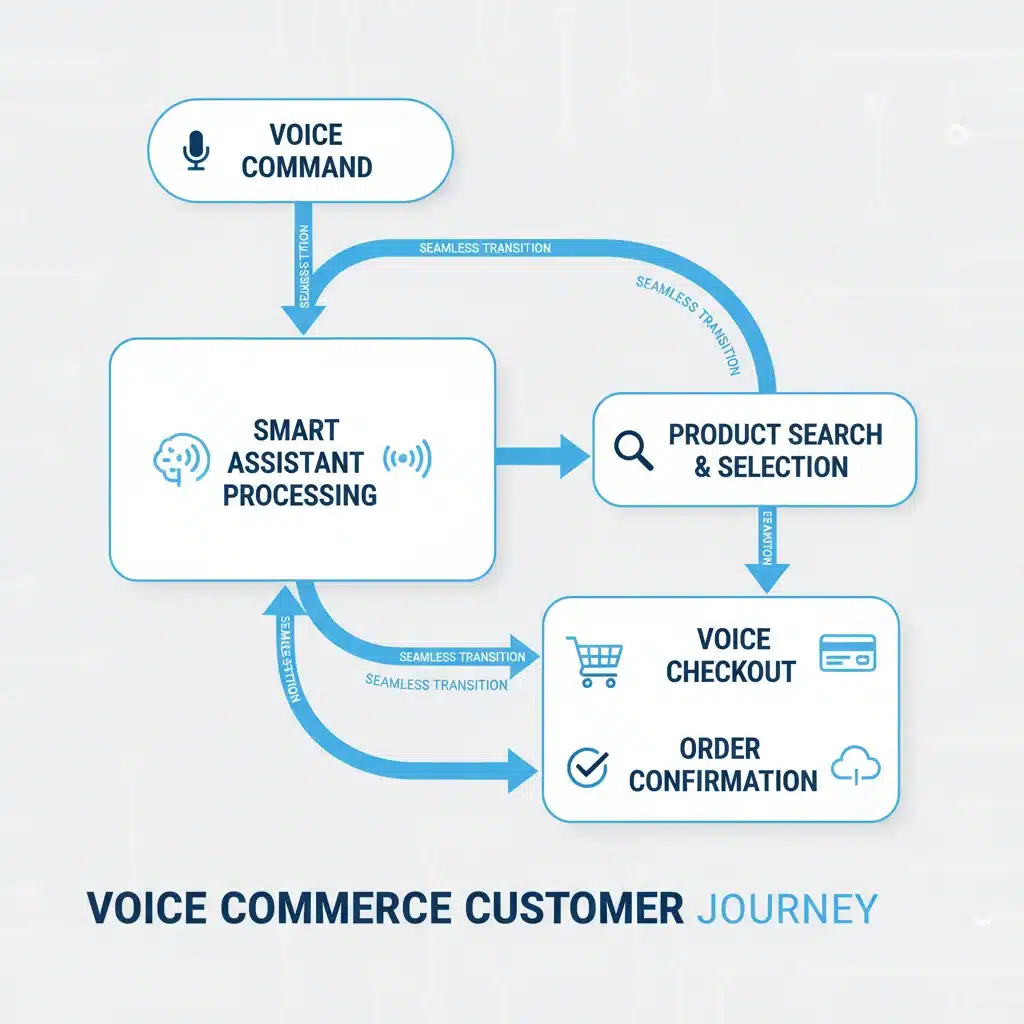
- Seamless Device Integration: Smart devices will communicate more effectively with each other and with retail platforms, creating a truly interconnected shopping experience. Imagine starting a shopping list on your smart speaker, refining it on your smart display, and completing the purchase via your smartphone, all with voice commands.
- Consumer Comfort and Habituation: As more consumers become accustomed to voice interactions for everyday tasks, their comfort level with using voice for purchasing will naturally increase.
- Retailer Investment: As the market matures, more retailers will invest heavily in their voice commerce capabilities, setting new standards for customer experience.
Crafting Your 2026 Voice Commerce Strategy: Key Pillars
Developing an effective voice commerce strategy requires a multi-faceted approach. It’s not just about enabling voice commands; it’s about optimizing the entire customer journey for a voice-first interaction. Here are the key pillars to focus on:
1. Voice Search Optimization (VSO)
Just as traditional SEO is crucial for web visibility, Voice Search Optimization (VSO) is paramount for discoverability in the voice commerce landscape. Voice queries differ significantly from text-based searches. They are often longer, more conversational, and typically framed as questions.
- Focus on Long-Tail Keywords and Natural Language: Instead of optimizing for ‘men’s shoes,’ consider phrases like ‘where can I buy comfortable men’s running shoes size 10.’
- Answer Common Questions: Identify the questions your customers frequently ask about your products and services. Structure your content to provide direct, concise answers. This is crucial for appearing in voice search results, as voice assistants often prioritize direct answers.
- Local SEO for Voice: For brick-and-mortar businesses, optimizing for local voice searches (e.g., ‘find a coffee shop near me’) is essential. Ensure your Google My Business profile is up-to-date and comprehensive.
- Structured Data and Schema Markup: Implement schema markup to help voice assistants understand the context and intent of your product information, pricing, and availability. This makes your data more easily digestible for AI.
2. Seamless Product Discovery and Catalog Integration
A successful voice commerce strategy hinges on how easily customers can find and understand your products using only their voice. This requires a deep integration of your product catalog with voice platforms.
- Detailed and Voice-Friendly Product Descriptions: Rewrite product descriptions to be concise, informative, and easily spoken aloud by a voice assistant. Avoid jargon and focus on key features and benefits.
- Categorization and Tagging: Ensure your products are meticulously categorized and tagged with relevant keywords that users might speak.
- Inventory Management Integration: Real-time inventory updates are critical. Nothing frustrates a voice shopper more than ordering an item only to find it’s out of stock.
- Personalization: Leverage past purchase history and preferences to offer personalized recommendations via voice, enhancing the shopping experience.
3. Streamlined Voice-Enabled Checkout Process
The checkout process is often the biggest hurdle in voice commerce. It needs to be incredibly simple and secure to prevent abandonment. A 5% increase in sales relies heavily on frictionless transactions.
- Simplified Authentication: Explore biometric authentication (e.g., voiceprint recognition, if available and secure) or simple PINs for quick, secure purchases.
- Pre-configured Payment Options: Allow users to link preferred payment methods (credit cards, digital wallets) to their voice assistant for one-command purchases.
- Order Confirmation and Tracking: Provide clear voice confirmations and allow users to track orders using voice commands.
- Returns and Customer Service: Enable voice-activated customer service for returns, order modifications, and general inquiries, closing the loop on the voice commerce experience.
4. Developing a Voice-First User Experience (UX)
Designing for voice is fundamentally different from designing for a visual interface. Your voice commerce strategy must prioritize a conversational and intuitive user experience.
- Natural Language Understanding (NLU): Invest in NLU capabilities that allow your voice assistant to understand intent, even with imperfect or varied phrasing.
- Contextual Awareness: The voice assistant should remember previous interactions and preferences to provide a more personalized and efficient experience.
- Error Handling: Design for graceful error recovery. If the assistant doesn’t understand a command, it should ask clarifying questions rather than simply stating it didn’t understand.
- Feedback and Confirmation: Provide clear audio feedback and confirmations for every action taken, building user trust.
Challenges and Considerations for Your Voice Commerce Strategy
While the opportunities are vast, implementing a successful voice commerce strategy isn’t without its challenges. Addressing these proactively will be crucial for achieving that 5% sales increase.
Data Privacy and Security
Consumer trust is paramount. Concerns about data privacy and the security of payment information are significant barriers to widespread voice commerce adoption. Businesses must implement robust security measures and be transparent about their data handling practices.
- Encryption: Ensure all voice data and payment information are encrypted both in transit and at rest.
- Compliance: Adhere to all relevant data protection regulations (e.g., GDPR, CCPA).
- User Control: Give users clear control over their data and privacy settings.
Accuracy and Natural Language Processing Limitations
Despite advancements, voice recognition and NLP still have limitations. Accents, background noise, and complex commands can lead to misinterpretations, frustrating users.
- Continuous Improvement: Regularly train and update your voice models to improve accuracy.
- Fallback Options: Provide clear pathways for users to switch to a visual interface or speak to a human agent if voice interaction becomes too difficult.
Integration with Existing Systems
Integrating voice commerce capabilities with existing CRM, ERP, and inventory management systems can be complex. A holistic approach is required to ensure seamless data flow and a consistent customer experience.
- API-First Approach: Design your voice commerce platform with robust APIs to facilitate easy integration with other systems.
- Scalability: Ensure your infrastructure can handle increased traffic and data processing as voice commerce grows.
Measuring Success: KPIs for Your Voice Commerce Strategy
To truly understand the impact of your voice commerce strategy and ensure you hit that 5% sales increase, you need to define and track key performance indicators (KPIs).
- Voice Conversion Rate: The percentage of voice interactions that result in a purchase.
- Average Order Value (AOV) via Voice: Track if voice purchases lead to higher or lower AOVs compared to other channels.
- Voice Search Ranking: Monitor your visibility for key voice search queries.
- Customer Satisfaction (CSAT) for Voice Interactions: Gather feedback on the ease and effectiveness of voice shopping.
- Number of Voice-Enabled Transactions: A direct measure of adoption.
- Retention Rate of Voice Shoppers: Are customers who use voice commerce coming back for more?
Future-Proofing Your Voice Commerce Strategy Beyond 2026
The digital landscape is ever-changing. A successful voice commerce strategy isn’t a one-time implementation but an ongoing evolution. Looking beyond 2026, several trends will continue to shape this domain.
Multimodal Experiences
The future of voice commerce will increasingly involve multimodal interactions, combining voice with visual interfaces (e.g., smart displays, augmented reality) and even haptic feedback. This will create richer, more immersive shopping experiences.
Proactive and Predictive Voice Assistants
Voice assistants will become more proactive, anticipating needs and offering relevant products or services before the user even asks. Imagine your smart speaker suggesting a reorder of your favorite coffee when it detects you’re running low.
Hyper-Personalization and AI-Driven Recommendations
Leveraging advanced AI, voice assistants will offer hyper-personalized recommendations based on an even deeper understanding of individual preferences, habits, and even emotional states inferred from voice patterns.
Integration with the Metaverse and Web3
As the metaverse evolves, voice commerce could play a significant role in virtual shopping experiences. Imagine using voice commands to navigate virtual stores, try on digital clothing, and make purchases within immersive digital environments.

Practical Steps to Implement Your Voice Commerce Strategy Now
Don’t wait until 2026 to begin. Start laying the groundwork for your voice commerce strategy today with these actionable steps:
- Conduct a Voice Search Audit: Analyze how your products and services currently appear (or don’t appear) in voice search results. Identify gaps and opportunities.
- Optimize Product Content: Begin rewriting product descriptions for conciseness and conversational language. Ensure all product attributes are well-defined.
- Pilot Voice-Enabled Features: Start with a small, manageable voice-enabled feature, such as checking order status or providing basic product information, to gain experience and gather user feedback.
- Invest in AI and NLP Expertise: Partner with or hire experts in AI, machine learning, and natural language processing to build and refine your voice capabilities.
- Monitor Competitors: Keep a close eye on what your competitors are doing in the voice commerce space. Learn from their successes and failures.
- Educate Your Team: Ensure your marketing, product development, and customer service teams understand the nuances and potential of voice commerce.
- Prioritize Data Security: Implement robust security protocols from day one to build and maintain customer trust.
- Seek User Feedback: Continuously collect feedback from early adopters to iterate and improve your voice commerce experience.
The Economic Impact of a Strong Voice Commerce Strategy
Beyond the 5% sales increase, a well-executed voice commerce strategy can yield numerous economic benefits:
- Reduced Customer Service Costs: Many routine customer inquiries can be handled by voice assistants, freeing up human agents for more complex issues.
- Increased Customer Loyalty: A convenient and personalized voice shopping experience can significantly enhance customer satisfaction and loyalty.
- New Revenue Streams: Voice commerce opens up opportunities for new products, services, and subscription models tailored to voice interactions.
- Enhanced Brand Visibility: Being discoverable through voice search can significantly increase brand awareness and reach.
- Competitive Differentiation: Early adopters of effective voice commerce strategies will gain a significant advantage over lagging competitors.
Consider the cumulative effect of these benefits. A 5% increase in sales, coupled with reduced operational costs and higher customer lifetime value, can translate into substantial growth and profitability for your business.
Conclusion: Embrace the Voice-First Future
The future of retail is conversational, intuitive, and increasingly voice-first. By developing a forward-thinking voice commerce strategy for 2026, businesses can unlock significant sales growth, improve customer experiences, and solidify their position in the digital marketplace. The journey requires investment in technology, a deep understanding of consumer behavior, and a commitment to continuous innovation.
The time to act is now. Start optimizing for voice search, streamlining your product catalog, and designing for a seamless voice-enabled checkout. By embracing these changes, your business won’t just keep pace with the market; it will lead it, capturing that crucial 5% (or more) of sales through the power of smart devices. The voice revolution is here, and your strategy for 2026 will determine whether you whisper or roar in the new era of commerce.