Social Commerce Features: Boost DTC Sales by 20% by Q4 2026
What the Latest Social Commerce Features Mean for DTC Brands: Driving a 20% Increase in Direct Sales by Q4 2026
The retail landscape is constantly evolving, and at the forefront of this transformation is social commerce. For Direct-to-Consumer (DTC) brands, this isn’t just another trend; it’s a pivotal shift that promises unprecedented opportunities for growth and direct engagement with their audience. The integration of shopping functionalities directly within social media platforms has created a seamless purchasing journey, blurring the lines between discovery, interaction, and transaction. As we move further into the digital age, understanding and effectively leveraging the latest Social Commerce DTC features will be the cornerstone of success for brands aiming to significantly boost their direct sales.
In an increasingly competitive market, DTC brands are constantly seeking innovative ways to connect with consumers, build brand loyalty, and, most importantly, drive sales. Traditional e-commerce models, while effective, often rely on consumers actively seeking out products. Social commerce, however, flips this paradigm by bringing products directly to where consumers are already spending their time: social media. This proactive approach to sales, combined with the inherent virality and community-building aspects of social platforms, makes social commerce an indispensable tool for achieving ambitious growth targets.
Our goal today is to delve deep into the most impactful Social Commerce DTC features and strategies that can empower your brand to achieve a remarkable 20% increase in direct sales by Q4 2026. We’ll explore how these features not only streamline the purchasing process but also enhance brand storytelling, foster community, and provide invaluable insights into consumer behavior. Get ready to transform your social media presence from a mere marketing channel into a powerful sales engine.
The Evolution of Social Commerce: More Than Just ‘Shop Now’ Buttons
Gone are the days when social media was solely about brand awareness and engagement. Today, platforms have evolved into sophisticated marketplaces, offering a comprehensive suite of tools designed to facilitate direct sales. This evolution is driven by consumer demand for convenience, authenticity, and personalized shopping experiences. The current landscape of Social Commerce DTC goes far beyond simple ‘shop now’ buttons; it encompasses a rich tapestry of interactive features that allow brands to showcase products, engage with customers in real-time, and close sales without ever leaving the social environment.
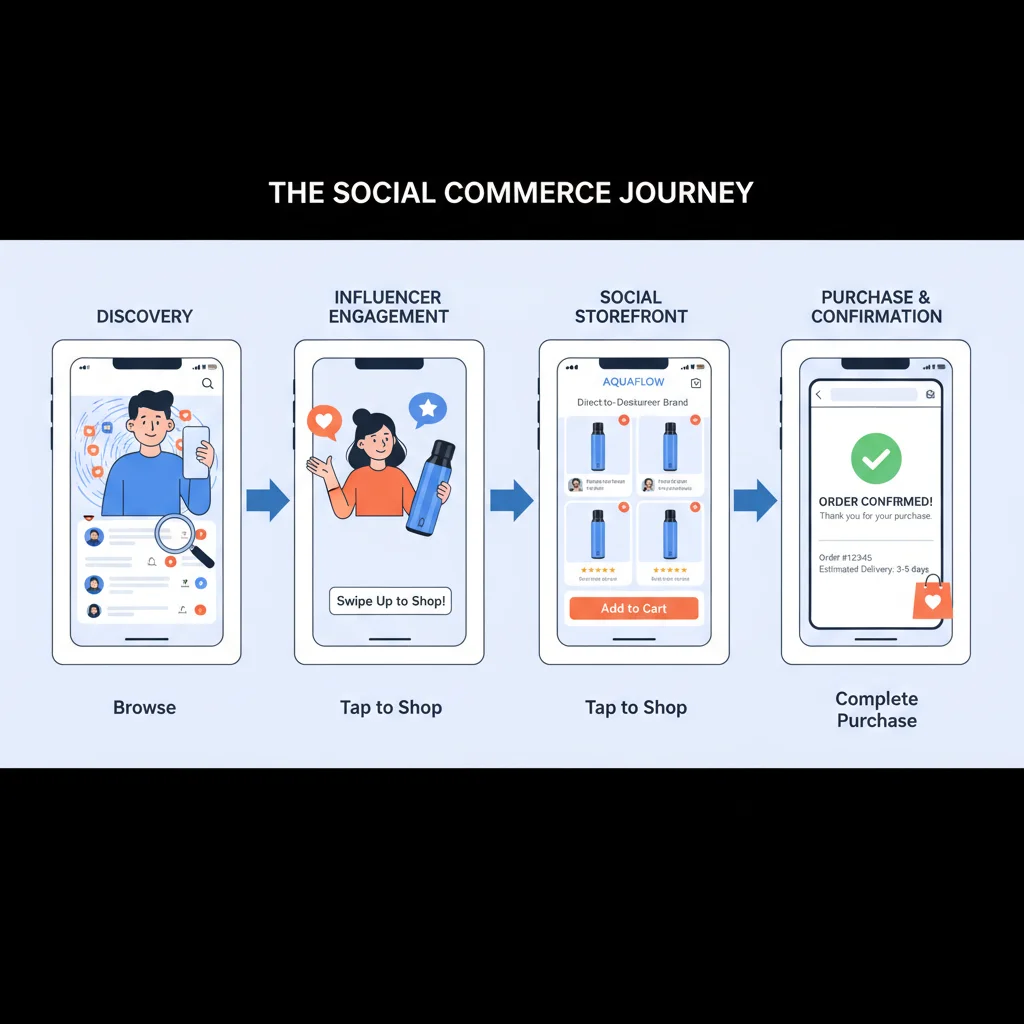
Early iterations of social commerce often involved directing users from a social post to an external e-commerce website. While this approach generated traffic, it introduced friction into the buying process. Each additional click or page load presented an opportunity for potential customers to abandon their carts. The latest advancements in social commerce aim to eliminate this friction, creating a seamless, in-app shopping experience that feels intuitive and natural to the social media user.
The shift towards integrated shopping experiences is particularly beneficial for DTC brands, which thrive on direct relationships with their customers. By owning the entire customer journey, from discovery to purchase to post-purchase support, DTC brands can maintain brand integrity, gather valuable first-party data, and cultivate a loyal customer base. Social commerce amplifies this advantage by providing direct channels for these interactions and transactions, making the path to purchase shorter and more engaging.
Understanding the nuances of these evolving features is critical for any DTC brand looking to stay ahead of the curve. It’s not just about being present on social media; it’s about actively leveraging its commercial capabilities to drive tangible business results. The brands that master this integration will be the ones that see significant upticks in their direct sales figures in the coming years.
Key Social Commerce Features Driving DTC Success
To achieve a 20% increase in direct sales by Q4 2026, DTC brands must strategically adopt and optimize the most impactful Social Commerce DTC features. These features are designed to meet consumers where they are, offering convenience, entertainment, and a personalized shopping experience.
1. In-App Shopping and Native Checkouts
The ability for customers to discover, select, and purchase products without ever leaving the social media application is perhaps the most significant advancement in social commerce. Platforms like Instagram Shopping, Facebook Shops, and TikTok Shop offer native checkout experiences that drastically reduce friction. This means fewer clicks, faster transactions, and a higher conversion rate. For DTC brands, this direct path to purchase is invaluable, as it allows them to capture impulse buys and cater to the instant gratification desired by modern consumers.
Setting up an in-app shop is relatively straightforward, requiring brands to integrate their product catalogs directly with the social platform. Once configured, products can be tagged in posts, stories, Reels, and even live streams, making them instantly shoppable. The convenience offered by native checkouts translates directly into increased sales velocity and improved customer satisfaction. Brands should prioritize streamlining their product feeds and ensuring accurate inventory synchronization to maximize the effectiveness of these features.
2. Live Shopping and Shoppable Videos
Live shopping has exploded in popularity, particularly on platforms like TikTok, Instagram, and even YouTube. This feature allows brands to host real-time product demonstrations, Q&A sessions, and interactive sales events. Consumers can ask questions, receive immediate answers, and purchase products directly within the live stream. This creates an immersive and engaging shopping experience that mimics the excitement of in-store shopping, but with the added convenience of online access.

Shoppable videos extend this concept to pre-recorded content, allowing brands to embed product tags directly into their video content. As viewers watch a product review, tutorial, or lifestyle video, they can tap on tagged items to learn more or make a purchase. Both live shopping and shoppable videos are powerful tools for storytelling and product education, enabling DTC brands to showcase their unique value proposition in dynamic and engaging ways. They foster a sense of urgency and exclusivity, often leading to higher conversion rates during the event itself.
3. Augmented Reality (AR) Try-Ons and Product Visualization
One of the biggest challenges in online retail has always been the inability to physically interact with products before purchasing. Augmented Reality (AR) is bridging this gap in Social Commerce DTC. Features like virtual try-ons for clothing, makeup, and accessories, or AR-powered product placements for furniture and home goods, allow customers to visualize how a product would look on them or in their environment. This not only enhances the shopping experience but also significantly reduces return rates, as customers have a clearer expectation of the product.
Brands leveraging AR can provide a more confident and engaging shopping journey, transforming passive browsing into an interactive exploration. This technology builds trust and minimizes buyer’s remorse, directly contributing to higher customer satisfaction and repeat purchases. Integrating AR experiences into social ads and product pages can be a game-changer for DTC brands in competitive categories.
4. Influencer and Creator Partnerships with Affiliate Tools
Influencer marketing has long been a staple for DTC brands, but social commerce is taking it to the next level. Platforms are now offering integrated affiliate tools that allow creators to earn commissions on sales made through their unique shoppable links or product tags. This incentivizes authentic endorsements and provides a transparent way for brands to track the performance of their influencer campaigns.
By partnering with relevant influencers, DTC brands can tap into established communities and leverage the trust their audience has in the creator. When an influencer demonstrates a product, and viewers can purchase it directly from the video or post, the conversion funnel becomes incredibly efficient. This approach not only drives sales but also expands brand reach and credibility, making it a cornerstone of a robust Social Commerce DTC strategy.
5. Personalized Recommendations and AI-Powered Discovery
Social media algorithms are incredibly adept at understanding user preferences. By leveraging AI, social commerce platforms can provide highly personalized product recommendations to users based on their browsing history, interests, and past interactions. For DTC brands, this means their products are more likely to be discovered by genuinely interested customers, leading to higher engagement and conversion rates.
These intelligent recommendation engines can highlight complementary products, suggest alternatives, and even remind users about items they’ve viewed previously. This level of personalization creates a highly relevant and enjoyable shopping experience, making customers feel understood and valued. DTC brands should focus on providing rich product data to these platforms to ensure their offerings are accurately categorized and recommended to the right audience.
Strategies for DTC Brands to Maximize Social Commerce Impact
Simply having access to these features isn’t enough; DTC brands must implement strategic approaches to fully harness the power of Social Commerce DTC. Here’s how to build a robust strategy:
1. Develop a Multi-Platform Strategy
While it might be tempting to focus on a single platform, a diverse approach often yields the best results. Different platforms cater to different demographics and content formats. Instagram is excellent for visual storytelling and curated aesthetics, TikTok thrives on short-form video and viral trends, and Facebook remains strong for community building and targeted ads. DTC brands should identify where their target audience spends most of their time and tailor their social commerce strategy accordingly for each platform.
This doesn’t mean spreading resources too thin. Instead, it involves understanding the unique strengths of each platform and adapting content and sales tactics to fit. For instance, a brand might use Instagram for shoppable posts of finished products, TikTok for behind-the-scenes content and live product reveals, and Facebook for customer service and community discussions around their products.
2. Prioritize Authentic Content and Community Building
The strength of Social Commerce DTC lies in its social aspect. Consumers are more likely to purchase from brands they trust and feel connected to. Therefore, DTC brands must prioritize creating authentic content that resonates with their audience. This includes user-generated content, behind-the-scenes glimpses, and genuine interactions with customers.
Building a strong community around your brand on social media can turn followers into loyal advocates. Encourage reviews, host interactive Q&A sessions, and respond promptly to comments and messages. When customers feel heard and valued, they become more invested in the brand, which naturally translates into increased sales and word-of-mouth marketing.
3. Leverage Data and Analytics for Optimization
Social commerce platforms provide a wealth of data on customer behavior, product performance, and content engagement. DTC brands must actively monitor these analytics to understand what’s working and what’s not. This data can inform future content strategies, product development, and advertising campaigns. For example, analyzing which products perform best in live shopping events can help tailor future broadcasts.
Understanding conversion rates from different content types, the demographics of engaged shoppers, and the peak times for purchases can help refine your Social Commerce DTC strategy for maximum impact. A data-driven approach ensures that resources are allocated effectively and that your brand is continuously optimizing its social selling efforts.
4. Seamless Integration with E-commerce Backend
While social commerce aims to keep the customer within the social platform, seamless integration with your existing e-commerce backend is crucial for operational efficiency. This includes synchronized inventory, order management, customer relationship management (CRM), and shipping processes. Disconnects between your social storefront and your main e-commerce operations can lead to stockouts, delayed shipments, and frustrated customers.
Many social platforms offer robust APIs and integrations with popular e-commerce platforms like Shopify, Magento, and WooCommerce. Investing in these integrations ensures a smooth workflow, allowing your team to manage social commerce sales as efficiently as traditional e-commerce sales. This holistic approach is vital for scaling your Social Commerce DTC efforts sustainably.
5. Experiment with Paid Social Commerce Ads
Organic reach on social media can be challenging, even with compelling content. Paid social commerce ads allow DTC brands to amplify their reach and target specific demographics with highly relevant product offerings. These ads can feature shoppable tags, direct links to in-app checkouts, and compelling calls to action.
Experiment with different ad formats, audiences, and bidding strategies. A/B testing various creative assets and messaging can help identify what resonates best with your potential customers. By strategically investing in paid social commerce, DTC brands can accelerate customer acquisition and significantly contribute to the 20% sales growth target.
Measuring Success and Overcoming Challenges in Social Commerce
Achieving a 20% increase in direct sales by Q4 2026 requires continuous monitoring and adaptation. DTC brands need clear metrics to measure the success of their Social Commerce DTC initiatives and be prepared to address potential challenges.
Key Performance Indicators (KPIs) for Social Commerce
- Conversion Rate: The percentage of social media users who complete a purchase after interacting with your social commerce features.
- Average Order Value (AOV): The average amount spent per transaction originating from social commerce.
- Return on Ad Spend (ROAS): For paid social commerce campaigns, this measures the revenue generated for every dollar spent on ads.
- Customer Acquisition Cost (CAC): The cost to acquire a new customer through social commerce channels.
- Engagement Rate: Likes, comments, shares, and saves on shoppable posts and videos, indicating content effectiveness.
- Website Traffic from Social: While social commerce aims for in-app purchases, tracking referral traffic to your main site still provides valuable insights.
- Customer Lifetime Value (CLTV): Ultimately, social commerce should contribute to long-term customer relationships and repeat purchases.
By regularly tracking these KPIs, DTC brands can gain a comprehensive understanding of their social commerce performance and identify areas for improvement. Dashboards and analytics tools provided by social platforms, combined with your own e-commerce analytics, will be crucial for this analysis.
Overcoming Common Challenges
Despite its immense potential, Social Commerce DTC comes with its own set of challenges:
- Platform Dependency: Brands are reliant on social media platforms for their reach and functionality. Changes in algorithms or policies can impact performance. Diversifying your social commerce efforts across multiple platforms can mitigate this risk.
- Content Overload: The sheer volume of content on social media makes it difficult for brands to stand out. High-quality, engaging, and authentic content is essential to cut through the noise.
- Trust and Security Concerns: Some consumers may still be hesitant to make purchases directly within social apps due to security concerns. Transparent communication about payment security and reliable customer service can build trust.
- Inventory Management: Keeping product catalogs synchronized across multiple social storefronts and your main e-commerce site can be complex. Robust integration solutions are necessary to prevent overselling or stockouts.
- Measuring ROI: Attributing sales accurately to specific social commerce efforts can be challenging without proper tracking and analytics setup. Investing in advanced tracking tools and proper UTM tagging is vital.
Proactive planning and continuous optimization are key to navigating these challenges. DTC brands that embrace an agile approach, experimenting and learning from their social commerce activities, will be best positioned for sustained growth.
The Future of Social Commerce for DTC Brands
The trajectory of Social Commerce DTC is undeniably upward. We can expect even deeper integrations, more sophisticated AR/VR shopping experiences, and increased personalization driven by AI. The lines between entertainment, communication, and commerce will continue to blur, making social platforms even more central to the consumer buying journey.
Voice commerce, enhanced chatbot support for shopping, and even metaverse-based shopping experiences are on the horizon, promising new frontiers for DTC brands. Those who stay agile, innovative, and customer-centric in their approach to social commerce will not only meet but exceed their sales targets, solidifying their position in the competitive direct-to-consumer market.
The 20% increase in direct sales by Q4 2026 is an ambitious yet achievable goal for DTC brands willing to fully embrace and strategically implement the latest social commerce features. It requires a commitment to understanding consumer behavior, investing in the right technologies, and fostering genuine connections with the audience. By doing so, brands can transform their social media presence from a marketing expense into a powerful, revenue-generating engine.
Conclusion: Your Path to 20% Direct Sales Growth
The paradigm shift towards social commerce represents a golden opportunity for Direct-to-Consumer brands. By strategically adopting and optimizing the latest Social Commerce DTC features – from in-app shopping and live streams to AR try-ons and influencer collaborations – brands can create compelling, frictionless purchasing experiences that resonate with modern consumers. The journey to a 20% increase in direct sales by Q4 2026 is not merely about adopting new tools; it’s about fundamentally rethinking how your brand engages, converts, and retains customers in the digital age.
Success in this dynamic landscape hinges on a multi-platform strategy, a relentless focus on authentic content and community building, and a data-driven approach to optimization. Furthermore, seamless integration with your e-commerce backend and a willingness to experiment with paid social commerce ads will amplify your efforts. While challenges exist, the rewards of a well-executed social commerce strategy – increased sales, enhanced brand loyalty, and invaluable customer insights – far outweigh the complexities.
Embrace the revolution. Start integrating these powerful features into your strategy today, and position your DTC brand at the forefront of the social commerce wave. The future of retail is social, and your brand’s growth depends on how effectively you navigate this exciting new frontier. The time to unlock the full potential of Social Commerce DTC is now.