Augmented Reality E-commerce: Boost Engagement 7% by 2026
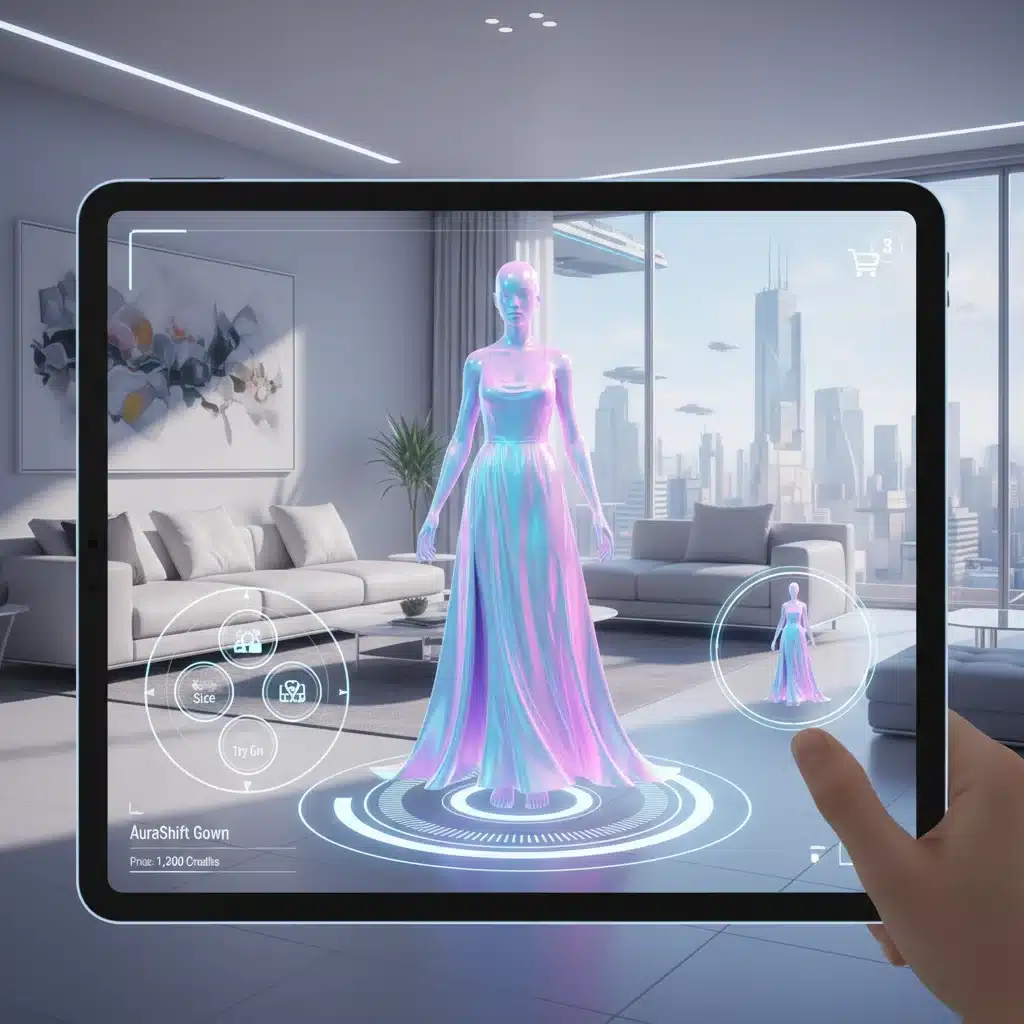
The digital landscape of commerce is in a perpetual state of evolution, driven by technological advancements that continuously reshape consumer expectations and business strategies. Among these transformative technologies, Augmented Reality (AR) stands out as a particularly potent force, poised to redefine the very essence of online shopping. In the United States, the integration of AR into e-commerce is no longer a futuristic concept but a tangible reality, demonstrating remarkable potential to significantly elevate customer engagement. Industry projections indicate a compelling trend: a projected 7% uplift in customer engagement rates in US e-commerce by Q2 2026, directly attributable to the strategic leveraging of AR. This isn’t just about novelty; it’s about creating deeply immersive, interactive, and personalized shopping experiences that bridge the gap between the digital and physical worlds, ultimately fostering stronger connections between brands and their clientele.
For businesses operating within the fiercely competitive e-commerce arena, understanding and implementing AR is becoming less of a luxury and more of a necessity. The traditional limitations of online shopping – the inability to physically interact with products, to gauge their size and scale in a real-world environment, or to truly visualize how an item might fit into one’s life – are systematically being dismantled by AR. This technology empowers consumers with a virtual ‘try-before-you-buy’ capability, whether it’s test-driving furniture in their living room, trying on clothes virtually, or experimenting with makeup shades from the comfort of their home. Such capabilities not only enhance the shopping journey but also instill a greater sense of confidence in purchase decisions, leading to reduced return rates and, crucially, increased customer satisfaction and loyalty.
This comprehensive exploration delves into the mechanics, benefits, and strategic implications of AR E-commerce Engagement. We will unpack the various facets of AR implementation, examine the tangible ways it drives higher engagement, and provide actionable insights for businesses looking to harness its power. From the underlying technological frameworks to the psychological impact on consumers, and from current success stories to future trends, this article aims to equip e-commerce stakeholders with a profound understanding of how AR is not just a passing trend, but a fundamental shift in how we buy and sell online, promising significant returns on investment in the coming years.
The Foundational Shift: Why AR is a Game-Changer for US E-commerce
The digital storefront, while offering unparalleled convenience and access, has historically lacked the tactile and immersive qualities of brick-and-mortar retail. This inherent limitation often translates into a degree of uncertainty for consumers, particularly when purchasing items where visual and spatial understanding is paramount. Think of a customer buying a piece of furniture, a pair of glasses, or even a new appliance; without seeing it in their space or on their person, the decision often involves guesswork, leading to apprehension and sometimes, eventual returns. This is where the power of AR E-commerce Engagement truly manifests.
Augmented Reality superimposes digital information and virtual objects onto the real world, as viewed through a device camera – typically a smartphone or tablet. This seamless blend of the physical and virtual creates an enhanced reality that allows customers to interact with products in a profoundly new way. Instead of merely viewing static images or videos, consumers can now virtually place a sofa in their living room, see how a new pair of sneakers looks on their feet, or test different lipstick shades on their own face, all in real-time and within their actual environment. This capability is not just a superficial enhancement; it addresses core pain points of online shopping, transforming a passive browsing experience into an active, exploratory, and highly personalized journey.
The impact of this shift is multifaceted. Firstly, it significantly reduces the cognitive load on the customer. They no longer have to imagine or estimate; they can see. This clarity leads to more informed purchase decisions. Secondly, it injects a strong element of fun and novelty into the shopping process. The interactive nature of AR makes browsing feel more like an engaging activity than a transactional chore, thereby increasing the time spent on a site or app. This extended engagement is a critical metric for e-commerce success, as longer dwell times often correlate with higher conversion rates.
Moreover, AR fosters a deeper emotional connection with products. When a customer can visualize an item fitting perfectly into their life, it moves from being a mere commodity to a potential asset, something they can already envision owning and using. This emotional resonance is a powerful driver of purchase intent and brand loyalty. The ability for consumers to ‘try on’ or ‘place’ items virtually also builds trust. By providing a more accurate representation of the product, brands demonstrate transparency and a commitment to customer satisfaction, which are invaluable in today’s competitive market. The projected 7% uplift in AR E-commerce Engagement by Q2 2026 is a testament to this foundational shift, illustrating the growing recognition among businesses and consumers alike regarding AR’s undeniable value proposition.
Key Drivers of Increased AR E-commerce Engagement
Several critical factors are converging to propel the adoption and effectiveness of AR in driving e-commerce engagement. Understanding these drivers is essential for businesses looking to strategically invest in this technology.
Enhanced Product Visualization and Confidence
Perhaps the most immediate and impactful benefit of AR is its ability to provide unparalleled product visualization. Traditional e-commerce relies heavily on static images, videos, and detailed descriptions. While effective to a degree, these mediums often fall short in conveying the true scale, texture, and fit of a product within a customer’s personal environment. AR demolishes these barriers. For furniture retailers, AR apps allow customers to virtually place sofas, tables, or lamps in their living rooms, instantly seeing how they fit, what colors complement their existing decor, and whether the dimensions are appropriate. For fashion brands, virtual try-on features enable customers to see how clothes or accessories look on their own body, reducing the guesswork associated with online apparel purchases. This superior visualization directly translates into increased customer confidence, a crucial component of successful AR E-commerce Engagement. When customers are confident in their choice, they are more likely to complete a purchase and less likely to initiate a return, thereby improving both conversion rates and profitability.
Immersive & Interactive Shopping Experiences
Beyond mere visualization, AR transforms shopping into an immersive and interactive experience. It moves beyond passive consumption of content to active participation. Customers aren’t just looking at products; they are interacting with them, manipulating them, and integrating them into their own reality. This level of interaction is inherently more engaging than traditional browsing. Think of an AR experience where a customer can not only see a product in their space but also change its color, rotate it, or even open its drawers. This playful and exploratory aspect makes the shopping journey more enjoyable and memorable. This enhanced engagement keeps customers on a brand’s platform longer, increases their exposure to a wider range of products, and strengthens their connection to the brand itself. The novelty factor also plays a role, attracting new users who are keen to try out cutting-edge shopping technologies.
Reduced Return Rates and Improved Customer Satisfaction
One of the most significant challenges in e-commerce is the high rate of product returns, which incurs substantial costs related to logistics, reprocessing, and potential damage. A primary reason for returns is that products often do not meet customer expectations regarding size, fit, or appearance in real life. AR directly addresses this issue. By allowing customers to accurately assess products in their own context before buying, AR significantly reduces the likelihood of mismatch. For instance, a customer using an AR app to place a refrigerator in their kitchen can immediately tell if it will fit through the doorway or if it will clash with their cabinetry. This accuracy leads to fewer unexpected disappointments upon delivery, resulting in a marked decrease in returns. Lower return rates not only save businesses money but also contribute to higher customer satisfaction, as customers receive products that genuinely meet their needs and expectations. This positive experience reinforces brand loyalty and encourages repeat purchases, further boosting AR E-commerce Engagement.
Personalization at Scale
AR offers unprecedented opportunities for personalization. While traditional personalization relies on data analytics to suggest products, AR takes it a step further by personalizing the actual product experience. Customers can see products tailored to their specific environment or physical attributes. For example, an AR makeup app can apply different shades of foundation or eyeshadow directly onto a user’s live video feed, matching their skin tone and facial structure. This level of personalized visualization is far more powerful than simply recommending a product. It makes the customer feel understood and catered to, fostering a deeper connection with the brand. This hyper-personalization, driven by AR, is a powerful engine for increasing engagement, as it makes the shopping experience feel uniquely designed for each individual.

Implementing AR: Best Practices for E-commerce Businesses
Successfully integrating AR into an e-commerce strategy requires careful planning and execution. Simply adding an AR feature without considering user experience or technical feasibility can lead to lackluster results. Here are some best practices to maximize AR E-commerce Engagement:
Choose the Right AR Technology and Platform
The AR landscape is diverse, with various technologies and platforms available. For most e-commerce applications, web-based AR (WebAR) is often the most accessible and scalable solution. WebAR allows users to experience AR directly through their web browser on a smartphone, without needing to download a dedicated app. This significantly lowers the barrier to entry for consumers. However, for highly complex or specialized AR experiences, a dedicated mobile app might be more suitable, offering greater processing power and integration with device-specific features. Businesses need to assess their target audience, product complexity, and budget to select the most appropriate AR solution. Partnering with experienced AR development agencies can also provide valuable expertise in navigating these choices and ensuring a robust implementation.
High-Quality 3D Models and Textures
The success of any AR experience hinges on the quality of the 3D models. Low-resolution, poorly textured, or inaccurately scaled models will detract from the realism and effectiveness of the AR visualization. Investing in high-fidelity 3D modeling is paramount. This includes accurate dimensions, realistic material rendering (e.g., how light reflects off wood, fabric, or metal), and attention to detail. The goal is to make the virtual product appear as real as possible within the user’s environment. Businesses should either have in-house expertise or collaborate with professional 3D artists and modelers to create a comprehensive library of AR-ready product assets. This commitment to quality directly impacts the credibility and utility of the AR E-commerce Engagement feature.
Seamless User Experience and Clear Instructions
Even the most advanced AR technology can fail if the user experience is clunky or confusing. The AR feature should be easily discoverable on product pages, with clear calls to action (e.g., ‘View in Your Room’ or ‘Try On Virtually’). Once activated, the AR experience itself must be intuitive. Provide simple, concise on-screen instructions on how to use the feature – for example, ‘Scan your floor’ or ‘Move your phone to calibrate.’ The loading times for AR models should be minimal, and the tracking of the virtual object within the real environment needs to be stable and accurate. Any friction in the user journey can lead to abandonment, negating the benefits of AR. Regular user testing and feedback loops are essential to refine the AR experience and ensure it is as smooth and enjoyable as possible, maximizing AR E-commerce Engagement.
Integration with Existing E-commerce Platforms
For AR to be truly effective, it must be seamlessly integrated into the existing e-commerce platform and workflow. This means the AR feature should not feel like a separate, disconnected tool. It should complement the product page, providing an additional layer of information and interaction alongside images, videos, and descriptions. Data generated from AR interactions (e.g., which products are viewed in AR, how long users engage) should ideally feed into analytics systems to provide insights into customer behavior and preferences. This integration ensures that AR is not just a standalone gimmick but a valuable component of the overall digital strategy, contributing to a holistic and data-driven approach to AR E-commerce Engagement.
Continuous Optimization and Analytics
Like any digital initiative, AR implementation is not a one-time task but an ongoing process of optimization. Businesses should continuously monitor key metrics related to their AR features, such as usage rates, conversion rates for AR-enabled products, and feedback from customer surveys. A/B testing different AR experiences, UI elements, or calls to action can help identify what resonates most with the target audience. The insights gained from analytics can then be used to refine the AR models, improve the user interface, and develop new AR features. This iterative approach ensures that the AR E-commerce Engagement strategy remains dynamic, relevant, and consistently delivers value to both customers and the business.
Measuring the Impact: Quantifying the 7% Uplift in AR E-commerce Engagement
The projection of a 7% uplift in AR E-commerce Engagement by Q2 2026 is not an arbitrary figure; it’s based on observable trends and the measurable impact AR has on key e-commerce metrics. Quantifying this uplift requires a clear understanding of what ‘engagement’ means in this context and how AR influences various touchpoints in the customer journey.
Defining Engagement in the AR Context
In the realm of AR e-commerce, engagement extends beyond simple page views or clicks. It encompasses a deeper level of interaction and immersion. Key metrics for measuring AR E-commerce Engagement include:
- AR Feature Adoption Rate: The percentage of users who interact with the AR feature on a product page.
- Time Spent in AR: The average duration users spend actively engaging with the AR experience. Longer times indicate higher interest and immersion.
- Conversion Rate for AR-Enabled Products: Comparing the conversion rates of products viewed with AR versus those without. A significant uplift here is a strong indicator of AR’s effectiveness.
- Reduced Return Rates: Tracking the decrease in returns for products that were viewed using AR, demonstrating improved purchase confidence.
- Customer Feedback and Sentiment: Surveys and reviews specifically asking about the AR experience and its impact on purchasing decisions.
- Repeat Purchases: An increase in repeat purchases from customers who previously utilized AR, suggesting enhanced loyalty.
Case Studies and Industry Benchmarks
Numerous brands have already demonstrated the tangible benefits of AR. For instance, furniture giant IKEA’s ‘Place’ app (now integrated into their main app) allows customers to virtually place furniture in their homes, reporting significant increases in customer satisfaction and reduced apprehension. Sephora’s ‘Virtual Artist’ enables users to try on makeup shades, leading to higher engagement and conversion. These early successes, coupled with advancements in AR technology and wider smartphone adoption, form the basis for the projected 7% uplift in AR E-commerce Engagement. As more businesses adopt AR and refine their implementations, the collective impact on overall engagement across the US e-commerce landscape is expected to grow substantially. The 7% figure represents a conservative yet significant increase, reflecting the growing maturity and efficacy of AR solutions.
The Role of Data and Analytics
To accurately measure the 7% uplift, robust data collection and analytics are indispensable. E-commerce platforms need to integrate AR usage data with their existing analytics tools. This allows businesses to correlate AR interactions with purchase behavior, average order value, and customer lifetime value. By segmenting customers who use AR versus those who don’t, companies can gain precise insights into the technology’s influence. For example, if customers who use AR spend 15% more time on product pages and have a 10% higher conversion rate, these are direct indicators of enhanced AR E-commerce Engagement. Continuous analysis of this data will not only confirm the projected uplift but also provide actionable intelligence for further optimizing AR strategies and identifying new opportunities for growth.
Challenges and Considerations for AR Adoption
While the benefits of AR for e-commerce engagement are clear, businesses must also be mindful of potential challenges and considerations during implementation.
Technical Hurdles and Development Costs
Developing high-quality AR experiences requires specialized technical expertise in 3D modeling, computer vision, and platform integration. This can translate into significant development costs, particularly for businesses that need to create a large library of 3D product models. Ensuring compatibility across various devices and operating systems also presents a technical challenge. Businesses need to weigh these initial investments against the projected returns in AR E-commerce Engagement and sales. Outsourcing AR development to specialized agencies can help manage costs and leverage expert knowledge, but careful vendor selection is crucial.
Ensuring Accuracy and Realism
The effectiveness of AR hinges on its ability to accurately and realistically represent products. Inaccurate scaling, poor lighting, or unrealistic textures can quickly break the immersion and erode customer trust. Maintaining consistent quality across a diverse product catalog can be challenging. For example, rendering fabric textures realistically in AR is more complex than rendering hard goods. Businesses must invest in quality assurance processes to ensure that all AR models meet a high standard of realism and accuracy, thereby reinforcing positive AR E-commerce Engagement.
User Adoption and Education
While AR technology is becoming more mainstream, not all consumers are equally familiar or comfortable with it. Some users might require clear instructions or a brief tutorial on how to use AR features. Businesses need to educate their audience about the benefits and ease of use of their AR tools. Marketing campaigns highlighting the immersive aspects of AR shopping can help drive adoption. Simplifying the user interface and ensuring a frictionless experience are key to overcoming any initial user hesitancy and encouraging widespread AR E-commerce Engagement.
Data Privacy and Security
AR applications often require access to a user’s device camera and potentially their environment data. This raises important considerations regarding data privacy and security. Businesses must be transparent about what data is collected, how it’s used, and ensure compliance with relevant data protection regulations (e.g., GDPR, CCPA). Building and maintaining customer trust in this regard is paramount. Clearly communicated privacy policies and robust security measures are essential to prevent any privacy concerns from hindering AR E-commerce Engagement.

The Future of AR E-commerce Engagement: Beyond 2026
The projected 7% uplift in AR E-commerce Engagement by Q2 2026 is just the beginning. The future holds even more profound transformations as AR technology continues to mature and integrate with other emerging technologies.
Integration with AI and Machine Learning
The synergy between AR, Artificial Intelligence (AI), and Machine Learning (ML) will unlock unprecedented levels of personalization and predictive capabilities. AI can analyze user preferences and behaviors within AR experiences to offer highly tailored product recommendations. ML algorithms can continuously improve the realism and accuracy of AR models based on user feedback and environmental data. Imagine an AR shopping assistant that not only shows you how a dress looks but also suggests complementary accessories based on your style preferences and wardrobe analysis, all within a real-time AR environment. This intelligent integration will further deepen AR E-commerce Engagement.
AR-Enhanced Physical Stores
The lines between online and offline commerce will continue to blur. AR won’t be confined to just online shopping but will increasingly enhance the in-store experience. Customers might use AR apps in physical stores to access additional product information, view virtual inventory, or see how different items look together without physically trying them on. This hybrid approach, often referred to as ‘phygital’ retail, will offer the best of both worlds, providing convenience and immersion across all touchpoints and driving holistic AR E-commerce Engagement.
Wearable AR Devices
While smartphones and tablets are currently the primary devices for AR, the advent of lightweight, comfortable, and powerful AR glasses or smart lenses will revolutionize the experience. Imagine hands-free AR shopping, where products appear seamlessly in your field of vision as you browse. This always-on, always-present AR capability will make AR E-commerce Engagement even more intuitive and integrated into daily life, paving the way for truly ambient commerce.
Collaborative AR Shopping Experiences
The future of AR could also involve collaborative shopping, where friends or family members can virtually shop together in an AR environment, even if they are physically in different locations. They could see the same virtual products, offer opinions, and make collective decisions, replicating the social aspect of traditional shopping but with the added convenience of digital access. This social dimension will add another layer to AR E-commerce Engagement, fostering community and shared experiences around products.
Conclusion: Embracing the AR Revolution for Sustainable Growth
The trajectory of AR E-commerce Engagement in the US is undeniably upward, with a projected 7% uplift by Q2 2026 serving as a clear indicator of its growing influence. This isn’t merely a technological fad; it represents a fundamental shift in how consumers interact with brands and products online. By offering unparalleled product visualization, creating immersive and interactive shopping experiences, reducing return rates, and enabling hyper-personalization, AR addresses core challenges and enhances key aspects of the e-commerce journey.
For businesses looking to thrive in the increasingly competitive digital marketplace, embracing AR is no longer an option but a strategic imperative. The brands that proactively invest in high-quality AR solutions, prioritize seamless user experiences, and continuously optimize their implementations will be the ones that capture market share, build stronger customer loyalty, and achieve sustainable growth. The future of e-commerce is augmented, and those who lead this revolution will reap the rewards of heightened AR E-commerce Engagement, transforming casual browsers into confident, loyal customers. The time to integrate AR is now, to ensure your business is not just participating in the future of retail, but actively shaping it.