Subscription Model Strategies: Boost US Brands’ Recurring Revenue by 10% by Early 2026

Subscription Model Strategies: How US Brands are Achieving a 10% Increase in Recurring Revenue by Early 2026
In the dynamic landscape of modern commerce, the subscription model has emerged as a powerhouse for sustainable business growth. For US brands, mastering these strategies is not just about keeping pace; it’s about setting the rhythm for the future. Projections indicate that US brands are on track to achieve an impressive 10% increase in recurring revenue by early 2026, primarily driven by sophisticated and customer-centric subscription model strategies. This isn’t merely a trend; it’s a fundamental shift in how businesses engage with their customers and generate value. The focus on sustained Subscription Revenue Growth is paramount, transforming one-time transactions into long-term relationships.
The allure of recurring revenue lies in its predictability and potential for exponential growth. Unlike traditional sales, which demand continuous customer acquisition, a well-executed subscription model fosters loyalty, reduces customer acquisition costs over time, and creates a stable financial foundation. This comprehensive guide will delve into the core principles, innovative tactics, and technological advancements that are enabling US brands to redefine their financial trajectories through enhanced Subscription Revenue Growth.
Understanding the Foundation of Subscription Revenue Growth
At its heart, the subscription economy thrives on value exchange. Customers opt for subscriptions when they perceive ongoing value that outweighs the recurring cost. For US brands, this means consistently delivering quality, convenience, and a personalized experience. The journey to significant Subscription Revenue Growth begins with a deep understanding of customer needs and a commitment to meeting those needs repeatedly.
The Shift from Transactional to Relational Business Models
Historically, many businesses operated on a transactional model, where each sale was a discrete event. The relationship often ended once the product was purchased. The subscription model fundamentally alters this dynamic, shifting the focus from individual transactions to an ongoing relationship. This relational approach builds trust, fosters loyalty, and creates opportunities for continuous engagement and upselling. For US brands, embracing this shift is critical for unlocking substantial Subscription Revenue Growth.
This paradigm shift necessitates a change in operational mindset, moving from a product-centric view to a customer-centric one. Brands must invest in understanding customer behaviors, preferences, and pain points to design subscription offerings that resonate deeply and provide sustained value. This foundational understanding is the bedrock upon which successful Subscription Revenue Growth is built.
Key Metrics for Measuring Subscription Success
To effectively drive Subscription Revenue Growth, US brands must meticulously track key performance indicators (KPIs). These metrics provide actionable insights into the health and trajectory of a subscription business. Essential KPIs include:
- Monthly Recurring Revenue (MRR): The predictable revenue a business expects to receive every month. Tracking MRR helps forecast financial performance and gauge growth.
- Customer Lifetime Value (CLTV): The total revenue a business can reasonably expect from a single customer account over the entire period of their relationship. Maximizing CLTV is crucial for long-term Subscription Revenue Growth.
- Churn Rate: The rate at which customers cancel their subscriptions. A low churn rate indicates strong customer satisfaction and retention, directly contributing to higher recurring revenue.
- Customer Acquisition Cost (CAC): The cost associated with acquiring a new customer. A healthy subscription model aims for a CLTV significantly higher than CAC.
- Average Revenue Per User (ARPU): The average amount of revenue generated per subscriber. Increasing ARPU through upselling or cross-selling enhances overall Subscription Revenue Growth.
- Retention Rate: The percentage of customers who continue their subscriptions over a given period. High retention is a cornerstone of sustainable recurring revenue.
By closely monitoring these metrics, US brands can identify areas for improvement, optimize their strategies, and ensure a steady path towards their 10% recurring revenue increase goal.
Innovative Strategies for Accelerating Subscription Revenue Growth
Achieving a 10% increase in recurring revenue by early 2026 requires more than just offering a subscription; it demands innovation and a proactive approach to customer engagement. US brands are employing a variety of sophisticated strategies to accelerate their Subscription Revenue Growth.
Personalization and Hyper-Targeted Offerings
In today’s competitive market, generic offerings simply won’t cut it. Customers expect personalized experiences that cater to their unique preferences and needs. US brands are leveraging data analytics and artificial intelligence to create hyper-targeted subscription tiers and content. This includes:
- Dynamic Pricing Models: Offering different subscription tiers based on usage, features, or customer segments.
- Customized Content Curation: Delivering personalized recommendations for media, products, or services based on past interactions and stated preferences.
- Tailored Product Bundles: Creating unique bundles of products or services that appeal to specific customer demographics or psychographics.
This level of personalization not only enhances customer satisfaction but also significantly increases the perceived value of the subscription, thereby boosting retention and fueling Subscription Revenue Growth.
Optimizing the Customer Onboarding Experience
The initial impression a subscriber receives can make or break their long-term commitment. A seamless and engaging onboarding process is crucial for reducing early churn and fostering immediate value perception. US brands are investing in:
- Interactive Welcome Sequences: Guiding new subscribers through the platform or service with tutorials, tips, and personalized introductions.
- Early Value Realization: Ensuring subscribers experience the core benefits of the service quickly, often within the first few days or weeks.
- Proactive Support: Offering readily available customer support during the onboarding phase to address any questions or issues promptly.
A positive onboarding experience sets the stage for a long and fruitful customer relationship, directly contributing to sustained Subscription Revenue Growth.
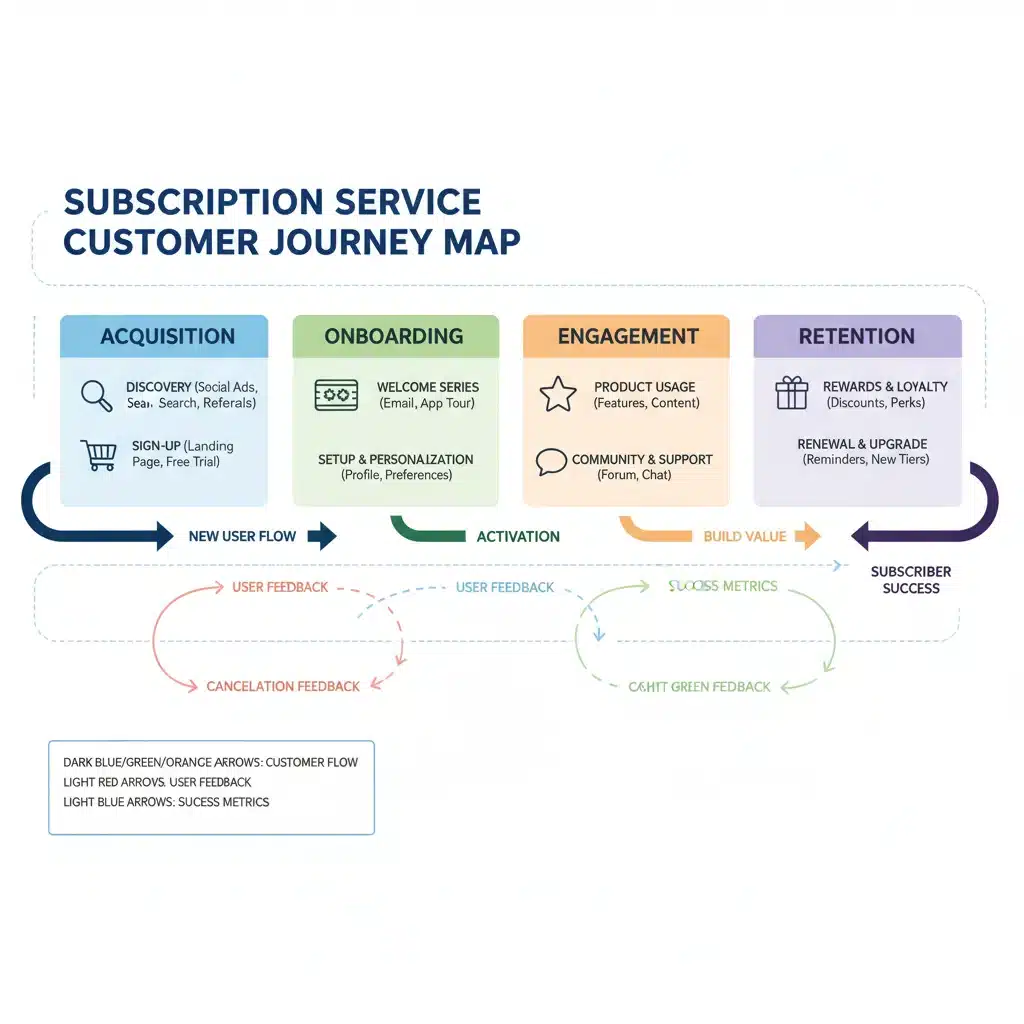
Enhanced Customer Engagement and Retention Strategies
Acquiring new subscribers is only half the battle; retaining them is where true Subscription Revenue Growth is realized. US brands are implementing robust engagement and retention strategies, including:
- Community Building: Creating exclusive online communities or forums where subscribers can interact with each other and the brand.
- Loyalty Programs and Rewards: Offering incentives for long-term subscribers, such as discounts, exclusive access, or premium features.
- Continuous Feature Updates and Improvements: Regularly adding new value to the subscription service to keep it fresh and relevant.
- Personalized Communication: Sending targeted emails, in-app notifications, and messages based on user behavior and preferences.
- Churn Prevention Initiatives: Identifying at-risk subscribers through data analytics and implementing proactive measures like win-back campaigns or personalized offers.
By prioritizing customer engagement and retention, US brands can significantly reduce churn and ensure consistent Subscription Revenue Growth.
Leveraging Technology for Unprecedented Subscription Revenue Growth
Technology plays a pivotal role in scaling subscription operations and optimizing performance. From advanced analytics to automated customer service, US brands are harnessing technological innovations to drive their Subscription Revenue Growth objectives.
Advanced Analytics and Data-Driven Decision Making
The ability to collect, analyze, and act upon data is a cornerstone of modern subscription success. US brands are investing in sophisticated analytics platforms that provide deep insights into customer behavior, churn predictors, and revenue opportunities. This includes:
- Predictive Analytics: Forecasting future customer behavior and identifying potential churn risks before they materialize.
- A/B Testing: Experimenting with different pricing models, onboarding flows, and marketing messages to optimize conversion and retention rates.
- Customer Segmentation: Dividing the customer base into distinct groups based on demographics, behavior, or value to tailor strategies more effectively.
Data-driven insights empower brands to make informed decisions that directly contribute to increased Subscription Revenue Growth.

Automation and AI in Subscription Management
Automating repetitive tasks and leveraging artificial intelligence can significantly enhance efficiency and customer experience in subscription models. US brands are utilizing AI and automation for:
- Automated Billing and Payments: Ensuring seamless and timely collection of recurring payments, reducing administrative burden.
- AI-Powered Customer Support: Chatbots and AI assistants handle routine inquiries, freeing up human agents for more complex issues and improving response times.
- Personalized Marketing Automation: Triggering targeted campaigns based on customer lifecycle events, such as renewal reminders, upsell opportunities, or win-back offers.
- Churn Prediction and Intervention: AI algorithms can identify customers likely to churn and automatically initiate retention efforts.
These technological advancements streamline operations, reduce costs, and ultimately pave the way for accelerated Subscription Revenue Growth.
Integration of Subscription Platforms
A fragmented technological ecosystem can hinder scalability and efficiency. Successful US brands are integrating their subscription management platforms with other critical business systems, such as CRM, ERP, and marketing automation tools. This integration ensures a unified view of the customer, streamlines workflows, and provides a holistic understanding of the business, which is vital for sustained Subscription Revenue Growth.
Case Studies: US Brands Driving Subscription Revenue Growth
Numerous US brands across various sectors are demonstrating impressive Subscription Revenue Growth through innovative strategies. While specific numbers for early 2026 are projections, current trends and successes illustrate the power of these models.
Streaming Services: Content and Personalization
Major streaming services in the US continue to dominate by offering vast libraries of content coupled with highly personalized recommendation engines. Their ability to understand viewer preferences, produce original content, and offer various subscription tiers (e.g., ad-supported, premium, family plans) has been instrumental in their sustained Subscription Revenue Growth. They constantly analyze viewing habits to refine their offerings and keep subscribers engaged, effectively minimizing churn.
SaaS Companies: Value-Driven Solutions
Software-as-a-Service (SaaS) companies are inherently subscription-based and serve as prime examples of successful recurring revenue models. US SaaS brands excel by providing indispensable tools and services that integrate deeply into their customers’ workflows. Their strategies often include freemium models, tiered pricing based on features and user count, and continuous product development to ensure ongoing value. Excellent customer support and robust onboarding processes are also key drivers of their Subscription Revenue Growth, ensuring businesses remain reliant on their solutions.
E-commerce Subscriptions: Convenience and Curation
The e-commerce sector has seen a surge in subscription boxes and replenishment services. US brands like those offering curated beauty products, gourmet meals, or essential household items thrive on convenience and discovery. Their success hinges on understanding consumer lifestyles, offering flexible subscription options, and delivering a delightful unboxing experience. By consistently delivering convenience and novelty, these brands foster loyalty and drive significant Subscription Revenue Growth in a competitive retail environment.
Challenges and Considerations for Sustained Subscription Revenue Growth
While the potential for Subscription Revenue Growth is immense, US brands must also navigate several challenges to ensure long-term success.
Managing Churn Effectively
Churn is the nemesis of recurring revenue. Even with the best strategies, some level of churn is inevitable. The key is to manage it effectively. This involves proactive identification of at-risk customers, personalized retention campaigns, and a continuous feedback loop to understand the reasons for cancellation. Brands must view churn not just as a loss, but as an opportunity to learn and improve their offerings.
Balancing Value and Pricing
Finding the sweet spot between perceived value and pricing is crucial. Customers must feel that they are getting more value than they are paying for. US brands need to continuously evaluate their pricing strategies, conduct market research, and be prepared to adjust their offerings to remain competitive and appealing. Over-pricing can lead to churn, while under-pricing can leave significant Subscription Revenue Growth on the table.
Maintaining Innovation and Relevance
The subscription landscape is constantly evolving. What was innovative yesterday might be standard today. US brands must commit to continuous innovation, regularly updating their products or services, and exploring new ways to add value. Staying relevant in the eyes of the consumer is vital for preventing subscription fatigue and ensuring sustained Subscription Revenue Growth.
Regulatory Compliance and Data Privacy
With increasing data collection comes greater responsibility. US brands operating subscription models must adhere to stringent data privacy regulations (e.g., CCPA, state-specific laws) and ensure transparent data handling practices. Building and maintaining customer trust through robust security measures and clear privacy policies is non-negotiable for long-term success and avoiding costly legal issues.
The Future of Subscription Revenue Growth for US Brands
The trajectory for Subscription Revenue Growth among US brands is undeniably upward. As technology advances and consumer expectations evolve, the subscription model will become even more integrated into daily life. We can anticipate several key developments:
- Hyper-Personalization at Scale: AI and machine learning will enable brands to offer increasingly tailored experiences, making every subscriber feel uniquely valued.
- Flexible and Hybrid Models: More brands will experiment with hybrid models that combine subscription with transactional purchases, offering greater flexibility to consumers.
- Sustainability and Ethical Sourcing: Consumers are increasingly conscious of environmental and social impact. Brands that embed sustainability into their subscription offerings will gain a competitive edge.
- Experiential Subscriptions: Beyond physical products or digital content, subscriptions for unique experiences, learning, and community access will grow.
- Predictive Customer Service: Leveraging AI to anticipate customer needs and issues before they arise, offering proactive support and problem resolution.
These trends underscore the importance of agility, innovation, and a relentless focus on customer value for US brands aiming to achieve and surpass their 10% recurring revenue increase by early 2026. The future of commerce is undoubtedly subscription-driven, and those who master its intricacies will lead the way.
Conclusion
The journey to achieving a 10% increase in recurring revenue by early 2026 is an ambitious yet attainable goal for US brands committed to embracing and optimizing the subscription model. By focusing on customer-centric strategies, leveraging advanced technology, and continuously innovating, businesses can unlock significant Subscription Revenue Growth. The shift from transactional to relational business models, coupled with meticulous tracking of key metrics, forms the bedrock of this success.
As the subscription economy matures, the brands that prioritize personalization, seamless onboarding, robust retention efforts, and data-driven decision-making will be the ones that thrive. The challenges are real, from managing churn to maintaining relevance, but with a strategic approach and a commitment to ongoing value delivery, US brands are well-positioned to not only meet but exceed their recurring revenue targets, solidifying their market positions for years to come. The era of sustained Subscription Revenue Growth is here, and smart brands are seizing the opportunity.