AI Personalization: Boost E-commerce Conversions by 15% by 2026

Leveraging AI-Powered Personalization for a 15% Uplift in E-commerce Conversion Rates by Mid-2026
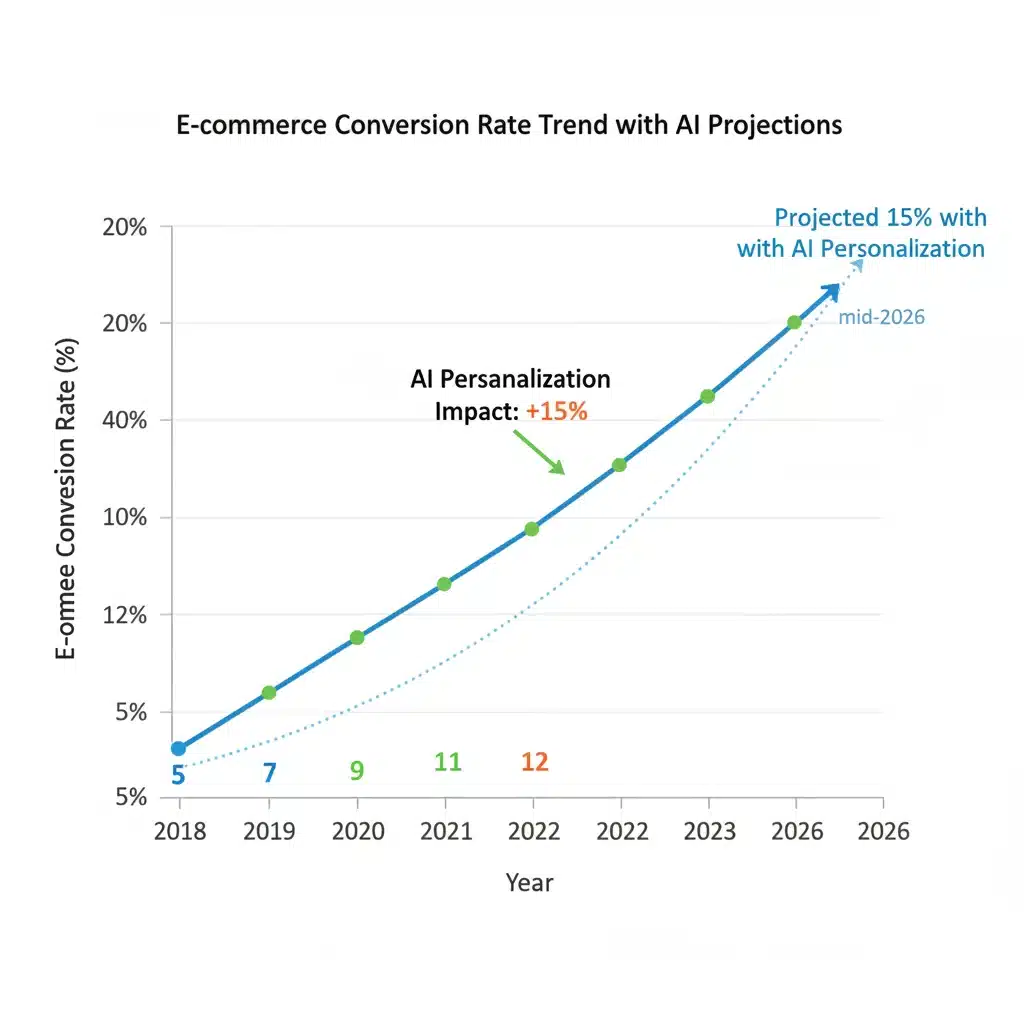
In the fiercely competitive landscape of modern e-commerce, businesses are constantly seeking innovative strategies to captivate customers, enhance their shopping experience, and ultimately, drive sales. The advent of artificial intelligence (AI) has ushered in a new era of possibilities, with AI personalization e-commerce emerging as a transformative force. This isn’t just about showing relevant ads; it’s about creating a truly bespoke journey for every single customer, from the moment they land on your site to post-purchase engagement. Industry experts and forward-thinking businesses are increasingly recognizing the profound impact of AI-driven personalization, with projections indicating a significant 15% uplift in e-commerce conversion rates by mid-2026 for those who effectively implement these advanced strategies.
The promise of a 15% increase in conversion rates is not a mere aspiration; it’s a tangible, achievable goal for businesses willing to invest in and strategically deploy AI technologies. This comprehensive guide will delve into the intricacies of AI personalization e-commerce, exploring its core components, the myriad benefits it offers, practical implementation strategies, and key considerations to ensure your business is well-positioned to capitalize on this powerful trend. We will dissect how AI analyzes vast datasets to understand individual preferences, predict future behaviors, and deliver hyper-relevant content, products, and offers that resonate deeply with each shopper. The journey towards enhanced customer satisfaction and unparalleled conversion success starts now.
The Core of AI Personalization in E-commerce
At its heart, AI personalization e-commerce is about leveraging machine learning algorithms and big data analytics to tailor the online shopping experience to individual users. Unlike traditional segmentation, which groups customers into broad categories, AI allows for a level of granularity that approaches a one-to-one interaction. This sophisticated approach moves beyond basic demographic data, diving deep into behavioral patterns, purchase history, browsing habits, and even real-time contextual information.
Understanding User Behavior Through AI
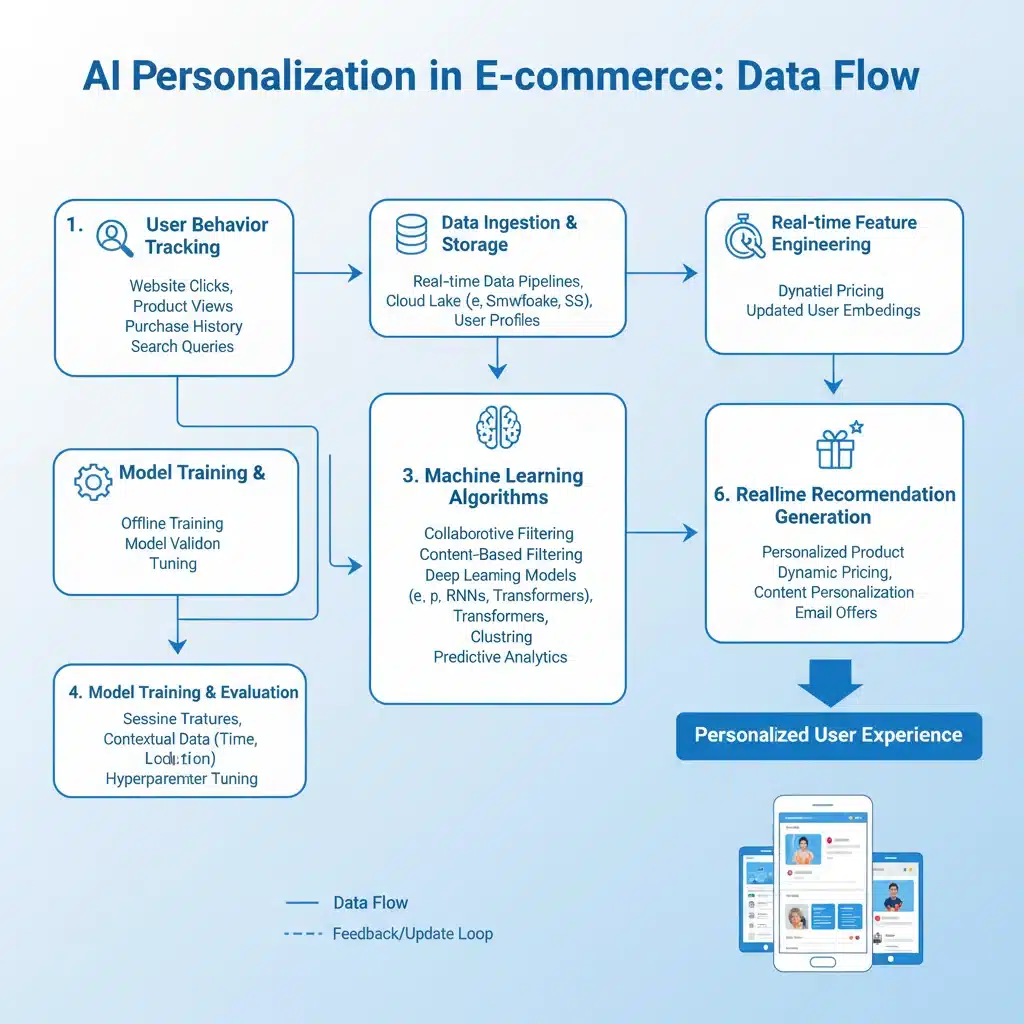
The foundation of effective AI personalization e-commerce lies in its ability to understand and interpret complex user behavior. AI systems continuously collect and analyze data points such as:
- Clickstream Data: The sequence of pages a user visits, the products they view, and the time spent on each page.
- Purchase History: Past purchases, including product categories, brands, price points, and frequency.
- Search Queries: Keywords used within the site’s search bar, revealing specific interests and intent.
- Interaction Data: How users interact with various elements on a page, such as adding items to a cart, wish lists, or engaging with customer service.
- Demographic Information: While not the sole focus, age, gender, and location can provide additional context.
- Real-time Context: Device type, time of day, geographic location, and even weather can influence immediate purchasing decisions.
By processing these colossal datasets, AI algorithms can identify subtle patterns and correlations that human analysts might miss. This deep understanding enables the system to construct a dynamic, evolving profile for each customer, predicting their needs and preferences with remarkable accuracy. This predictive power is what truly differentiates advanced AI personalization e-commerce from simpler recommendation engines.
Machine Learning Algorithms at Play
Various machine learning techniques power AI personalization e-commerce. Collaborative filtering, for example, recommends products based on what similar users have liked or purchased. Content-based filtering suggests items similar to those a user has shown interest in previously. More advanced techniques like deep learning can process unstructured data, such as product reviews and images, to gain an even richer understanding of product attributes and customer sentiment. Reinforcement learning can even adapt recommendations in real-time based on immediate user feedback, constantly optimizing for engagement and conversion. The continuous learning aspect of these algorithms means that the personalization engine becomes more effective over time, refining its predictions and suggestions with every new interaction.
Why AI Personalization is Crucial for E-commerce Success
The benefits of integrating AI personalization e-commerce strategies are multifaceted, extending beyond just conversion rates to encompass customer loyalty, operational efficiency, and competitive advantage.
Enhanced Customer Experience
In today’s experience economy, customers expect more than just products; they demand seamless, intuitive, and relevant interactions. AI personalization e-commerce delivers precisely this by:
- Tailored Product Recommendations: Presenting products that genuinely align with a customer’s tastes and needs, reducing decision fatigue and increasing the likelihood of purchase.
- Personalized Content: Displaying dynamic website content, banners, and promotions that are relevant to the individual, making the site feel uniquely designed for them.
- Dynamic Pricing: Offering personalized discounts or pricing based on customer loyalty, browsing history, or real-time demand, maximizing both customer satisfaction and revenue.
- Optimized Search Results: Reranking search results based on individual preferences, ensuring that the most relevant items appear at the top.
- Personalized Email Marketing: Sending targeted emails with product suggestions, abandoned cart reminders, or special offers that resonate with the recipient.
This level of bespoke interaction fosters a sense of being understood and valued, significantly improving the overall customer journey and building stronger relationships.
Increased Conversion Rates and Average Order Value (AOV)
The most direct and measurable impact of AI personalization e-commerce is on conversion rates. When customers are shown products they are more likely to buy, the path to purchase becomes shorter and smoother. This directly contributes to the projected 15% uplift in conversion rates. Furthermore, by suggesting complementary products or higher-value alternatives, AI can effectively increase the average order value (AOV), boosting overall revenue. For example, if a customer is buying a camera, AI might suggest a compatible lens, a camera bag, or an extended warranty, leading to a larger total sale.
Improved Customer Loyalty and Retention
A personalized experience doesn’t just encourage a single purchase; it cultivates loyalty. When customers consistently find what they need and feel understood by a brand, they are more likely to return. AI personalization e-commerce helps build this loyalty by:
- Anticipating Needs: Proactively suggesting products or services based on past behavior and predicted future needs.
- Personalized Communication: Engaging customers with relevant messages across various touchpoints, from website to email to mobile apps.
- Exclusive Offers: Rewarding loyal customers with personalized deals, making them feel special and appreciated.
High customer retention rates are critical for sustainable growth, and AI plays a pivotal role in achieving this by making each customer feel uniquely catered to.
Reduced Marketing Spend and Increased ROI
By delivering highly targeted and relevant content, AI personalization e-commerce reduces the need for broad, often inefficient, marketing campaigns. Instead of casting a wide net, businesses can focus their efforts on specific customer segments or even individuals with a higher propensity to convert. This precision marketing leads to a more efficient allocation of resources, lower customer acquisition costs (CAC), and a significantly higher return on investment (ROI) for marketing expenditures. Every dollar spent on personalized marketing is more likely to generate a return.
Implementing AI Personalization: A Strategic Roadmap
Successfully integrating AI personalization e-commerce requires a well-thought-out strategy, encompassing data infrastructure, technology adoption, and continuous optimization.
1. Data Collection and Integration
The first and most critical step is establishing a robust data collection and integration strategy. This involves gathering data from all customer touchpoints:
- Website Analytics: Tracking page views, clicks, session duration, and navigation paths.
- CRM Systems: Integrating customer relationship management data, including contact information, purchase history, and customer service interactions.
- Marketing Automation Platforms: Collecting data from email campaigns, ad interactions, and social media engagements.
- Third-Party Data: Optionally enriching internal data with external sources, provided privacy regulations are strictly adhered to.
All this data must be consolidated into a unified customer profile, often within a Customer Data Platform (CDP), to provide a holistic view of each shopper. This single source of truth is indispensable for effective AI personalization e-commerce.
2. Choosing the Right AI Tools and Platforms
The market offers a wide array of AI personalization platforms, ranging from comprehensive suites to specialized tools. When selecting a solution for AI personalization e-commerce, consider:
- Scalability: Can the platform handle your current and future data volumes and user traffic?
- Integration Capabilities: Does it seamlessly integrate with your existing e-commerce platform (e.g., Shopify, Magento, Salesforce Commerce Cloud), CRM, and marketing tools?
- Customization: Does it allow for tailoring algorithms and rules to your specific business needs and customer base?
- Ease of Use: Is the interface intuitive, and does it provide actionable insights without requiring extensive data science expertise?
- Vendor Support and Expertise: Does the vendor offer strong support, training, and a proven track record in AI personalization e-commerce?
Some popular platforms include Salesforce Einstein, Adobe Sensei, Dynamic Yield, and Bloomreach, among others. Many e-commerce platforms also offer built-in AI capabilities that can be a good starting point.
3. Defining Personalization Strategies and Use Cases
Before launching, clearly define what you want to personalize and why. Common use cases for AI personalization e-commerce include:
- Product Recommendations: ‘Customers who bought this also bought,’ ‘Frequently bought together,’ ‘Personalized for you.’
- Homepage Personalization: Dynamic banners, featured products, and content tailored to the returning visitor.
- Category Page Optimization: Reordering products within categories based on individual preferences.
- Search and Navigation Personalization: Adapting search results and navigation menus.
- Email Personalization: Triggered emails, personalized newsletters, and abandonment campaigns.
- Dynamic Pricing and Promotions: Offering individualized discounts or free shipping.
Start with a few high-impact use cases, measure their performance, and then expand your personalization efforts incrementally.
4. A/B Testing and Continuous Optimization
AI personalization e-commerce is not a set-it-and-forget-it solution. Continuous A/B testing is essential to understand what works best for different segments and to refine your personalization strategies. Test different recommendation algorithms, content variations, and placement strategies. Analyze metrics beyond just conversion rates, such as engagement, average order value, and customer lifetime value (CLTV). Use these insights to iterate and optimize your AI models and personalization rules, ensuring your system is constantly learning and improving.
Challenges and Considerations for AI Personalization
While the benefits are substantial, implementing AI personalization e-commerce comes with its own set of challenges that businesses must address proactively.
Data Quality and Privacy
Garbage in, garbage out. The effectiveness of any AI system is directly tied to the quality of the data it processes. Ensuring clean, accurate, and consistent data is paramount. Furthermore, with increasing consumer awareness and stringent regulations like GDPR and CCPA, data privacy is a critical concern. Businesses must be transparent about data collection, obtain explicit consent, and implement robust security measures to protect customer information. A breach of trust can severely undermine any gains from AI personalization e-commerce.
Technical Expertise and Integration Complexity
Implementing sophisticated AI solutions often requires specialized technical expertise, from data scientists to AI engineers. Integrating these new systems with existing legacy infrastructure can also be complex and time-consuming. Businesses may need to invest in upskilling their teams or partnering with external experts to navigate these challenges effectively. The initial investment in technical infrastructure and talent is a significant hurdle for some, but the long-term ROI of AI personalization e-commerce often justifies it.
Avoiding Filter Bubbles and Over-Personalization
While personalization aims to show relevant content, there’s a risk of creating “filter bubbles” where customers are only exposed to products similar to their past interests, potentially stifling discovery and limiting their shopping horizons. Over-personalization can also feel intrusive or even creepy to some users. Striking the right balance between relevance and serendipity, and ensuring a degree of novelty in recommendations, is crucial. AI personalization e-commerce should enhance discovery, not restrict it.
Measuring ROI and Attribution
Accurately measuring the return on investment for AI personalization e-commerce can be challenging. It’s not always straightforward to attribute a conversion directly to a personalized recommendation versus other marketing efforts. Businesses need advanced analytics and attribution models to fully understand the impact of their personalization initiatives. This involves tracking key performance indicators (KPIs) beyond just conversion rates, such as engagement, repeat purchase rates, and customer lifetime value.
The Future Outlook: Beyond 2026
The projected 15% uplift in e-commerce conversion rates by mid-2026 due to AI personalization e-commerce is just the beginning. As AI technologies continue to evolve, we can expect even more sophisticated and seamless personalization experiences.
Predictive Personalization and Proactive Engagement
The future of AI personalization e-commerce will increasingly move towards predictive and proactive engagement. AI won’t just react to current user behavior but will anticipate needs even before the customer expresses them. Imagine an e-commerce site suggesting a winter coat because it knows your location and sees a cold front approaching, or recommending baby products before you even search for them, based on subtle behavioral cues. This level of foresight will revolutionize customer service and sales.
Hyper-Personalization Across All Channels
The goal is to achieve hyper-personalization that extends beyond the website to encompass every customer touchpoint: mobile apps, email, social media, chatbots, and even in-store experiences (for omnichannel retailers). A truly unified customer profile powered by AI will ensure a consistent and personalized journey regardless of the channel. This seamless transition between online and offline experiences will be a hallmark of advanced AI personalization e-commerce.
Ethical AI and Trust
As AI becomes more pervasive, ethical considerations will come to the forefront. Ensuring fairness, transparency, and accountability in AI algorithms will be crucial. Businesses that prioritize ethical AI practices and build trust with their customers will be the ones that thrive. This includes being clear about how data is used and empowering customers with control over their personal information. The long-term success of AI personalization e-commerce hinges on maintaining customer trust.
Conclusion: Seizing the Personalization Opportunity
The evidence is clear: AI personalization e-commerce is no longer a luxury but a strategic imperative for businesses aiming to thrive in the digital age. The promise of a 15% uplift in conversion rates by mid-2026 is a powerful motivator, reflecting the profound impact that tailored customer experiences can have on bottom-line results. By understanding user behavior at an unprecedented level, leveraging advanced machine learning, and implementing thoughtful strategies, e-commerce businesses can unlock significant growth.
While challenges related to data, technology, and ethics exist, the rewards of successful AI personalization far outweigh the hurdles. Businesses that commit to building robust data infrastructures, investing in the right AI tools, and continuously optimizing their personalization efforts will not only meet but likely exceed the projected conversion rate increases. The future of e-commerce is personal, and AI is the key to unlocking its full potential. Embrace AI personalization e-commerce now to secure your competitive edge and build lasting relationships with your customers, driving unprecedented success in the years to come.