Future of E-commerce Logistics: 5 Strategies for 2-Day Delivery in 2026
The Future of E-commerce Logistics in the U.S.: 5 Key Strategies for 2-Day Delivery in 2026
The landscape of e-commerce has been in a perpetual state of evolution, driven by consumer demand for speed, convenience, and reliability. As we approach 2026, the aspiration for consistent 2-day delivery in the U.S. is no longer a luxury but a fundamental expectation. This ambitious goal requires a profound transformation in how goods are stored, processed, and transported. The challenges are multifaceted, ranging from managing vast inventories and navigating complex supply chains to optimizing last-mile delivery and embracing sustainable practices. Businesses that fail to adapt risk being left behind in an increasingly competitive market.
Achieving widespread 2-day delivery by 2026 necessitates strategic foresight and significant investment in innovative solutions. This article delves into the critical strategies that will define the future of e-commerce logistics 2026 in the U.S., enabling businesses to meet and exceed customer expectations. From the integration of advanced technologies like AI and automation to the restructuring of fulfillment networks and the adoption of eco-friendly practices, each strategy plays a pivotal role in shaping the next generation of e-commerce delivery.
The relentless pursuit of faster delivery times has pushed the boundaries of traditional logistics. Consumers, now accustomed to instant gratification, demand not just speed but also transparency and flexibility in their delivery options. This pressure has spurred innovations across the entire supply chain, making e-commerce logistics 2026 a hotbed of technological advancements and strategic reconfigurations. Understanding these shifts is paramount for any business aiming to thrive in the digital marketplace.
1. Hyper-Localized Fulfillment Networks and Micro-Warehousing
The traditional model of large, centralized distribution centers is increasingly proving inadequate for the demands of 2-day delivery across a vast country like the U.S. The future of e-commerce logistics 2026 lies in hyper-localized fulfillment networks. This strategy involves establishing a greater number of smaller, strategically located micro-warehouses and dark stores within or very close to urban and suburban population centers. These facilities act as mini-distribution hubs, significantly reducing the distance goods need to travel to reach the customer’s doorstep.
Micro-warehousing allows for faster order processing and dispatch, cutting down transit times dramatically. Imagine a scenario where a customer in a major city places an order, and the product is already stocked in a micro-warehouse just a few miles away. This proximity makes same-day or next-day delivery not just possible, but highly efficient, paving the way for consistent 2-day delivery. These smaller facilities are often highly automated, utilizing robotics and AI to manage inventory, pick, and pack orders with unparalleled speed and accuracy. The decentralized nature of these networks also offers greater resilience against disruptions, as a problem in one hub won’t cripple the entire operation.
Furthermore, hyper-localized fulfillment can leverage existing retail spaces. Brick-and-mortar stores can be repurposed or partially converted into fulfillment centers, serving both in-store shoppers and online orders. This ‘ship-from-store’ model not only optimizes inventory utilization but also transforms physical stores into valuable assets in the e-commerce logistics 2026 ecosystem. The strategic placement of these micro-hubs is crucial, requiring sophisticated data analytics to identify optimal locations based on population density, demand patterns, and transportation infrastructure. This approach minimizes transportation costs and environmental impact by reducing long-haul shipping, contributing to a more sustainable logistics model.
The development of such networks also fosters stronger regional economies by creating localized job opportunities in logistics and technology. It’s a win-win: faster delivery for customers, increased efficiency for businesses, and economic benefits for communities. The investment in these smaller, agile facilities will be a defining characteristic of successful e-commerce operations in the coming years, fundamentally reshaping how goods move from seller to buyer.
2. Advanced Automation and Robotics in Fulfillment Centers
To achieve the speed and accuracy required for 2-day delivery, especially with the increased volume of online orders, automation and robotics are no longer optional but essential. The future of e-commerce logistics 2026 will see a widespread adoption of advanced automated systems across all stages of fulfillment, from receiving and storage to picking, packing, and sorting.
Robotic process automation (RPA) will streamline repetitive tasks, freeing human workers to focus on more complex and value-added activities. Automated guided vehicles (AGVs) and autonomous mobile robots (AMRs) are already transforming warehouse floors, efficiently transporting goods, assisting with inventory management, and even performing tasks like shelf replenishment. These robots operate 24/7, significantly increasing throughput and reducing the margin of human error. Collaborative robots (cobots) are also becoming more prevalent, working alongside human employees to enhance productivity and safety.
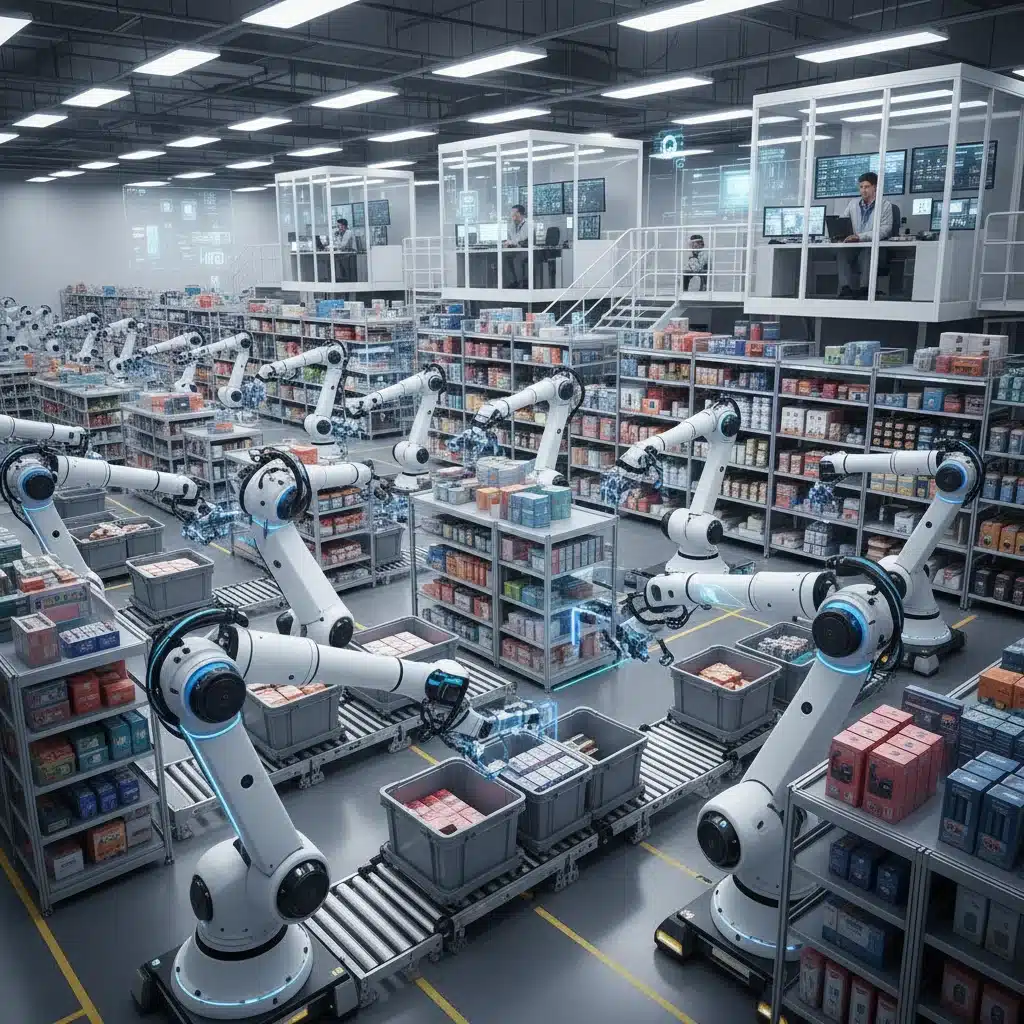
Beyond the warehouse floor, automation extends to sophisticated picking and packing systems. AI-powered vision systems can identify and handle a wide variety of products, from delicate items to irregularly shaped goods, with precision. Automated sortation systems can rapidly direct packages to the correct outbound channels, optimizing the loading process for last-mile delivery. This level of automation is critical for handling peak season surges and maintaining consistent service levels throughout the year, making 2-day delivery a reliable standard rather than an occasional feat.
The integration of artificial intelligence (AI) with these robotic systems takes efficiency to another level. AI algorithms can analyze vast amounts of data to optimize warehouse layouts, predict demand spikes, manage inventory levels dynamically, and even orchestrate the movements of hundreds of robots simultaneously. This intelligent automation minimizes bottlenecks, reduces operational costs, and ensures that products are always where they need to be, when they need to be there, directly supporting the goal of efficient e-commerce logistics 2026.
While the initial investment in such technologies can be substantial, the long-term benefits in terms of increased efficiency, reduced labor costs, and enhanced customer satisfaction make it a compelling strategy for businesses looking to dominate the e-commerce space. Automation ensures scalability, allowing businesses to grow without compromising on delivery speed or quality.
3. AI-Powered Predictive Analytics and Inventory Optimization
One of the biggest challenges in achieving rapid delivery is managing inventory effectively. Having the right product in the right place at the right time is paramount. This is where AI-powered predictive analytics becomes a game-changer for e-commerce logistics 2026. By leveraging machine learning algorithms, businesses can analyze historical sales data, seasonal trends, marketing campaigns, external events (like weather patterns or social media buzz), and even real-time customer behavior to forecast demand with unprecedented accuracy.
Predictive analytics allows companies to anticipate which products will be in high demand and where that demand will originate. This enables proactive inventory placement across the hyper-localized fulfillment network, ensuring that popular items are stocked closer to anticipated customer locations. Instead of reacting to orders, businesses can strategically pre-position inventory, significantly cutting down on order processing and transit times. This not only supports 2-day delivery but can also facilitate same-day delivery in many instances.
Beyond demand forecasting, AI also optimizes inventory levels, preventing both overstocking and understocking. Overstocking ties up capital and occupies valuable warehouse space, while understocking leads to lost sales and customer dissatisfaction due to out-of-stock messages or delayed shipments. AI systems can dynamically adjust inventory thresholds, recommend replenishment orders, and even suggest optimal pricing strategies based on current stock levels and predicted demand. This level of optimization minimizes waste, reduces carrying costs, and improves overall supply chain efficiency.
Furthermore, AI can identify potential supply chain disruptions before they occur, allowing businesses to implement contingency plans. By analyzing data from suppliers, transportation networks, and geopolitical events, AI can flag risks such as delays in raw material shipments, port congestion, or labor shortages. This proactive risk management is crucial for maintaining the smooth flow of goods and ensuring that delivery promises are met consistently, a cornerstone of effective e-commerce logistics 2026.
The insights generated by AI also extend to warehouse operations, optimizing picking routes, slotting strategies, and even employee scheduling to maximize efficiency during peak periods. In essence, AI transforms logistics from a reactive operation into a highly proactive and intelligent system, making rapid and reliable delivery a standard offering.
4. Last-Mile Delivery Innovation and Diversification
The ‘last mile’ – the final leg of a product’s journey from the local distribution hub to the customer’s doorstep – is often the most complex, expensive, and time-consuming part of the entire delivery process. Innovation in last-mile delivery is therefore critical for achieving consistent 2-day delivery by 2026. This involves a diversification of delivery methods and a heavy reliance on technology to optimize routes and improve efficiency.
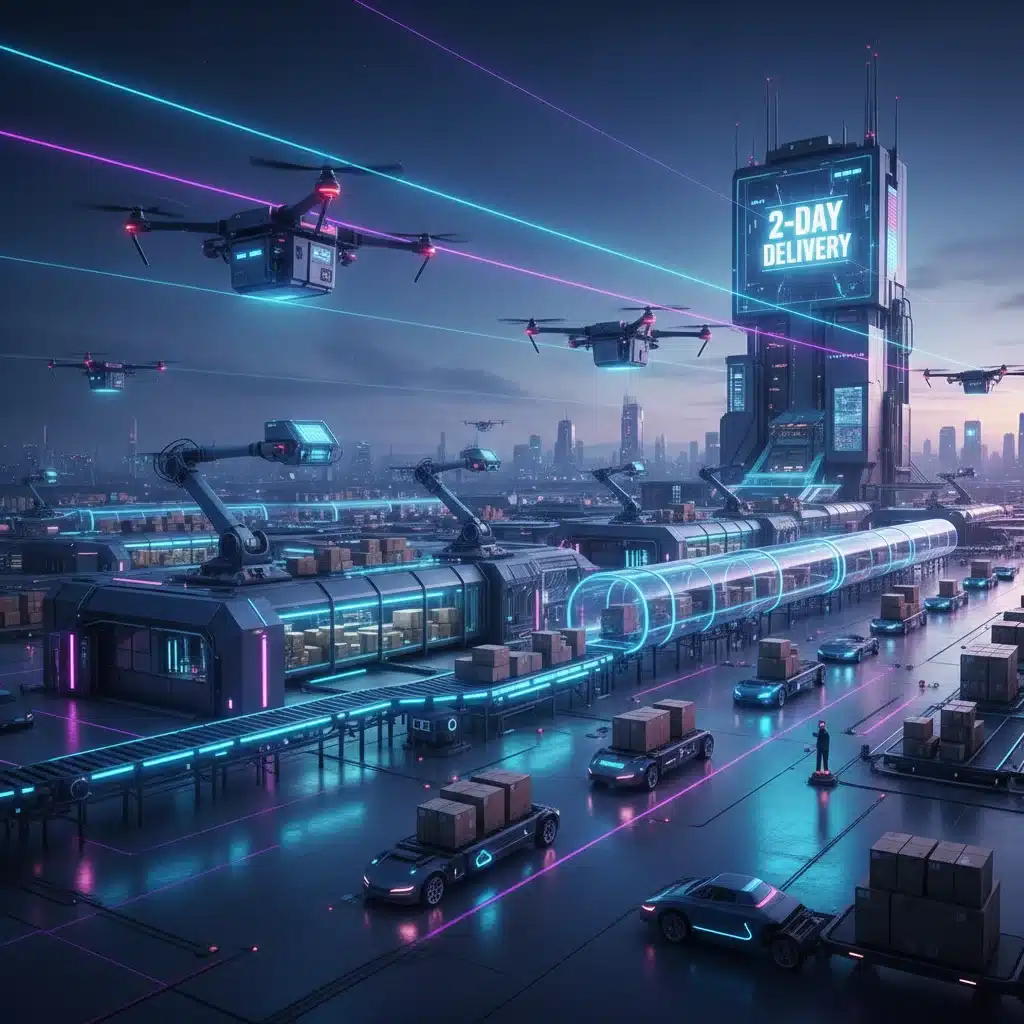
One significant trend is the rise of alternative delivery methods. Drone delivery, while still facing regulatory hurdles, holds immense potential for rapid, autonomous delivery in certain areas, particularly for smaller, lightweight packages. Autonomous ground vehicles (AGVs) and robotic couriers are also being piloted in urban environments, offering efficient, contactless delivery options. These technologies promise to reduce labor costs and increase delivery speed, especially in dense urban areas where traffic congestion is a major issue.
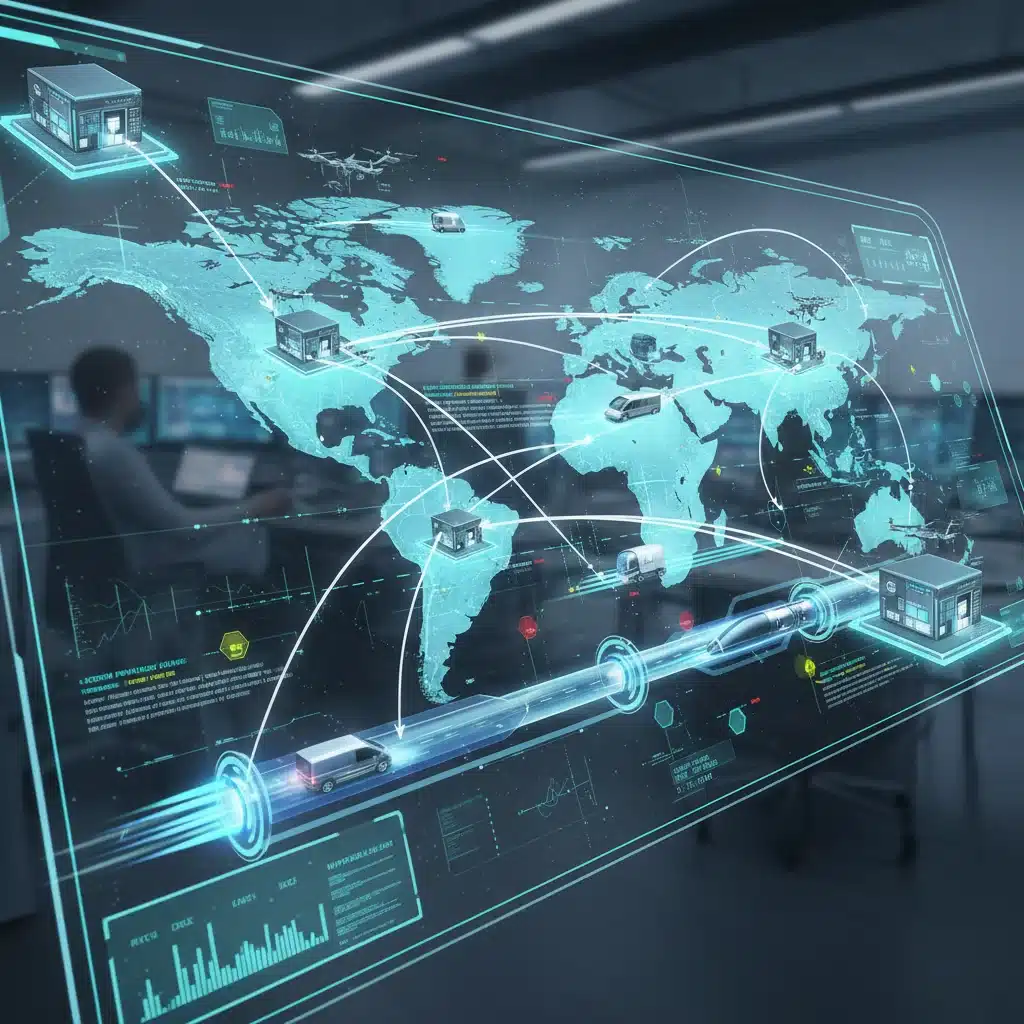
Beyond futuristic solutions, optimization of traditional vehicle-based delivery is paramount. Advanced route optimization software, powered by AI and real-time traffic data, can dynamically adjust delivery routes to avoid congestion, minimize fuel consumption, and ensure timely arrivals. This software can also group deliveries efficiently, consolidating multiple packages into a single trip, further enhancing efficiency. The use of electric vehicles (EVs) for last-mile delivery is also gaining traction, not only for their environmental benefits but also for their lower operating costs and suitability for urban environments.
Customer convenience is also driving innovation. The expansion of parcel lockers and pick-up points (PUPs) in convenient locations like grocery stores, pharmacies, or dedicated locker hubs offers customers greater flexibility and reduces the need for multiple delivery attempts. This ‘click-and-collect’ model alleviates pressure on last-mile carriers and provides a secure alternative for customers who may not be home during delivery hours. Partnerships with local businesses and gig economy drivers are also expanding the capacity and flexibility of last-mile networks, allowing for scalable delivery solutions during peak demand.
Ultimately, the future of e-commerce logistics 2026 in the last mile will be characterized by a hybrid approach, combining traditional methods with cutting-edge technologies and innovative partnerships to create a resilient, efficient, and customer-centric delivery ecosystem.
5. Sustainable Logistics and Green Supply Chain Practices
As consumer awareness of environmental impact grows, and regulatory pressures intensify, sustainable logistics will become an integral part of achieving competitive advantage and meeting customer expectations by 2026. Businesses can no longer afford to view sustainability as a separate initiative but must integrate it into the core of their e-commerce logistics 2026 strategies.
This strategy encompasses several key areas. Firstly, the widespread adoption of electric vehicles (EVs) for both last-mile delivery and potentially for middle-mile transportation will significantly reduce carbon emissions. Companies are investing in large EV fleets and building out the necessary charging infrastructure to support this transition. Beyond EVs, alternative fuels and more fuel-efficient routing (as discussed in last-mile innovation) also play a crucial role in reducing the carbon footprint of transportation.
Secondly, packaging optimization is a major focus. This includes using lighter, more compact, and recyclable materials to reduce waste and shipping volume. Innovative packaging designs that minimize void fill and protect products effectively while being eco-friendly are becoming standard. Companies are also exploring reusable packaging solutions and closed-loop systems to further reduce environmental impact. The goal is to minimize the amount of material used and ensure that what is used can be easily recycled or reused.
Thirdly, optimizing warehouse operations for energy efficiency is vital. This involves using renewable energy sources (solar panels), implementing smart lighting systems, and designing facilities with efficient insulation and climate control. Automation, while primarily driven by efficiency, also contributes to sustainability by optimizing workflows and reducing energy waste. Furthermore, the strategic location of hyper-localized fulfillment centers reduces the overall distance traveled by goods, leading to lower emissions.
Finally, reverse logistics – the process of handling returns – is being re-evaluated through a sustainability lens. Efficient and environmentally friendly processes for returns, including repair, refurbishment, and responsible recycling, minimize waste and maximize resource utilization. Transparent communication about sustainable practices can also enhance brand reputation and resonate with environmentally conscious consumers, transforming sustainability from a cost center into a value driver for e-commerce logistics 2026.
Conclusion: Navigating the Future of E-commerce Logistics
The journey towards consistent 2-day delivery across the U.S. by 2026 is complex but achievable. It requires a holistic approach that integrates technological innovation with strategic operational adjustments and a strong commitment to sustainability. The five strategies outlined – hyper-localized fulfillment, advanced automation, AI-powered predictive analytics, last-mile innovation, and sustainable practices – are not isolated efforts but interconnected components of a future-proof e-commerce logistics 2026 ecosystem.
Businesses that embrace these strategies will be well-positioned to meet the ever-increasing demands of consumers, gain a significant competitive edge, and build resilient, efficient, and environmentally responsible supply chains. The investment in these areas will not only ensure faster delivery but also lead to reduced operational costs, improved customer satisfaction, and a stronger brand reputation. The future of e-commerce logistics is dynamic, challenging, and filled with opportunities for those willing to innovate and adapt.
The next few years will undoubtedly witness a rapid acceleration in the adoption of these advanced logistics solutions. Companies that prioritize data-driven decision-making, invest in cutting-edge technology, and foster a culture of continuous improvement will emerge as leaders in the race for rapid and reliable delivery. The transformation of e-commerce logistics 2026 is not just about speed; it’s about building a smarter, more efficient, and more sustainable way to connect products with people across the nation.