AI Personalization Boosts DTC ROI by 20% in Q3 2026

Beyond the Algorithm: New AI Tools Driving a 20% Increase in DTC Personalization ROI for Q3 2026
In the rapidly evolving landscape of e-commerce, Direct-to-Consumer (DTC) brands are constantly seeking innovative ways to connect with their audience, foster loyalty, and ultimately, drive revenue. The promise of personalization has long been a holy grail for marketers, but its true potential is only now being unlocked through the sophisticated capabilities of Artificial Intelligence (AI). We are on the cusp of a significant transformation, with projections indicating that new AI tools will drive a remarkable 20% increase in DTC personalization ROI for Q3 2026. This isn’t just about tweaking product recommendations; it’s about fundamentally reshaping the customer experience at every touchpoint.
The journey from generic marketing messages to hyper-individualized interactions has been a long one, fraught with data challenges and technological limitations. However, the advent of advanced AI, particularly in machine learning, natural language processing, and predictive analytics, has paved the way for unprecedented levels of customer understanding and engagement. This article delves into the mechanisms behind this projected surge in ROI, exploring the new AI tools that are making it possible, the strategies DTC brands are employing, and the tangible benefits they can expect to reap.
The Evolution of Personalization: From Segmentation to Hyper-Individualization
For years, personalization in marketing primarily revolved around broad segmentation. Marketers would group customers based on demographics, purchase history, or browsing behavior, and then tailor content or offers to these segments. While effective to a degree, this approach often fell short of creating a truly unique and resonant experience for each individual. The inherent limitation was the inability to process and act upon the vast, dynamic datasets generated by modern consumers.
Enter AI. Modern AI tools transcend traditional segmentation by analyzing individual-level data points at scale and in real-time. This allows DTC brands to move beyond ‘who’ a customer is, to ‘what’ they need, ‘when’ they need it, and ‘how’ they prefer to receive it. This hyper-individualization is the cornerstone of the projected 20% ROI increase in DTC personalization. It’s about predicting future behavior, understanding nuanced preferences, and delivering truly contextual experiences that feel less like marketing and more like a helpful, intuitive interaction.
The impact of this shift is profound. Customers are no longer passive recipients of marketing messages; they are active participants in a personalized journey. This enhanced engagement translates directly into higher conversion rates, increased average order value, and crucially, stronger customer loyalty. When a brand consistently delivers relevant, timely, and valuable interactions, it builds trust and cements its place in the customer’s mind. The focus on AI DTC Personalization is not merely a trend; it is becoming a foundational element of successful e-commerce strategy.
Key AI Tools Driving Enhanced DTC Personalization
The 20% ROI projection is not wishful thinking; it’s based on the tangible capabilities of a new generation of AI tools. These technologies are making personalization more effective, scalable, and measurable than ever before. Here are some of the key players:
1. Advanced Machine Learning for Predictive Analytics
Machine learning algorithms are at the heart of modern personalization. They analyze vast quantities of historical and real-time data – including browsing patterns, purchase history, search queries, social media activity, and even customer service interactions – to predict future customer behavior. This includes anticipating which products a customer is likely to buy next, when they might churn, or which offers will resonate most effectively. For DTC brands, this means:
- Dynamic Product Recommendations: Moving beyond simple ‘customers who bought this also bought…’ to highly sophisticated, personalized recommendations based on an individual’s unique preferences and journey.
- Churn Prediction and Prevention: Identifying customers at risk of leaving and triggering personalized retention campaigns with tailored incentives.
- Lifetime Value (LTV) Optimization: Understanding which customer segments have the highest LTV potential and optimizing marketing spend to acquire and retain them.
2. Natural Language Processing (NLP) for Deeper Customer Understanding
NLP allows AI systems to understand, interpret, and generate human language. In the context of DTC personalization, NLP is revolutionary:
- Sentiment Analysis: Gauging customer sentiment from reviews, social media comments, and customer service interactions to understand pain points and preferences at scale.
- Chatbots and Virtual Assistants: Providing instant, personalized support and guidance, answering questions, and even assisting with purchases in a human-like manner. These AI-powered interactions can be tailored to the individual’s history and current needs.
- Content Generation and Optimization: AI can help generate personalized email subject lines, ad copy, and even product descriptions that are optimized for individual customer appeal.
3. Computer Vision for Visual Personalization
While often overlooked in personalization discussions, computer vision is gaining traction, especially for visually driven DTC brands (e.g., fashion, home decor):
- Visual Search: Allowing customers to upload an image of an item they like and find similar products within the brand’s catalog.
- Personalized Visual Content: Tailoring website layouts, ad creatives, and email designs based on a customer’s visual preferences derived from past interactions.
4. Real-time Personalization Engines
The ability to act on data in real-time is paramount for effective personalization. These engines integrate with various customer touchpoints (website, app, email, ads) to deliver instantaneous, contextual experiences:
- Dynamic Website Content: Changing hero banners, product displays, and calls-to-action based on a visitor’s current behavior and known preferences.
- Personalized Email Triggers: Sending perfectly timed emails (e.g., abandoned cart reminders with personalized offers, post-purchase follow-ups with relevant upsells).
- In-App Experiences: Customizing app interfaces and notifications to guide users towards relevant content or actions.
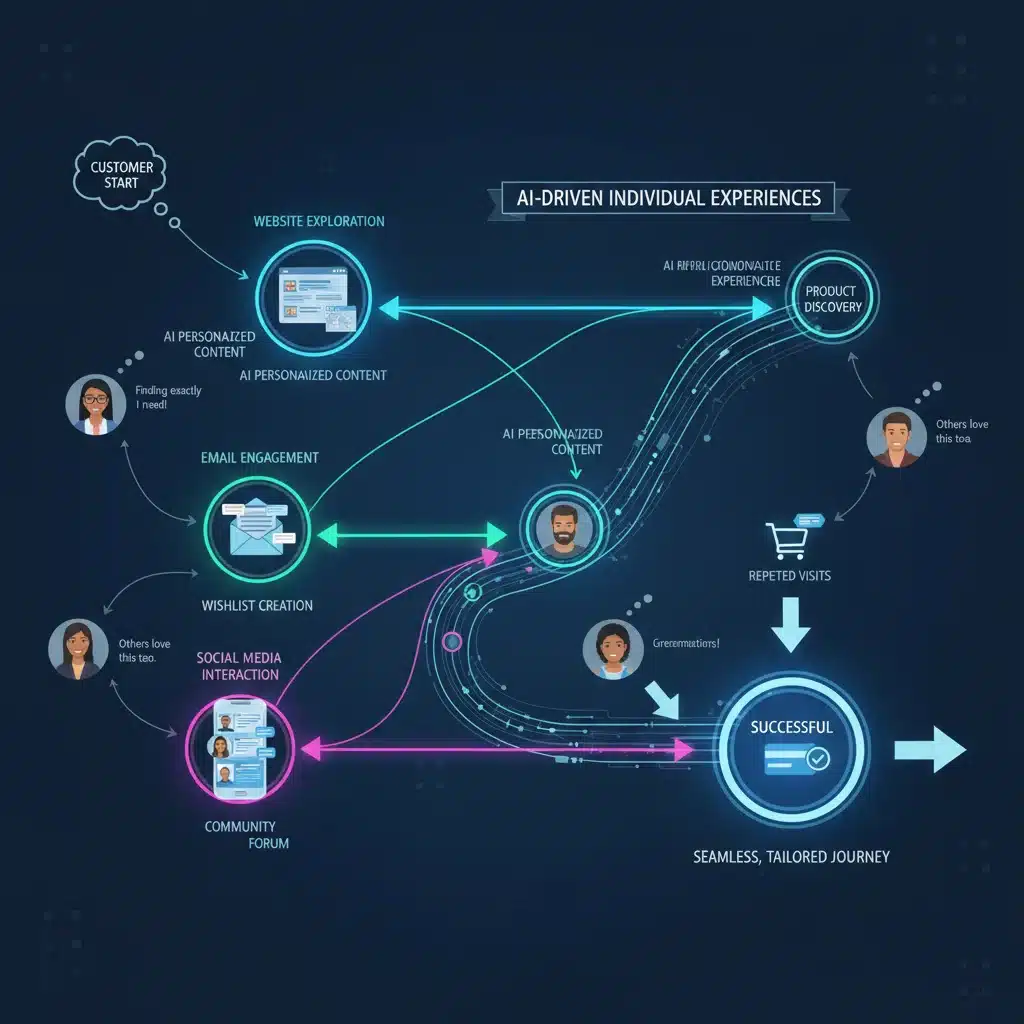
Strategies for Implementing AI-Powered DTC Personalization to Achieve 20% ROI
Achieving a 20% increase in ROI through AI DTC Personalization requires more than just adopting new tools; it demands a strategic overhaul of how brands interact with their customers. Here are key strategies:
1. Unify Customer Data Silos
The first and most critical step is to consolidate customer data from all sources – CRM, e-commerce platform, marketing automation, social media, customer service, etc. A Customer Data Platform (CDP) is often essential here, creating a single, comprehensive view of each customer. Without unified data, AI algorithms cannot build accurate profiles or make effective predictions. This foundational step ensures that every interaction is informed by a complete understanding of the customer’s history and preferences.
2. Define Clear Personalization Goals and Metrics
Before deploying AI, brands must clearly define what they want to achieve with personalization. Is it increased conversion rates, higher average order value, reduced churn, or improved customer lifetime value? Each goal will dictate different AI applications and measurement strategies. For the projected 20% ROI, metrics like conversion rate uplift, incremental revenue per personalized interaction, and improved customer retention rates will be crucial to track.
3. Start Small, Scale Smart
Implementing AI personalization can be complex. It’s often best to start with a specific use case that offers a clear path to measurable ROI. For example, begin with personalized product recommendations on the homepage or targeted abandoned cart emails. Once successful, expand to other areas like dynamic content on product pages, personalized search results, or AI-driven customer service. This iterative approach allows brands to learn, optimize, and build confidence.
4. Embrace A/B Testing and Continuous Optimization
AI models are not set-it-and-forget-it solutions. They require continuous feedback and optimization. A/B testing different personalization strategies and algorithms is vital to understand what resonates best with specific customer segments. AI-driven optimization tools can automate this process, constantly refining models to improve performance and contribute to the 20% ROI goal.
5. Focus on the Entire Customer Journey
Personalization shouldn’t be limited to the purchase phase. It should extend across the entire customer journey, from initial awareness to post-purchase support and re-engagement. This includes:
- Discovery: Personalized ads and content that align with a prospect’s interests.
- Consideration: Tailored website experiences, product comparisons, and trust signals.
- Purchase: Seamless checkout with personalized payment options or expedited shipping offers.
- Post-Purchase: Personalized order updates, product care tips, cross-sell/upsell opportunities, and loyalty program engagement.
Each personalized touchpoint contributes to a superior customer experience, reinforcing brand loyalty and driving repeat purchases, which are vital for achieving the projected ROI.
Measuring the 20% ROI: Key Performance Indicators
To validate the 20% ROI increase for Q3 2026, DTC brands need robust measurement frameworks. Here are the key KPIs to monitor:
- Conversion Rate Uplift: Compare conversion rates of personalized experiences versus non-personalized ones.
- Average Order Value (AOV): Analyze if personalized recommendations or bundles lead to larger purchases.
- Customer Lifetime Value (CLTV): Track the long-term value of customers acquired or retained through personalized strategies.
- Customer Retention Rate: Measure the percentage of customers who return for repeat purchases after experiencing personalized interactions.
- Reduced Customer Acquisition Cost (CAC): More effective personalization can lead to higher conversion rates from marketing efforts, thus lowering CAC.
- Engagement Metrics: Open rates, click-through rates, time on site for personalized content vs. generic content.
- Return on Ad Spend (ROAS): For personalized ad campaigns, measure the revenue generated for every dollar spent.
By meticulously tracking these metrics, DTC brands can not only confirm the 20% ROI increase but also gain insights into further optimization opportunities for their AI DTC Personalization efforts.
Case Studies and Future Outlook
While Q3 2026 is still in the future, early adopters of advanced AI personalization are already seeing impressive results. Fashion retailers are using AI to offer personalized styling advice and predict trend adoption. Beauty brands are creating custom product formulations based on individual skin analysis. Food delivery services are tailoring menu recommendations based on dietary preferences and past orders. These successes lay the groundwork for the broader 20% ROI projection.

Looking ahead, the integration of AI with emerging technologies like augmented reality (AR) and virtual reality (VR) will push personalization even further. Imagine trying on clothes virtually with AI-powered stylists, or customizing home decor in a digital space based on your personal aesthetic, all informed by your historical preferences and predicted future tastes. The boundaries of what’s possible are constantly expanding.
The ethical considerations around data privacy and transparency will also become increasingly important. Brands that build trust by clearly communicating how customer data is used to enhance their experience, and by offering control over personalization settings, will be the ones that truly thrive in this AI-driven future.
Challenges and Considerations
While the benefits of AI-powered personalization are clear, DTC brands must also be aware of potential challenges:
- Data Quality and Quantity: AI models are only as good as the data they are fed. Poor data quality or insufficient data can lead to inaccurate predictions and ineffective personalization.
- Integration Complexity: Integrating various AI tools with existing e-commerce platforms, CRMs, and marketing automation systems can be technically complex and require significant investment.
- Talent Gap: There is a growing need for data scientists, AI engineers, and marketing strategists who understand how to effectively leverage these advanced tools.
- Over-Personalization and ‘Creepiness’ Factor: Brands must strike a delicate balance. Too much personalization can feel intrusive or ‘creepy’ to customers. Transparency and providing opt-out options are crucial.
- Maintaining Brand Voice: While AI can generate content, ensuring it aligns with the brand’s unique voice and values requires careful oversight.
Addressing these challenges proactively will be key to unlocking the full potential of AI DTC Personalization and achieving the ambitious 20% ROI target.
Conclusion: The Future is Personal, and AI-Driven
The direct-to-consumer market is intensely competitive, and standing out requires more than just a great product. It requires a profound understanding of each customer and the ability to deliver experiences that are uniquely tailored to their needs and desires. The new generation of AI tools, encompassing advanced machine learning, NLP, and real-time engines, is making this level of personalization not just possible, but highly profitable.
The projection of a 20% increase in DTC personalization ROI for Q3 2026 is a testament to the transformative power of AI. Brands that embrace these technologies, strategically integrate them into their operations, and continuously optimize their approaches will be the ones to dominate the future of e-commerce. It’s a future where every customer interaction is meaningful, every recommendation is relevant, and every purchase is a result of a truly personal connection. For DTC brands, the time to invest in AI-driven personalization is not tomorrow, but today.