Data Privacy Regulations 2026: US Retailers’ Path to Compliance & Trust
Data Privacy Regulations in 2026: How US Retailers Are Achieving 100% Compliance While Boosting Trust
The digital age has ushered in an era of unprecedented data collection, especially within the retail sector. Every click, every purchase, every interaction leaves a digital footprint, a valuable asset for businesses but also a sensitive one for consumers. As we look towards 2026, the landscape of retail data privacy in the United States is more complex and critical than ever before. Retailers are no longer just selling products; they are also custodians of vast amounts of personal information, and with that custodianship comes immense responsibility and an evolving regulatory framework.
For US retailers, navigating the intricate web of federal and state-level data privacy regulations is not merely a legal obligation but a strategic imperative. The goal is not just to avoid hefty fines but to build unshakeable customer trust, foster loyalty, and ultimately, drive sustainable growth. This comprehensive guide will delve into the anticipated state of data privacy regulations in 2026, explore the challenges and opportunities for retailers, and outline actionable strategies to achieve 100% compliance while simultaneously elevating customer confidence.
The Evolving Landscape of US Data Privacy Regulations
Unlike the European Union’s unified General Data Protection Regulation (GDPR), the United States has adopted a patchwork approach to data privacy. While federal laws like COPPA (Children’s Online Privacy Protection Act) and HIPAA (Health Insurance Portability and Accountability Act) address specific sectors, a comprehensive federal privacy law akin to GDPR has yet to materialize. This absence has led to a proliferation of state-level privacy laws, each with its nuances and requirements, creating a significant challenge for retailers operating across state lines.
Key State-Level Privacy Laws Impacting Retail in 2026
By 2026, several key state laws will continue to shape the retail data privacy environment, with more states likely to introduce their own versions. Understanding these is fundamental:
- California Consumer Privacy Act (CCPA) / California Privacy Rights Act (CPRA): The trailblazer in US data privacy, the CCPA, significantly expanded consumer rights regarding their personal information. The CPRA, effective January 1, 2023, further strengthened these rights, introducing the California Privacy Protection Agency (CPPA) and expanding the definition of sensitive personal information. Retailers must be acutely aware of consumers’ rights to know, delete, correct, and opt-out of the sale or sharing of their data.
- Virginia Consumer Data Protection Act (VCDPA): Effective January 1, 2023, the VCDPA grants Virginia residents similar rights to those in California, though with some differences in scope and enforcement. It applies to businesses that conduct business in Virginia or produce products or services targeted to Virginia residents and process personal data of at least 100,000 consumers or control or process personal data of at least 25,000 consumers and derive over 50% of gross revenue from the sale of personal data.
- Colorado Privacy Act (CPA): Also effective July 1, 2023, the CPA mirrors many aspects of the VCDPA and CPRA, granting Colorado consumers rights related to access, deletion, and opt-out. It emphasizes data minimization and purpose limitation.
- Utah Consumer Privacy Act (UCPA): Effective December 31, 2023, the UCPA is considered more business-friendly than its California, Virginia, and Colorado counterparts, offering fewer opt-out rights and a higher threshold for applicability.
- Connecticut Data Privacy Act (CTDPA): Effective July 1, 2023, the CTDPA closely aligns with the VCDPA and CPA, providing Connecticut residents with robust privacy rights and imposing obligations on data controllers and processors.
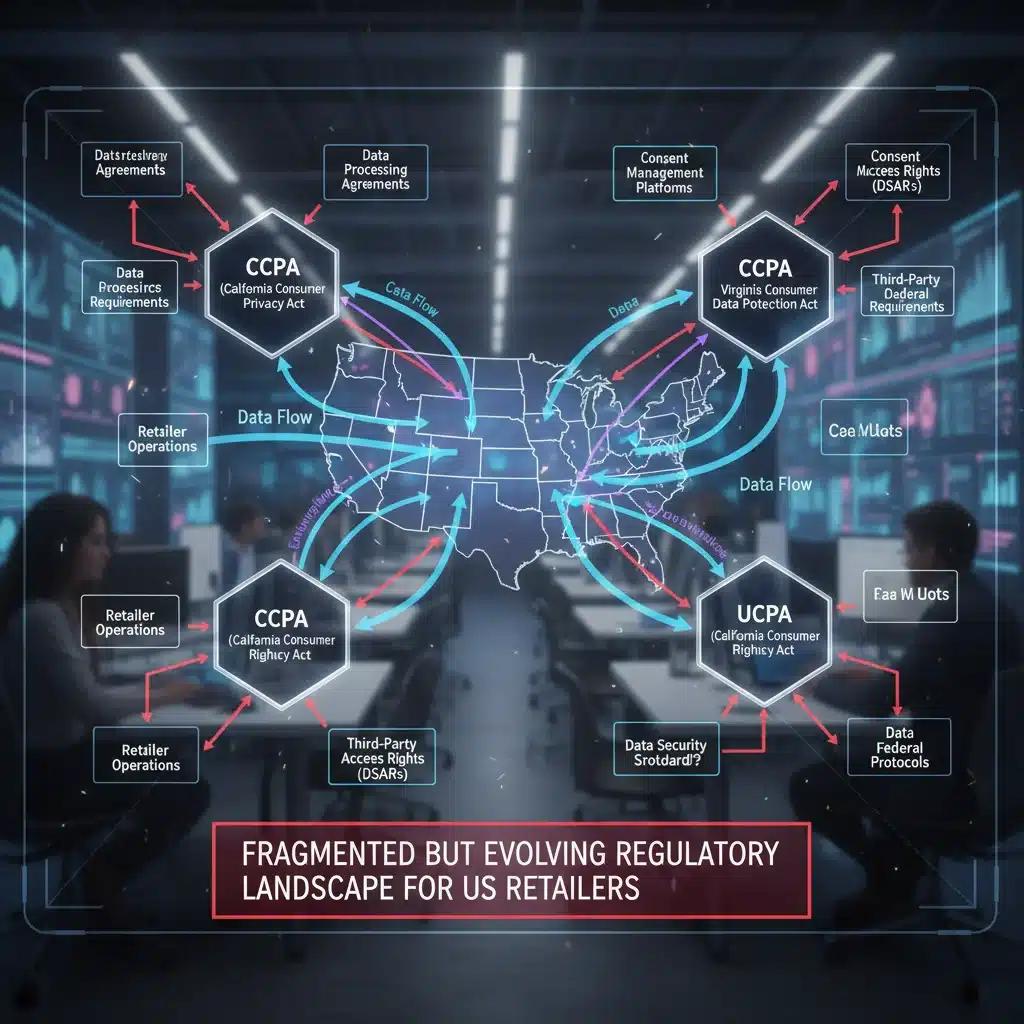
The trend is clear: more states are enacting their own privacy laws, leading to a fragmented regulatory landscape. This means retailers need a robust, adaptable privacy program that can address varying requirements, rather than a one-size-fits-all approach.
Challenges for US Retailers in Achieving 100% Compliance
The journey to 100% retail data privacy compliance in 2026 is fraught with challenges. Retailers, particularly those with a significant online presence and multi-state operations, face a formidable task:
1. Regulatory Complexity and Fragmentation
The primary challenge is the sheer volume and diversity of state laws. Each law has different thresholds for applicability, definitions of personal data, consumer rights, consent requirements, and enforcement mechanisms. Harmonizing these disparate requirements into a single, cohesive compliance strategy is incredibly difficult and resource-intensive.
2. Data Silos and Data Mapping
Many retailers operate with legacy systems and fragmented data architectures, leading to data silos. Personal data might reside in various departments—marketing, sales, customer service, logistics—often without a clear, centralized view. Achieving compliance requires comprehensive data mapping to understand what data is collected, where it is stored, how it is used, and who has access to it.
3. Consent Management and Preference Centers
Obtaining, managing, and respecting consumer consent is a cornerstone of modern privacy laws. Retailers must implement robust consent management platforms (CMPs) and preference centers that allow consumers to easily grant, modify, or revoke consent for different types of data processing. This includes everything from marketing communications to the sale of personal data.
4. Third-Party Vendor Management
Retailers rarely operate in isolation. They rely on a vast ecosystem of third-party vendors for everything from payment processing and cloud hosting to advertising and analytics. Each of these vendors might process consumer data, making retailers responsible for ensuring their compliance. Due diligence, robust data processing agreements (DPAs), and continuous monitoring of vendor practices are essential.
5. Data Security and Breach Notification
Privacy and security are inextricably linked. Retailers must implement strong technical and organizational measures to protect personal data from unauthorized access, loss, or disclosure. In the event of a data breach, timely and accurate notification to affected individuals and regulatory authorities is critical, often under strict deadlines that vary by state.
6. Employee Training and Awareness
Human error remains a leading cause of data breaches and compliance failures. Employees at all levels, from store associates to IT professionals, must be adequately trained on data privacy policies, procedures, and best practices. A strong privacy-aware culture is indispensable for achieving and maintaining compliance.
Opportunities: Boosting Trust and Gaining a Competitive Edge
While the challenges are significant, viewing data privacy solely as a burden misses a crucial point: it presents a powerful opportunity. For forward-thinking US retailers, achieving robust retail data privacy compliance in 2026 is not just about avoiding penalties; it’s about building deeper customer relationships and gaining a significant competitive advantage.
1. Enhanced Customer Trust and Loyalty
In an era of increasing data breaches and privacy concerns, consumers are more discerning than ever about who they trust with their personal information. Retailers who demonstrate a clear commitment to privacy, transparency, and data protection will differentiate themselves. This trust translates directly into increased customer loyalty, repeat purchases, and positive brand perception.
2. Improved Brand Reputation
A strong privacy posture can significantly enhance a retailer’s brand reputation. Conversely, privacy missteps or breaches can severely damage a brand, leading to reputational harm that takes years to repair. Proactive privacy compliance is a vital component of brand management.
3. More Effective Data Utilization
Compliance often forces retailers to rationalize their data collection practices. By focusing on data minimization and collecting only what is necessary and relevant, retailers can improve the quality and utility of their data. Clean, well-managed, and ethically sourced data leads to more accurate analytics, more personalized marketing (with consent), and better business decisions.
4. Operational Efficiencies
While initial compliance efforts can be resource-intensive, establishing clear data governance policies, automated consent management, and streamlined data access/deletion processes can lead to long-term operational efficiencies. A well-organized data privacy program can reduce manual effort and mitigate risks.
5. Future-Proofing Business Operations
The trend towards stronger data privacy regulations is undeniable. By investing in comprehensive compliance now, retailers are future-proofing their operations against upcoming legislative changes and evolving consumer expectations. This proactive approach positions them as leaders rather than reactive followers.
Strategies for 100% Retail Data Privacy Compliance in 2026
Achieving and maintaining 100% retail data privacy compliance by 2026 requires a multi-faceted, strategic approach. Here are key strategies retailers should implement:
1. Conduct a Comprehensive Data Audit and Mapping
The first step is to understand your data. Conduct a thorough audit to identify all personal data collected, processed, stored, and shared. This includes data from online interactions, in-store purchases, loyalty programs, customer service inquiries, and third-party sources. Create detailed data maps that show data flows, storage locations, retention periods, and who has access.
2. Implement a Robust Data Governance Framework
Establish clear policies and procedures for data collection, usage, storage, and deletion. This framework should define roles and responsibilities, data classification standards, and incident response plans. Appoint a Data Protection Officer (DPO) or privacy lead, even if not legally mandated, to oversee privacy initiatives.
3. Prioritize Privacy by Design and Default
Integrate privacy considerations into the design of all new systems, products, and services from the outset. This means building in data minimization, pseudonymization, and strong security measures from the ground up, rather than as an afterthought. Make privacy the default setting for consumers wherever possible.
4. Strengthen Consent Management and Transparency
Develop user-friendly consent management platforms (CMPs) that empower consumers to make informed choices about their data. Provide clear, concise, and easily accessible privacy notices that explain what data is collected, why, how it’s used, and with whom it’s shared. Make it simple for consumers to exercise their privacy rights (access, deletion, correction, opt-out).
5. Enhance Data Security Measures
Invest in state-of-the-art security technologies and practices. This includes:
- Encryption: Encrypt data both in transit and at rest.
- Access Controls: Implement strict role-based access controls (RBAC) to ensure only authorized personnel can access sensitive data.
- Regular Audits and Penetration Testing: Continuously assess your security posture to identify and address vulnerabilities.
- Employee Training: Regular security awareness training to prevent phishing, social engineering, and other human-factor risks.
- Incident Response Plan: A well-defined and regularly tested plan for detecting, responding to, and recovering from data breaches.
6. Vet Third-Party Vendors Thoroughly
Before engaging any third-party vendor that will process personal data, conduct comprehensive due diligence. This includes assessing their security practices, compliance certifications, and contractual obligations. Ensure robust Data Processing Agreements (DPAs) are in place that clearly outline responsibilities, liability, and data protection standards. Regularly audit vendor compliance.
7. Invest in Continuous Employee Training and Culture Building
Privacy is everyone’s responsibility. Implement ongoing, mandatory privacy training for all employees, tailored to their specific roles. Foster a culture where privacy is understood as a core business value, not just a compliance checkbox. Encourage employees to be privacy advocates.
8. Leverage Technology for Compliance Automation
The scale of data and the complexity of regulations make manual compliance unsustainable. Invest in privacy-enhancing technologies (PETs) and privacy management software. These tools can automate tasks such as:
- Data discovery and mapping
- Consent management
- Data Subject Access Request (DSAR) fulfillment
- Automated policy enforcement
- Breach notification management
9. Stay Informed and Adaptable
The retail data privacy landscape is dynamic. Designate a team or individual responsible for monitoring new legislative developments, enforcement actions, and industry best practices. Build flexibility into your privacy program to adapt quickly to changes.
The Role of Artificial Intelligence and Emerging Technologies
As retailers increasingly adopt AI, machine learning, and other emerging technologies for personalization, inventory management, and customer service, the privacy implications become even more pronounced. By 2026, understanding how these technologies collect, process, and infer personal data will be critical. Retailers must ensure that their AI systems are developed and deployed with privacy-by-design principles, avoiding biased data sets and ensuring transparency in algorithmic decision-making.
For example, using facial recognition for personalized store experiences or predictive analytics for customer behavior requires careful consideration of consent, data minimization, and potential discriminatory impacts. Integrating privacy impact assessments (PIAs) into the development lifecycle of these technologies will be paramount.

Case Studies: Retailers Leading the Way
While specific examples of 100% compliance are hard to quantify publicly, several large retailers have made significant strides in their privacy programs, offering valuable lessons:
- Major E-commerce Platforms: Many leading e-commerce giants have invested heavily in robust consent management, transparent privacy policies, and comprehensive DSAR fulfillment processes. Their success often lies in dedicated privacy teams and significant technology investments.
- Luxury Brands: Some luxury retailers, understanding the value of exclusivity and trust, have adopted stringent privacy practices, often going beyond legal requirements to offer enhanced data control to their high-value customers, thereby reinforcing brand loyalty.
- Subscription Box Services: These retailers often collect highly personal preference data. The most successful ones have built their business models around explicit consent and clear value propositions for data sharing, demonstrating how privacy can be integrated into the core service offering.
These examples highlight that a strong commitment from leadership, significant investment in technology and personnel, and a customer-centric approach are common threads among those making progress in retail data privacy.
Conclusion: Privacy as a Pillar of Retail Success in 2026
The year 2026 will mark a pivotal moment for retail data privacy in the United States. The fragmented regulatory landscape will likely continue to evolve, with more states enacting their own laws, potentially pushing towards a federal standard. For US retailers, achieving 100% compliance is not just a regulatory hurdle but a fundamental shift in how they engage with their customers and manage their most valuable asset: data.
By embracing privacy by design, implementing robust data governance, prioritizing security, fostering transparency, and leveraging technology, retailers can navigate this complex environment successfully. More importantly, by treating data privacy as a core business value rather than a compliance burden, retailers can transform it into a powerful differentiator, earning profound customer trust, enhancing brand reputation, and securing a sustainable competitive advantage in an increasingly data-driven world. The future of retail success in 2026 is inextricably linked to a steadfast commitment to consumer privacy.