Supply Chain Resilience: US Digital Retailers Post-Q1 2026 Disruptions
Building Unbreakable Retail Supply Resilience: Lessons from Q1 2026 for US Digital Retailers
The dawn of 2026 brought with it a cascade of unforeseen challenges that tested the very foundations of global commerce. For US digital retailers, the first quarter of the year, Q1 2026, became a crucible, forging new strategies and exposing vulnerabilities within their intricate supply chains. From geopolitical tensions escalating unexpectedly to unforeseen natural disasters impacting key manufacturing hubs, and even novel cyber-attacks disrupting logistics networks, the disruptions were multifaceted and severe. This period served as a stark reminder that in the hyper-connected, fast-paced world of e-commerce, retail supply resilience isn’t merely a buzzword; it’s an imperative for survival and sustained growth.
Prior to Q1 2026, many digital retailers operated on principles of lean inventory and just-in-time delivery, strategies optimized for cost efficiency and reduced warehousing expenses. While effective in stable environments, these approaches proved brittle when confronted with systemic shocks. The immediate aftermath saw stockouts, significant delays, and a scramble to fulfill customer orders, leading to lost revenue, damaged customer trust, and a frantic reassessment of existing operational models. The lessons learned during this tumultuous quarter are now driving a fundamental shift in how US digital retailers approach their supply chains, moving towards a more robust, agile, and resilient framework.
The Core Challenge: Understanding the Nature of Q1 2026 Disruptions
To truly build retail supply resilience, it’s crucial to first dissect the nature of the disruptions experienced in Q1 2026. This wasn’t a single point of failure but a complex interplay of various factors, each exacerbating the others:
Geopolitical Instability and Trade Route Interruptions
Rising geopolitical tensions in several critical manufacturing regions led to unexpected export restrictions, increased customs scrutiny, and even temporary closures of vital shipping lanes. This directly impacted the availability of raw materials and finished goods, particularly for retailers heavily reliant on international sourcing. The Suez Canal, a perennial choke point, experienced renewed congestion due to unforeseen events, further extending transit times and increasing shipping costs.
Unprecedented Natural Disasters
Several regions crucial for global manufacturing and logistics faced severe and unseasonal weather events and natural disasters. Earthquakes in Southeast Asia disrupted electronics production, while severe flooding in parts of Europe halted ground transportation, affecting inbound components and outbound finished products. These events highlighted the need for geographic diversification of suppliers and manufacturing sites.
Cybersecurity Breaches Targeting Logistics Infrastructure
A disturbing trend emerged with sophisticated cyber-attacks specifically targeting large logistics providers and port authorities. These attacks crippled operational systems, causing widespread delays in cargo processing, tracking, and delivery. For digital retailers, this meant a loss of visibility into their shipments and an inability to accurately communicate delivery times to customers, eroding confidence.
Labor Shortages and Workforce Instability
Lingering effects from previous economic shifts, coupled with new health-related mandates and evolving labor market dynamics, contributed to significant labor shortages across the supply chain. From factory workers to truck drivers and warehouse staff, the lack of adequate personnel created bottlenecks at every stage, slowing down production, transportation, and last-mile delivery.
Sudden Shifts in Consumer Demand Patterns
The cumulative effect of these disruptions, combined with evolving economic sentiment, led to unpredictable shifts in consumer buying behavior. Some product categories saw unprecedented spikes in demand, while others experienced sharp declines. Retailers struggled to adapt their inventory and fulfillment strategies quickly enough, leading to both overstocking and stockouts simultaneously.
Pillars of New Retail Supply Resilience Strategies
In response to these challenges, US digital retailers are now systematically implementing a range of strategies to fortify their supply chains. These strategies can be broadly categorized into several key pillars:
1. Enhanced Visibility and Real-time Data Analytics
The most immediate lesson from Q1 2026 was the critical need for comprehensive, real-time visibility across the entire supply chain. Many retailers realized they lacked granular data on the status of their inventory, shipments, and supplier performance once goods left their immediate control. This lack of visibility left them blind to impending disruptions.
- End-to-End Tracking Technologies: Adoption of advanced IoT sensors, GPS tracking, and blockchain for immutable record-keeping is becoming standard. This allows retailers to monitor goods from raw material sourcing through manufacturing, transit, warehousing, and final delivery.
- AI-Powered Predictive Analytics: Leveraging artificial intelligence and machine learning to analyze vast datasets – including weather patterns, geopolitical news, economic indicators, and historical disruption data – enables retailers to predict potential bottlenecks and risks before they materialize. This allows for proactive re-routing, alternative sourcing, or inventory adjustments.
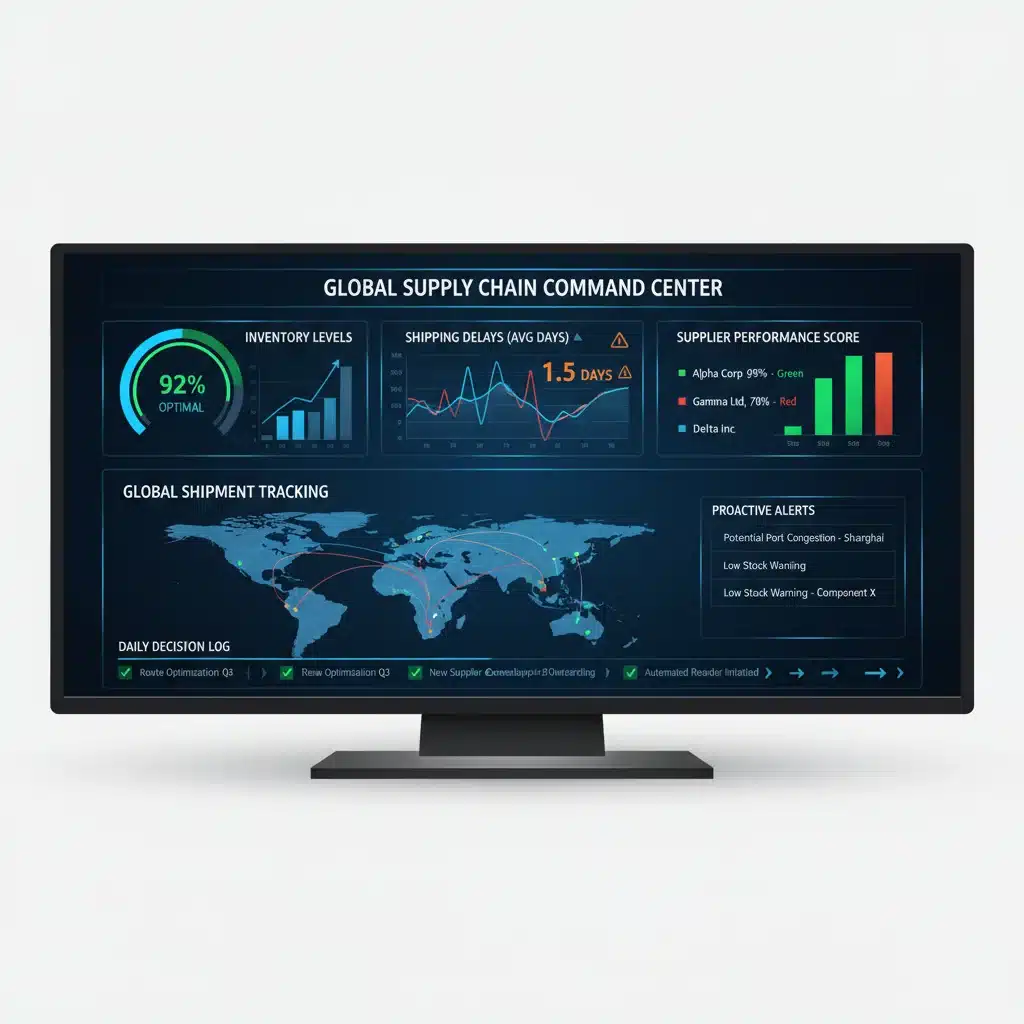
- Control Tower Solutions: Implementation of integrated supply chain control towers that aggregate data from multiple systems (ERP, WMS, TMS, supplier portals) into a single, actionable dashboard. These platforms provide a holistic view of operations, facilitating rapid decision-making and cross-functional collaboration.
The ability to see, understand, and react quickly to changes is paramount for retail supply resilience.
2. Diversification of Sourcing and Manufacturing
Over-reliance on single suppliers or concentrated manufacturing regions proved to be a major vulnerability. The new paradigm emphasizes diversification to mitigate geographic and political risks.
- Multi-Sourcing Strategies: Identifying and onboarding multiple suppliers for critical components and finished goods, ideally from different geographic locations. This reduces the impact of disruptions affecting a single region or vendor.
- Nearshoring and Reshoring: A growing trend of bringing manufacturing closer to the point of consumption, either within the US (reshoring) or to neighboring countries (nearshoring). While potentially increasing production costs, this significantly reduces lead times, transportation risks, and exposure to international shipping volatility.
- Strategic Inventory Buffers: Moving away from ultra-lean inventory models to incorporate strategic safety stock for critical items. This buffer acts as a shock absorber during unexpected supply interruptions, ensuring continuity of sales. The challenge here is balancing the cost of holding inventory against the risk of stockouts.
- Supplier Relationship Management (SRM): Building stronger, more collaborative relationships with key suppliers. This includes sharing forecasts, co-investing in technology, and developing joint contingency plans. A transparent and trusting relationship allows for better communication and faster problem-solving during crises.
3. Agility and Flexibility in Logistics and Fulfillment
A rigid logistics network is a fragile one. Digital retailers are now focusing on building flexibility into their transportation and fulfillment operations.
- Multi-Modal Transportation: Utilizing a mix of shipping methods (air, sea, rail, road) and carriers to avoid over-reliance on any single mode or provider. If one route or carrier is disrupted, alternatives can be quickly activated.
- Distributed Fulfillment Networks: Expanding warehousing and fulfillment centers to multiple locations, closer to end-customers. This not only speeds up delivery but also localizes inventory, making it less susceptible to large-scale disruptions affecting a single hub. Micro-fulfillment centers in urban areas are gaining traction.
- Dynamic Routing and Re-routing: Employing logistics software that can dynamically adjust shipping routes and carrier assignments in real-time based on traffic, weather, port congestion, and other disruptive events. This minimizes delays and optimizes delivery efficiency.
- Last-Mile Innovation: Investing in diverse last-mile delivery options, including partnerships with local couriers, crowd-sourced delivery platforms, and exploring autonomous delivery solutions where feasible. This reduces reliance on traditional postal services or single large carriers.
4. Robust Risk Management and Contingency Planning
Proactive risk assessment and detailed contingency planning are no longer optional but fundamental components of retail supply resilience.
- Scenario Planning: Regularly conducting ‘what-if’ analyses for various disruption scenarios (e.g., major port closure, factory fire, cyber-attack) to understand potential impacts and pre-plan responses. This includes identifying alternative suppliers, logistics routes, and communication protocols.
- Supply Chain Mapping: Thoroughly mapping out the entire supply chain, including tier-2 and tier-3 suppliers, to identify hidden dependencies and potential single points of failure that might not be immediately obvious.
- Cybersecurity Fortification: Strengthening cybersecurity measures not just within the retailer’s own IT infrastructure but also extending to key supply chain partners. This includes regular audits, penetration testing, and employee training on cyber hygiene.
- Insurance and Financial Hedging: Reviewing and updating insurance policies to ensure adequate coverage for supply chain disruptions. Exploring financial hedging strategies to mitigate currency fluctuations or unexpected cost increases for raw materials.
5. Technology Adoption and Digital Transformation
Technology is the enabler for almost all the aforementioned strategies. Digital transformation of the supply chain is accelerating.
- Cloud-Based Platforms: Migrating to cloud-based supply chain management (SCM) systems offers scalability, accessibility, and real-time collaboration capabilities that traditional on-premise systems cannot match.
- Automation and Robotics: Increased automation in warehouses and fulfillment centers, including robotic picking, packing, and sorting, reduces reliance on manual labor, improves efficiency, and enhances resilience to labor shortages.
- Blockchain for Transparency: Utilizing blockchain technology to create an immutable, transparent record of transactions and product movements across the supply chain. This enhances trust, traceability, and helps in quickly identifying the source of issues.
- AI and Machine Learning: Beyond predictive analytics, AI is being deployed for demand forecasting optimization, inventory management, automated order placement, and even quality control, leading to more intelligent and adaptive supply chains.
The Human Element: Collaboration and Talent Development
While technology and processes are crucial, the human element remains indispensable for building retail supply resilience. The Q1 2026 disruptions highlighted the importance of skilled personnel and strong collaborative networks.
- Cross-Functional Teams: Breaking down silos between departments like procurement, logistics, sales, and IT. Cross-functional teams are better equipped to respond holistically to disruptions, sharing information and coordinating efforts effectively.
- Talent Development and Retention: Investing in training and upskilling supply chain professionals to equip them with the analytical, technological, and problem-solving skills needed in a dynamic environment. Retaining experienced talent is crucial for institutional knowledge and rapid response.
- Supplier Collaboration and Partnerships: Moving beyond transactional relationships with suppliers to foster genuine partnerships. This includes sharing data, jointly developing innovation, and working together on risk mitigation strategies. A strong partner ecosystem is a resilient one.
- Customer Communication: In times of disruption, transparent and proactive communication with customers is vital. Digital retailers learned the hard way that managing expectations and providing timely updates, even bad news, helps preserve customer loyalty.

Sustainability and Ethical Sourcing: An Intertwined Imperative
Beyond the immediate financial and operational impacts, Q1 2026 also underscored the growing importance of sustainability and ethical sourcing as integral components of retail supply resilience. Consumers are increasingly demanding transparency and ethical practices, and disruptions often expose vulnerabilities in these areas.
- Sustainable Sourcing Practices: Prioritizing suppliers who adhere to environmental standards, use renewable energy, and minimize waste. This not only aligns with consumer values but also often leads to more stable and less resource-dependent supply chains.
- Ethical Labor Practices: Ensuring that all suppliers uphold fair labor practices and safe working conditions. Disruptions can sometimes exacerbate exploitation, making it critical for retailers to have strong oversight and auditing processes.
- Circular Economy Principles: Exploring opportunities for product take-back programs, recycling, and upcycling to reduce reliance on virgin materials and create more closed-loop supply chains. This builds resilience by reducing external dependencies.
- Traceability for Accountability: Implementing robust traceability systems not just for operational efficiency but also to verify the ethical and sustainable credentials of products from origin to consumer. This builds trust and protects brand reputation during crises.
Measuring and Continuously Improving Retail Supply Resilience
Building resilience is not a one-time project; it’s an ongoing journey of assessment, adaptation, and improvement. US digital retailers are developing sophisticated metrics to measure their retail supply resilience and identify areas for continuous enhancement.
- Key Performance Indicators (KPIs) for Resilience: Beyond traditional metrics like on-time delivery and cost, new KPIs are emerging. These include:
- Supplier Redundancy Ratio: The percentage of critical components or products with multiple qualified suppliers.
- Lead Time Variability: Measuring the consistency of lead times from different suppliers and routes.
- Inventory Buffer Levels: Tracking the amount of safety stock held for critical items relative to demand.
- Disruption Recovery Time: The average time taken to restore normal operations after a significant supply chain disruption.
- Supply Chain Risk Score: A composite score based on geopolitical stability, natural disaster risk, cyber threat levels, and supplier financial health.
- Regular Audits and Stress Tests: Periodically auditing suppliers and logistics partners for compliance with resilience standards. Conducting simulated stress tests to evaluate the supply chain’s ability to withstand various disruption scenarios.
- Feedback Loops and Learning: Establishing mechanisms for collecting feedback from all stakeholders – internal teams, suppliers, and customers – on the effectiveness of resilience strategies. Using post-disruption analysis to identify what worked, what didn’t, and how to improve.
- Investment in R&D: Allocating resources to research and development of new technologies, materials, and processes that can further enhance supply chain resilience. This includes exploring advanced manufacturing techniques like 3D printing for on-demand production.
The Future of Retail Supply Chains: A Paradigm Shift
The lessons from Q1 2026 have undeniably ushered in a paradigm shift for US digital retailers. The era of optimizing solely for cost and efficiency is being replaced by a more balanced approach that prioritizes retail supply resilience, agility, and sustainability. This doesn’t mean abandoning cost-effectiveness, but rather integrating it within a broader framework of risk management and strategic preparedness.
The retailers who emerge stronger from this period will be those who have embraced digital transformation, fostered deep collaboration with their partners, diversified their networks, and built a culture of continuous learning and adaptation. The supply chain is no longer just a cost center; it is a strategic asset, a competitive differentiator, and the backbone of customer trust in the digital age. By proactively addressing the vulnerabilities exposed in Q1 2026, US digital retailers are not just preparing for the next disruption; they are fundamentally reshaping the future of commerce.
The journey towards an unbreakable supply chain is complex and ongoing, but the commitment to retail supply resilience is now a non-negotiable aspect of success in the dynamic world of e-commerce. The investments made today in technology, partnerships, and strategic planning will define the leaders of tomorrow, ensuring they can not only weather any storm but also thrive in an increasingly unpredictable global marketplace.