US Retail Subscription Models: 12% Market Share Increase by 2026
The retail sector is in a constant state of evolution, driven by technological advancements and shifting consumer behaviors. Among the most impactful trends redefining how consumers shop and businesses operate, the rise of US Retail Subscriptions stands out prominently. Projections indicate a remarkable surge, with subscription models expected to capture an additional 12% market share by the end of 2026. This isn’t just a fleeting fad; it’s a fundamental shift towards recurring revenue, enhanced customer loyalty, and personalized experiences that are reshaping the very fabric of retail.
The Unstoppable Ascent of US Retail Subscriptions
For years, the subscription model was largely confined to magazines, newspapers, and utility services. However, the digital age has democratized this approach, extending its reach across virtually every retail category. From gourmet coffee and curated fashion boxes to pet supplies and software-as-a-service (SaaS) for everyday consumers, the options are endless. This explosion in availability, coupled with changing consumer preferences, has propelled US Retail Subscriptions into a dominant position within the market.
The projected 12% market share increase by 2026 is a testament to the model’s inherent strengths. It signifies a growing consumer appetite for convenience, personalization, and value. For businesses, it represents a potent strategy for building predictable revenue streams, fostering deep customer relationships, and gaining invaluable insights into purchasing habits. The pandemic further accelerated this trend, as consumers sought reliable and contactless ways to acquire goods and services, solidifying the subscription model’s place in the modern retail ecosystem.
What’s Driving This Phenomenal Growth?
Several key factors are contributing to the rapid expansion of US Retail Subscriptions:
- Convenience and Automation: Consumers are increasingly time-poor and value services that simplify their lives. Subscriptions eliminate the need for repeated purchasing decisions, ensuring essential or desired products arrive regularly without effort.
- Personalization and Curation: Modern subscription services excel at tailoring offerings to individual preferences. Through data analytics and AI, companies can curate highly relevant products, making customers feel understood and valued.
- Cost Savings and Value Perception: Many subscriptions offer bundled pricing or exclusive discounts, presenting a perceived cost saving compared to one-off purchases. The consistent delivery of value reinforces this perception.
- Discovery and Novelty: Curation boxes, in particular, tap into the human desire for discovery. Receiving new and exciting products regularly creates an element of surprise and delight, fostering engagement.
- Building Community and Brand Loyalty: Successful subscription brands often cultivate strong communities around their products, turning customers into advocates. This sense of belonging is a powerful driver of loyalty and retention.
- Predictable Supply Chain: For businesses, subscriptions offer a clearer picture of demand, allowing for more efficient inventory management, reduced waste, and optimized logistics.
The Archetypes of US Retail Subscriptions: A Deeper Dive
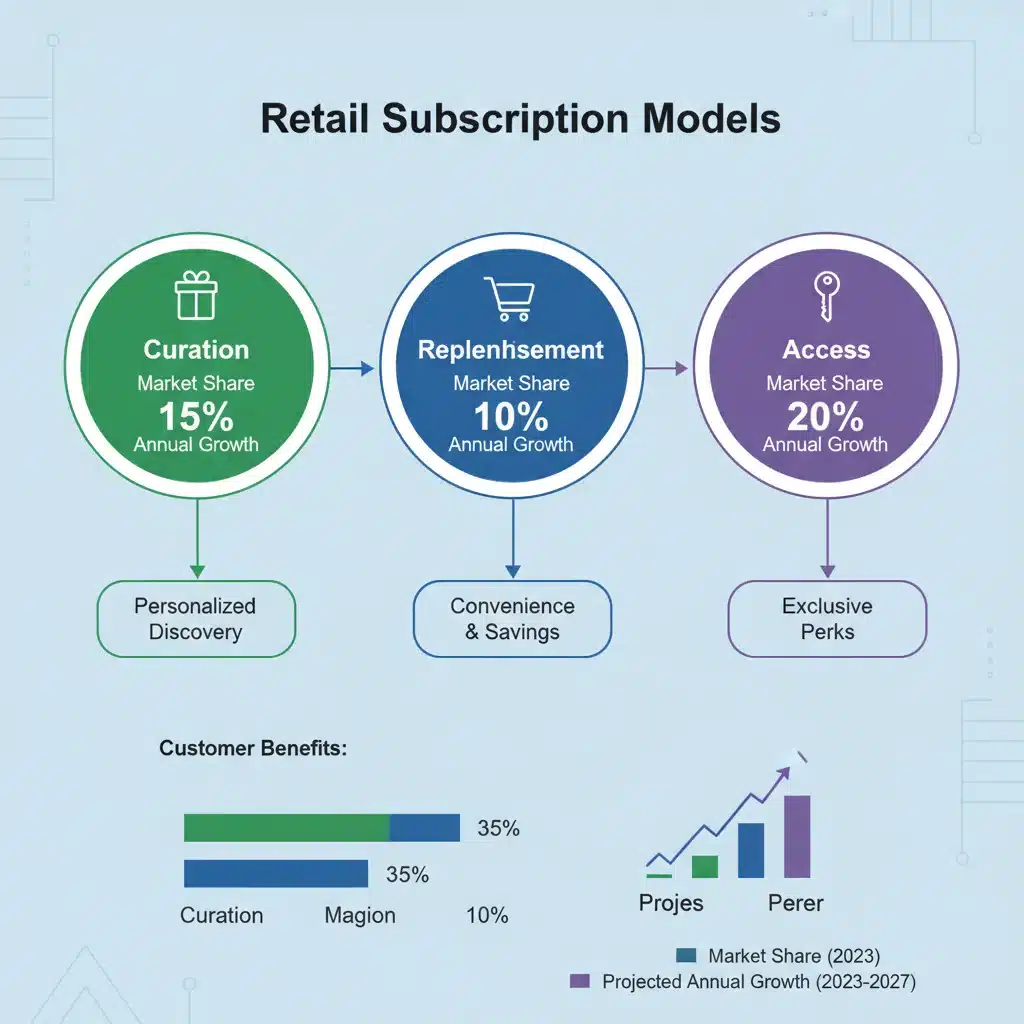
While the umbrella term ‘subscription’ is broad, it encompasses distinct models, each with its own advantages and target audience. Understanding these archetypes is crucial for both businesses looking to launch a subscription service and consumers evaluating their options.
1. Replenishment Subscriptions: The Convenience Kings
This is arguably the most straightforward and widely adopted model. Replenishment subscriptions focus on delivering essential, consumable products on a recurring schedule. Think razor blades, coffee, pet food, cleaning supplies, or vitamins. The primary value proposition here is convenience and ensuring consumers never run out of critical items.
- Examples: Dollar Shave Club, Chewy’s Auto-Ship, Amazon Subscribe & Save.
- Key Benefits for Consumers: Time-saving, consistent supply, often discounted pricing.
- Key Benefits for Businesses: Highly predictable recurring revenue, strong customer retention, simplified inventory forecasting.
2. Curation Subscriptions: The Discovery Engines
Curation subscriptions offer a curated selection of products, often new or niche, based on a subscriber’s preferences, style, or interests. These services aim to surprise and delight, introducing customers to items they might not have discovered otherwise.

- Examples: Stitch Fix (personal styling), Birchbox (beauty samples), Blue Apron (meal kits), BarkBox (dog toys and treats).
- Key Benefits for Consumers: Personalized discovery, exposure to new brands/products, element of surprise.
- Key Benefits for Businesses: High engagement, robust data collection for personalization, strong brand building, premium pricing potential.
3. Access Subscriptions: The Exclusive Club
Access subscriptions grant members exclusive benefits, discounts, or content for a recurring fee. The value here lies not in receiving physical products regularly, but in the privileged access it provides. This model often complements traditional retail offerings.
- Examples: Amazon Prime (free shipping, streaming, exclusive deals), Thrive Market (discounted organic groceries), PlayStation Plus (gaming access and discounts).
- Key Benefits for Consumers: Exclusive deals, early access, premium content, enhanced service.
- Key Benefits for Businesses: Drives overall sales, builds strong loyalty, creates a distinct competitive advantage, generates high-margin revenue.
4. Hybrid Models: Blending the Best
Many successful US Retail Subscriptions are adopting hybrid models, combining elements from two or even all three archetypes. For instance, a meal kit service might offer curated recipes (curation) delivered weekly (replenishment) along with exclusive access to cooking classes (access). This flexibility allows businesses to cater to a broader range of customer needs and preferences, maximizing appeal and retention.
The Economic Impact: Why 12% Matters
A 12% market share increase projected for US Retail Subscriptions by 2026 is not merely a statistical blip; it represents billions of dollars shifting within the retail economy. This growth signifies:
- Increased Revenue Predictability: For businesses, recurring revenue is gold. It allows for better financial planning, investment in growth, and resilience during economic fluctuations.
- Enhanced Customer Lifetime Value (CLTV): Subscribers, by their nature, tend to have higher CLTV than one-time purchasers. The ongoing relationship fosters repeat business and reduces customer acquisition costs over time.
- Data-Driven Decision Making: Subscription models generate a wealth of data on consumer preferences, usage patterns, and feedback. This data is invaluable for product development, marketing optimization, and personalized experiences.
- Competitive Differentiation: In a crowded retail landscape, a well-executed subscription model can be a significant differentiator, attracting and retaining customers who seek convenience and value.
- Innovation and Niche Markets: The subscription model lowers the barrier to entry for many entrepreneurs, allowing them to serve niche markets with highly specialized products and services that might not be viable through traditional retail channels.
Challenges and Considerations for Businesses
While the growth trajectory for US Retail Subscriptions is promising, businesses venturing into or expanding within this space must navigate several challenges:
- Customer Churn: High churn rates can quickly erode the profitability of a subscription service. Businesses must continuously focus on delivering value, engaging subscribers, and offering flexible options to minimize cancellations.
- Logistics and Fulfillment: Managing recurring shipments, especially for physical products, requires robust logistics, efficient inventory management, and reliable delivery partners.
- Personalization at Scale: As subscriber bases grow, maintaining a high degree of personalization becomes complex. Advanced analytics and automation are essential to deliver tailored experiences efficiently.
- Pricing Strategy: Finding the sweet spot for pricing – one that offers value to the customer while ensuring profitability for the business – is crucial. This often involves tiered options and flexible plans.
- Building Trust and Transparency: Consumers need to trust that they are getting fair value and that their subscriptions are easy to manage, pause, or cancel. Hidden fees or complicated cancellation processes can quickly damage a brand’s reputation.
- Market Saturation: As more businesses enter the subscription space, differentiation becomes increasingly important. Unique value propositions and superior customer experience are key to standing out.
Strategies for Success in the Subscription Economy
For businesses looking to capitalize on the growth of US Retail Subscriptions, several strategic imperatives emerge:
1. Deeply Understand Your Customer
The foundation of any successful subscription service is a profound understanding of the target customer’s needs, pain points, and desires. What problems can your subscription solve? What value can it consistently deliver? Conduct thorough market research, analyze customer data, and solicit feedback incessantly.
2. Focus on Value Proposition and Differentiation
In a competitive market, your subscription needs a clear and compelling value proposition. What makes it unique? Is it superior curation, unparalleled convenience, exclusive access, or exceptional quality? Clearly articulate this differentiation to potential subscribers.
3. Prioritize Customer Experience (CX)
A seamless and positive customer experience is paramount for retention. This includes an intuitive sign-up process, easy management of subscriptions (pausing, skipping, canceling), responsive customer support, and consistent delivery of high-quality products or services. Each touchpoint is an opportunity to reinforce value.
4. Leverage Data for Personalization
Collect and analyze data to continuously refine your offerings and personalize the subscriber journey. Use insights to recommend relevant products, tailor content, and anticipate needs. AI and machine learning tools can be invaluable in scaling personalization efforts.
5. Implement Flexible Subscription Options
Offer flexibility in terms of subscription frequency, product choices, and pausing/skipping options. This empowers customers and reduces the likelihood of churn due to feeling locked in or overwhelmed.
6. Embrace Community Building
Foster a sense of community among your subscribers. This could involve exclusive online forums, social media groups, member-only events, or loyalty programs. A strong community enhances engagement and creates a powerful network effect.
7. Optimize Logistics and Fulfillment
Invest in robust backend systems for inventory management, order processing, and shipping. Partner with reliable logistics providers to ensure timely and accurate deliveries. Efficient operations are crucial for customer satisfaction and cost control.
8. Continuously Innovate and Evolve
The subscription landscape is dynamic. Businesses must be prepared to innovate their product offerings, pricing models, and marketing strategies based on market trends and customer feedback. Stagnation is a recipe for churn.
The Future of US Retail Subscriptions
Looking ahead, the 12% market share increase is likely just another milestone in the ongoing evolution of US Retail Subscriptions. We can expect several trends to shape its future:
- Hyper-Personalization: Advancements in AI and data analytics will enable even more granular personalization, potentially leading to ‘subscriptions of one’ where every aspect is tailored to an individual.
- Sustainability Focus: Environmentally conscious consumers will increasingly favor subscription services that prioritize sustainable sourcing, packaging, and delivery methods.
- Experiential Subscriptions: Beyond physical products, more services will offer access to unique experiences, workshops, or digital content as part of their subscription package.
- Integration with Smart Home Devices: Imagine appliances automatically reordering consumables when they run low, seamlessly integrated with your subscription services.
- B2B Subscriptions: The model’s success in consumer retail is inspiring similar growth in the business-to-business (B2B) sector, offering recurring solutions for businesses of all sizes.
- Dynamic Pricing Models: Expect more sophisticated pricing strategies that adapt to usage, loyalty, or market conditions, offering even greater value and flexibility.
The shift towards US Retail Subscriptions is more than just a business model; it’s a reflection of evolving consumer expectations for convenience, value, and personalized engagement. Retailers who embrace this transformation, focusing on customer-centricity, innovation, and operational excellence, are best positioned to thrive in the years to come. The projected 12% market share increase is a clear signal: the subscription economy is here to stay, and its influence will only continue to grow, redefining the retail experience for millions of Americans.
As the market matures, success will hinge not just on acquiring subscribers, but on retaining them through consistent value delivery and an exceptional customer journey. Businesses that master these elements will not only capture a larger share of the market but will also build enduring relationships with their customers, securing their place in the future of retail.