DTC Supply Chain Optimization: 8% Cost Reduction with Micro-Hubs by 2026

In the rapidly evolving landscape of direct-to-consumer (DTC) commerce, businesses are constantly seeking innovative strategies to gain a competitive edge. One of the most critical battlegrounds for profitability and customer satisfaction is the DTC supply chain. As consumer expectations for speed and convenience continue to escalate, traditional fulfillment models are proving increasingly inadequate. The solution? A strategic pivot towards localized micro-hubs, a revolutionary approach poised to reduce fulfillment costs by a remarkable 8% and significantly enhance operational efficiency by 2026.
This comprehensive guide delves into the intricacies of optimizing your DTC supply chain through the adoption of micro-hubs. We will explore the challenges faced by modern DTC brands, the transformative potential of localized distribution, and a step-by-step roadmap for successful implementation. Our goal is to equip you with the knowledge and insights needed to navigate this paradigm shift, ensuring your business not only survives but thrives in the competitive e-commerce arena.
The Evolving Landscape of the DTC Supply Chain: Challenges and Opportunities
The direct-to-consumer model has exploded in popularity, bypassing traditional retail intermediaries and allowing brands to connect directly with their customers. While this offers immense benefits in terms of brand control and direct feedback, it also places unprecedented pressure on the DTC supply chain. Consumers today expect instant gratification, demanding faster shipping, transparent tracking, and seamless returns. Meeting these expectations while maintaining profitability is a delicate balancing act.
Key Challenges Facing DTC Brands:
- Rising Fulfillment Costs: The cost of warehousing, picking, packing, and shipping continues to climb, eating into profit margins. Last-mile delivery, in particular, is a significant expense.
- Customer Expectation for Speed: Two-day shipping is now the norm, and next-day or even same-day delivery is becoming a differentiator. This puts immense strain on logistics.
- Inventory Management Complexity: Managing inventory across multiple channels and potentially multiple fulfillment centers requires sophisticated systems and foresight.
- Scalability Issues: Rapid growth can quickly overwhelm an existing supply chain infrastructure, leading to delays and customer dissatisfaction.
- Environmental Concerns: Consumers are increasingly conscious of the environmental impact of their purchases, pushing brands to adopt more sustainable logistics practices.
These challenges, while formidable, also present opportunities for innovation. Brands that proactively address these pain points by reimagining their DTC supply chain can unlock significant competitive advantages, not just in cost savings but also in customer loyalty and brand reputation.
Introducing Localized Micro-Hubs: A Game Changer for DTC Fulfillment
Localized micro-hubs represent a strategic decentralization of the traditional fulfillment model. Instead of relying on one or two large, centralized distribution centers, micro-hubs are smaller, strategically located facilities positioned closer to end customers, typically within urban or densely populated suburban areas. These hubs act as miniature warehouses or cross-docking points, enabling faster order processing and significantly reducing last-mile delivery times and costs.
How Micro-Hubs Transform the DTC Supply Chain:
- Proximity to Customers: By bringing inventory closer to the customer, micro-hubs drastically cut down on transit times, making same-day or next-day delivery feasible and cost-effective.
- Reduced Last-Mile Costs: Shorter delivery routes mean lower fuel consumption, fewer vehicle miles, and optimized driver schedules, leading to substantial savings in the most expensive part of the delivery journey.
- Improved Customer Experience: Faster delivery speeds directly translate to higher customer satisfaction, increased repeat purchases, and stronger brand loyalty.
- Enhanced Inventory Agility: Micro-hubs allow for more agile inventory deployment, responding quickly to local demand fluctuations and reducing the need for costly expedited shipping from a central warehouse.
- Scalability and Flexibility: Brands can scale their fulfillment operations more granularly by adding or removing micro-hubs as needed, adapting to market changes without overhauling their entire infrastructure.
- Sustainability Benefits: Shorter delivery routes contribute to a smaller carbon footprint, aligning with growing consumer demand for eco-friendly practices.
The concept of micro-hubs is not entirely new, drawing inspiration from urban logistics and dark stores, but its application within the DTC supply chain is gaining unprecedented traction as a definitive strategy for future growth and efficiency.
The 8% Fulfillment Cost Reduction: A Tangible Goal for 2026
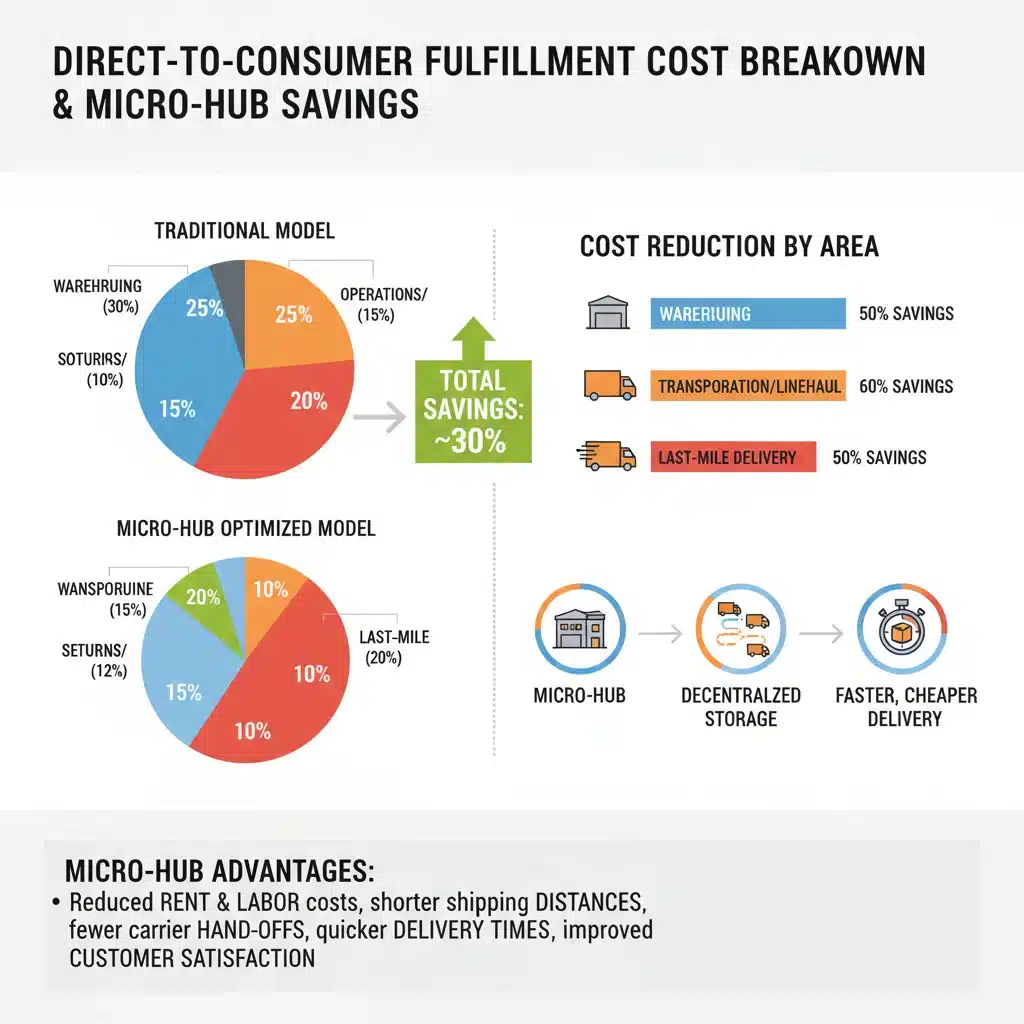
The promise of an 8% reduction in fulfillment costs by 2026 is not an arbitrary figure; it is an achievable target for DTC brands that strategically implement localized micro-hubs. This reduction stems from a combination of factors that directly impact the most significant cost drivers in the DTC supply chain.
Where the Savings Come From:
- Transportation Efficiencies: The most substantial savings come from optimizing last-mile delivery. By shortening delivery distances, brands can reduce fuel costs, vehicle maintenance, and driver labor hours. Consolidating deliveries within smaller geographic zones also improves route density.
- Reduced Expedited Shipping: With inventory closer to customers, the need for expensive expedited shipping from a central warehouse dramatically decreases, leading to significant cost avoidance.
- Optimized Labor Utilization: Micro-hubs can be designed for highly efficient pick-and-pack operations, often with automated or semi-automated systems, leading to better labor utilization compared to sprawling central warehouses.
- Lower Inventory Holding Costs (Potentially): While the initial setup might involve more locations, optimized inventory placement can lead to a reduction in overall inventory holding costs by minimizing stockouts and overstocking across the network.
- Reduced Returns Costs: Faster, more accurate deliveries can lead to fewer returns due to damaged goods or incorrect orders. Localized return processing at micro-hubs can also streamline the reverse logistics process.
Achieving this 8% reduction requires a holistic approach, integrating advanced analytics, robust inventory management systems, and a clear understanding of customer demand patterns. The initial investment in setting up micro-hubs will be offset by these long-term operational savings, making it a financially sound strategic move for any forward-thinking DTC brand.
Designing Your Micro-Hub Network: Strategic Considerations
Implementing a micro-hub strategy for your DTC supply chain is not a one-size-fits-all endeavor. It requires careful planning, data-driven decision-making, and a deep understanding of your customer base and product characteristics.
Key Steps in Designing Your Network:
- Demand Analysis and Geographic Mapping:
- Customer Density: Identify areas with high customer concentration and order volume. These are prime candidates for micro-hub locations.
- Order Profiles: Analyze average order value, product mix, and seasonality to determine optimal inventory levels for each hub.
- Delivery Zones: Define realistic delivery zones for each potential micro-hub, aiming for a balance between coverage and efficiency.
- Site Selection and Infrastructure:
- Location Accessibility: Choose sites with good access to major transportation routes and proximity to customer delivery points.
- Size and Layout: Micro-hubs don’t need to be massive. Focus on efficient layouts for receiving, storage, picking, packing, and dispatch.
- Technology Integration: Ensure the chosen sites can accommodate necessary technology, such as warehouse management systems (WMS), automation, and IoT devices.
- Inventory Allocation Strategy:
- Fast-Moving SKUs: Prioritize stocking popular, fast-moving items in micro-hubs to maximize speed and efficiency.
- Regional Preferences: Consider stocking products that have specific regional demand in relevant micro-hubs.
- Dynamic Allocation: Implement systems that allow for dynamic inventory allocation based on real-time demand and predictive analytics.
- Transportation and Last-Mile Integration:
- Carrier Partnerships: Forge strong relationships with local and regional last-mile carriers that can integrate seamlessly with your micro-hub operations.
- Fleet Management (if applicable): If operating your own fleet, optimize routing and scheduling for maximum efficiency from each hub.
- Returns Management: Design a clear and efficient process for handling returns through the micro-hub network.
The success of your micro-hub strategy hinges on meticulous planning and continuous optimization. It’s an iterative process that benefits from pilot programs and phased rollouts.
Technology and Automation: The Backbone of an Optimized DTC Supply Chain
Modern DTC supply chain optimization, especially with micro-hubs, is inseparable from advanced technology and automation. These tools provide the intelligence, speed, and accuracy needed to manage complex distributed networks effectively.
Essential Technologies:
- Warehouse Management Systems (WMS): A robust WMS is crucial for managing inventory, tracking orders, and optimizing workflows within each micro-hub. It provides real-time visibility into stock levels and order status.
- Order Management Systems (OMS): An OMS orchestrates orders across your entire network, routing them to the most appropriate micro-hub based on inventory availability, customer location, and delivery speed requirements.
- Transportation Management Systems (TMS): A TMS optimizes delivery routes, schedules shipments, and manages carrier relationships, ensuring efficient last-mile delivery from the micro-hubs.
- Predictive Analytics and AI: Leveraging AI and machine learning for demand forecasting, inventory optimization, and route planning can significantly enhance efficiency and reduce costs.
- IoT Devices: Sensors and IoT devices can provide real-time data on inventory location, environmental conditions, and equipment performance, enabling proactive management.
- Robotics and Automation: For higher volume micro-hubs, technologies like automated guided vehicles (AGVs), robotic picking arms, and automated sortation systems can dramatically increase throughput and reduce labor costs.
Investing in the right technology stack is paramount. It allows for seamless data flow, informed decision-making, and the scalability required to grow your DTC supply chain efficiently.

Measuring Success: KPIs for Micro-Hub Implementation
To ensure your micro-hub strategy is delivering the promised 8% cost reduction and improved customer experience, it’s vital to establish clear Key Performance Indicators (KPIs) and regularly monitor your progress.
Key Performance Indicators:
- Fulfillment Cost Per Order: Track the total cost of fulfilling an order, from warehousing to last-mile delivery. This is the primary metric for measuring cost reduction.
- Delivery Speed (Order-to-Delivery Time): Monitor the average time it takes for an order to reach the customer. Aim for continuous improvement.
- Last-Mile Delivery Cost: Focus specifically on the cost associated with the final leg of delivery from the micro-hub to the customer.
- On-Time Delivery Rate: Measure the percentage of orders delivered within the promised timeframe.
- Order Accuracy Rate: Track the percentage of orders delivered without errors (e.g., incorrect items, missing items).
- Inventory Turnover Rate: Assess how quickly inventory is sold and replaced, indicating efficient stock management within micro-hubs.
- Customer Satisfaction (CSAT/NPS): Directly measure customer sentiment regarding delivery speed and overall fulfillment experience.
- Carbon Footprint Reduction: Quantify the environmental benefits of shorter delivery routes.
Regularly analyzing these KPIs allows for continuous optimization of your DTC supply chain. Use the data to identify bottlenecks, refine processes, and make informed decisions about expanding or adjusting your micro-hub network.
Overcoming Potential Challenges in Micro-Hub Implementation
While the benefits of localized micro-hubs are compelling, implementation is not without its challenges. Proactive planning and strategic foresight can help mitigate these hurdles.
Common Challenges and Solutions:
- Real Estate Acquisition: Finding suitable, affordable real estate in urban areas can be difficult.
- Solution: Explore partnerships with existing urban logistics providers, utilize underutilized retail spaces (dark stores), or consider modular/flexible warehouse solutions.
- Increased Complexity: Managing a network of smaller hubs can be more complex than a single central facility.
- Solution: Invest in advanced WMS and OMS that can provide centralized control and visibility across all hubs. Standardize processes across all locations.
- Initial Capital Investment: Setting up multiple micro-hubs requires upfront capital.
- Solution: Start with a pilot program in one or two key markets to demonstrate ROI before scaling. Consider third-party logistics (3PL) providers specializing in micro-fulfillment.
- Inventory Fragmentation: Spreading inventory across multiple locations can increase the risk of stockouts if not managed carefully.
- Solution: Implement sophisticated demand forecasting and inventory optimization software. Maintain a central buffer stock for less popular items.
- Labor Management: Recruiting and managing staff for multiple smaller locations can be challenging.
- Solution: Leverage automation where possible. Develop standardized training programs and foster a strong company culture across all sites.
Addressing these challenges head-on with a well-thought-out strategy is crucial for the successful transformation of your DTC supply chain.
The Future of DTC Fulfillment: Beyond 2026
The journey towards an optimized DTC supply chain with localized micro-hubs doesn’t end in 2026. This is merely a significant milestone in an ongoing evolution. As technology advances and consumer expectations continue to shift, the micro-hub model will likely become even more sophisticated.
Future Trends to Watch:
- Hyperlocal Fulfillment: Even smaller, highly automated mini-hubs or locker systems integrated into existing retail spaces.
- Drone and Autonomous Vehicle Delivery: As regulations evolve, these technologies could further reduce last-mile costs and delivery times from micro-hubs.
- Increased Use of AI and Machine Learning: Even more precise demand forecasting, dynamic inventory rebalancing, and predictive maintenance for logistics assets.
- Circular Economy Integration: Micro-hubs playing a dual role in both outbound fulfillment and reverse logistics for returns, repairs, and recycling, supporting a more sustainable DTC supply chain.
- Collaborative Logistics: Brands sharing micro-hub infrastructure or last-mile delivery networks to achieve greater efficiencies and reduce costs.
By embracing the micro-hub strategy now, DTC brands are not just solving current fulfillment challenges; they are future-proofing their operations and positioning themselves at the forefront of e-commerce innovation.
Conclusion: Revolutionizing Your DTC Supply Chain for a Competitive Future
The imperative to optimize the DTC supply chain has never been more pressing. With consumer demands for speed and convenience showing no signs of abating, and fulfillment costs continuing to rise, a strategic overhaul is essential for sustained success. Localized micro-hubs offer a powerful, proven pathway to address these challenges head-on.
By bringing inventory closer to the customer, streamlining last-mile delivery, and leveraging cutting-edge technology, DTC brands can realistically aim for an 8% reduction in fulfillment costs by 2026. This isn’t just about saving money; it’s about building a more resilient, agile, and customer-centric supply chain that fosters loyalty and drives growth.
The journey to implement a micro-hub network requires careful planning, strategic investment, and a commitment to continuous improvement. However, the rewards – in terms of cost efficiency, operational excellence, and enhanced customer satisfaction – are substantial. Embrace this transformative strategy, and position your DTC brand for unparalleled success in the years to come.