Data Analytics for Retail Profit: Boosting Margins by 12% in 2026
In the fiercely competitive landscape of modern retail, the ability to harness and interpret data has become the ultimate differentiator. Gone are the days when gut feelings and historical sales reports alone dictated strategy. Today, leading US retailers are turning to sophisticated retail data analytics to not only understand their past but to predict their future, optimize operations, and, most critically, boost their profit margins. Projections indicate that by 2026, retailers effectively implementing these strategies could see an impressive 12% increase in their profit margins. This isn’t just a hopeful forecast; it’s a tangible outcome driven by strategic data utilization.
The retail sector generates an unprecedented volume of data daily – from point-of-sale transactions and inventory movements to customer browsing habits and social media interactions. The challenge, and indeed the opportunity, lies in transforming this raw data into actionable insights. This comprehensive guide will delve into how US retailers are leveraging retail data analytics to achieve significant financial gains, exploring the methodologies, technologies, and strategic shifts required to capitalize on this powerful trend.
The Imperative of Retail Data Analytics in Today’s Market
The retail industry is in a state of constant flux. E-commerce growth, shifting consumer behaviors, and global supply chain disruptions demand agility and foresight. In this environment, retail data analytics is no longer a luxury but a fundamental necessity. It provides the clarity needed to navigate complex market dynamics, identify emerging opportunities, and mitigate risks before they escalate.
Understanding the Data Landscape
Before diving into specific applications, it’s crucial to understand the sheer breadth of data available to retailers. This includes, but is not limited to:
- Transactional Data: Purchase history, average transaction value, payment methods, returns.
- Customer Data: Demographics, loyalty program participation, browsing behavior, engagement with marketing campaigns.
- Inventory Data: Stock levels, movement, shrinkage, supplier performance.
- Supply Chain Data: Logistics, shipping times, warehouse efficiency, delivery costs.
- Operational Data: Store traffic, employee performance, energy consumption.
- External Data: Economic indicators, competitor pricing, social media trends, weather patterns.
The integration and analysis of these disparate data sources form the bedrock of effective retail data analytics. By connecting these dots, retailers can build a holistic view of their business and customer ecosystem.
Key Strategies for Boosting Profit Margins with Retail Data Analytics
Achieving a 12% profit margin increase by 2026 is an ambitious yet attainable goal for retailers committed to data-driven decision-making. Here are the core strategies being adopted by industry leaders:
1. Personalized Customer Experiences and Targeted Marketing
One of the most immediate and impactful applications of retail data analytics is in understanding and engaging customers on a deeper level. By analyzing purchase history, browsing patterns, and demographic information, retailers can:
- Segment Customers: Group customers into distinct categories based on their value, preferences, and behaviors. This allows for highly tailored marketing messages.
- Personalize Recommendations: Offer product suggestions that are highly relevant to individual customers, significantly increasing conversion rates and average order value.
- Optimize Pricing Strategies: Implement dynamic pricing models based on demand, competitor pricing, and customer willingness to pay, maximizing revenue without alienating customers.
- Enhance Loyalty Programs: Design loyalty programs that reward desired behaviors and offer personalized incentives, fostering long-term customer relationships.
- Predict Churn: Identify customers at risk of leaving and implement retention strategies proactively.
The result is not just increased sales, but more efficient marketing spend and higher customer lifetime value, directly contributing to improved profit margins.
2. Optimized Inventory Management and Supply Chain Efficiency
Inventory is often the largest asset for many retailers, but also a significant source of cost and risk (e.g., obsolescence, carrying costs). Retail data analytics revolutionizes inventory and supply chain management by:
- Accurate Demand Forecasting: Using predictive analytics to forecast demand with greater precision, minimizing overstocking and understocking. This reduces carrying costs, markdown losses, and lost sales opportunities.
- Streamlined Procurement: Identifying optimal order quantities and timing, negotiating better deals with suppliers based on accurate demand predictions, and reducing lead times.
- Warehouse Optimization: Analyzing warehouse data to optimize layout, picking routes, and storage strategies, leading to faster fulfillment and reduced operational costs.
- Supply Chain Visibility: Gaining end-to-end visibility into the supply chain, identifying bottlenecks, and proactively addressing potential disruptions.
- Waste Reduction: Minimizing spoilage for perishable goods and reducing returns through better product descriptions and quality control informed by customer feedback analysis.
By making the supply chain leaner and more responsive, retailers can significantly cut operational costs and improve profitability.
3. Enhanced Store Operations and Workforce Optimization
Even in the age of e-commerce, physical stores remain a critical component of the retail ecosystem. Retail data analytics offers powerful insights to optimize in-store experiences and operational efficiency:
- Traffic Analysis: Understanding foot traffic patterns, popular store zones, and dwell times to optimize store layout, product placement, and promotional displays.
- Workforce Scheduling: Using predictive analytics to forecast staffing needs based on anticipated customer traffic and sales volume, ensuring adequate staff levels without overspending on labor.
- Shrinkage Reduction: Identifying patterns related to theft or operational errors, allowing for targeted interventions.
- Conversion Rate Optimization: Analyzing factors influencing in-store purchases, such as associate interaction, product availability, and queue times, to improve conversion rates.
Optimizing store operations directly translates to better customer experiences, increased sales, and reduced operational overhead.
The Technologies Driving Retail Data Analytics Success
Implementing these strategies requires robust technological infrastructure. Here are some of the key technologies fueling the retail data analytics revolution:
1. Big Data Platforms
The sheer volume, velocity, and variety of retail data necessitate big data platforms (e.g., Hadoop, Spark, cloud-based data warehouses like Snowflake or Google BigQuery). These platforms are designed to store, process, and manage massive datasets efficiently, providing the foundation for advanced analytics.
2. Artificial Intelligence (AI) and Machine Learning (ML)
AI and ML algorithms are at the heart of predictive and prescriptive analytics. They enable retailers to:
- Predict Future Trends: Forecast sales, demand, and customer behavior with high accuracy.
- Automate Personalization: Power recommendation engines and dynamic pricing algorithms.
- Identify Anomalies: Detect fraudulent activities, inventory discrepancies, or unusual sales patterns.
- Optimize Complex Processes: Improve supply chain routing, warehouse management, and workforce scheduling.
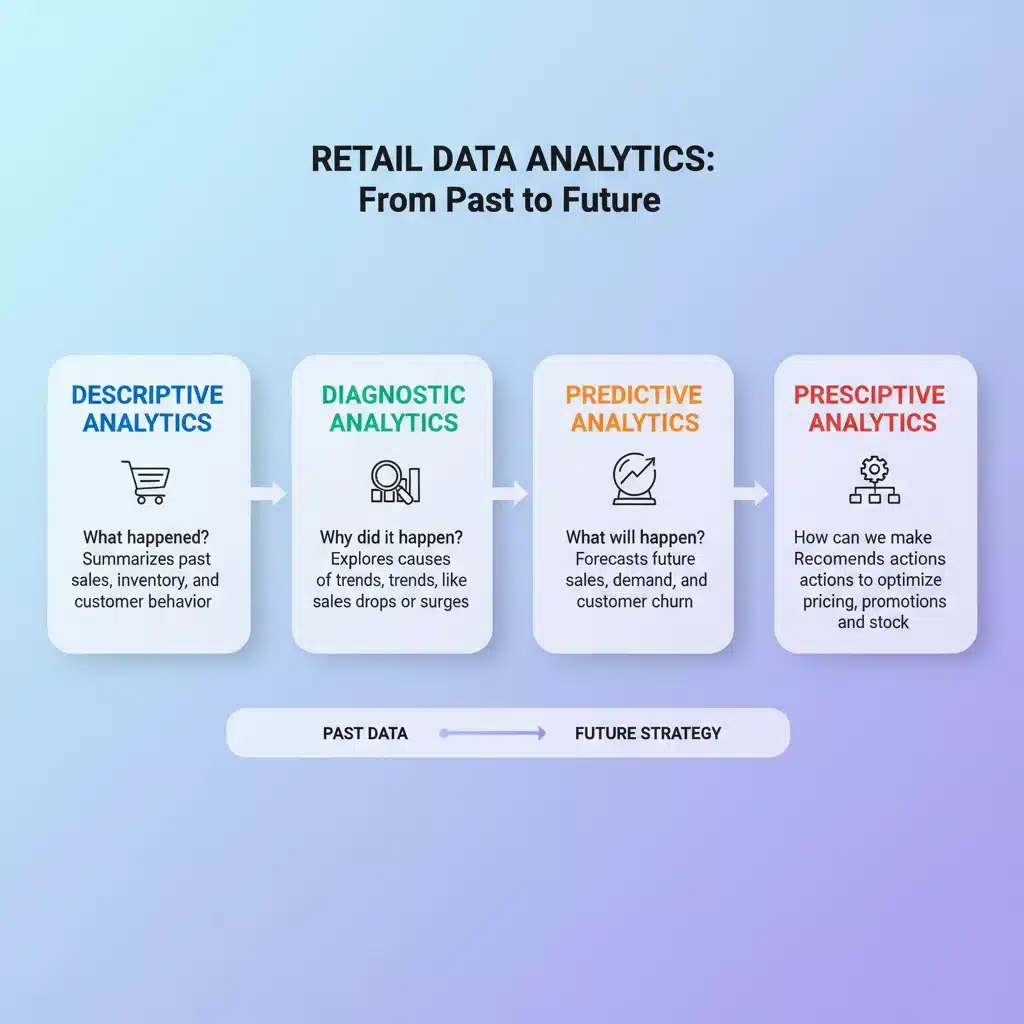
These capabilities move retailers beyond simply understanding what happened to predicting what will happen and prescribing the best course of action.
3. Business Intelligence (BI) Tools and Dashboards
BI tools (e.g., Tableau, Power BI, QlikView) provide user-friendly interfaces to visualize data and generate reports. They transform complex data into digestible insights, allowing decision-makers across all levels of the organization to monitor key performance indicators (KPIs), track trends, and make informed decisions quickly. Real-time dashboards are crucial for agile retail operations.
4. Customer Data Platforms (CDPs)
CDPs unify customer data from various sources (online, offline, mobile, social) into a single, comprehensive customer profile. This "single source of truth" for customer information is essential for delivering truly personalized experiences and targeted marketing campaigns, a core component of effective retail data analytics.
5. Internet of Things (IoT) Devices
IoT devices, such as smart sensors in stores, RFID tags for inventory tracking, and smart shelves, generate real-time operational data. This data can be analyzed to optimize store layouts, monitor inventory levels automatically, track asset movement, and enhance security, all contributing to operational efficiency and cost savings.
Real-World Impact: How Leading US Retailers Are Benefiting
The projected 12% profit margin increase isn’t hypothetical. Many US retailers are already demonstrating the power of sophisticated retail data analytics:
- E-commerce Giants: Companies like Amazon are pioneers in using AI-driven recommendation engines, dynamic pricing, and predictive logistics to dominate the online retail space. Their ability to anticipate customer needs and optimize their vast supply chain is a direct result of advanced analytics.
- Fashion Retailers: Leveraging sales data, social media trends, and even weather patterns to predict fashion trends, optimize inventory, and reduce markdowns. This allows them to bring the right products to market at the right time.
- Grocery Chains: Utilizing loyalty card data to understand purchasing habits, personalize promotions, optimize store layouts, and manage perishable inventory to minimize waste and maximize freshness.
- Department Stores: Employing analytics to understand customer segments, tailor promotional offers, and improve omnichannel experiences, bridging the gap between online and in-store shopping.
These examples underscore that regardless of the retail niche, retail data analytics offers a pathway to significant competitive advantage and financial growth.
Challenges and Considerations in Implementing Retail Data Analytics
While the benefits are clear, implementing a robust retail data analytics strategy comes with its own set of challenges:
1. Data Quality and Integration
Poor data quality (inaccurate, incomplete, or inconsistent data) can derail even the most sophisticated analytics efforts. Retailers must invest in data governance, cleansing, and integration strategies to ensure data reliability.
2. Talent Gap
There’s a significant shortage of data scientists, analysts, and engineers with the specialized skills needed to build and manage advanced analytics solutions. Retailers often need to invest in training existing staff or recruiting new talent.
3. Data Security and Privacy
Handling vast amounts of customer data necessitates stringent data security measures and adherence to privacy regulations (e.g., CCPA). Breaches can lead to severe financial penalties and reputational damage.
4. Organizational Culture
Transitioning to a data-driven culture requires a shift in mindset across the organization. Decision-makers must be willing to trust data insights over intuition, and employees need to be empowered with the tools and training to utilize data effectively in their roles.
5. Cost of Implementation
Investing in big data infrastructure, AI/ML tools, and skilled personnel can be substantial. Retailers need to carefully assess the ROI and adopt a phased approach to implementation.
The Future of Retail Data Analytics: Beyond 2026
The journey of retail data analytics is continuous. Beyond 2026, we can expect even more sophisticated applications:
- Hyper-Personalization at Scale: AI will enable real-time, individualized experiences across all touchpoints, from in-store digital signage to personalized product formulations.
- Proactive Problem Solving: Predictive and prescriptive analytics will become even more advanced, allowing retailers to anticipate and resolve issues (e.g., supply chain disruptions, customer complaints) before they impact the business.
- Ethical AI and Transparent Analytics: Increased focus on ethical data use, bias detection in algorithms, and transparency in how AI makes decisions will become paramount.
- Integrated Ecosystems: Data sharing and collaboration across the entire retail ecosystem – from manufacturers to logistics providers and even competitors – will become more common, creating more resilient and efficient systems.
- Augmented Reality (AR) and Virtual Reality (VR) Integration: Data from AR/VR shopping experiences will provide new dimensions of insight into customer engagement and product interaction.
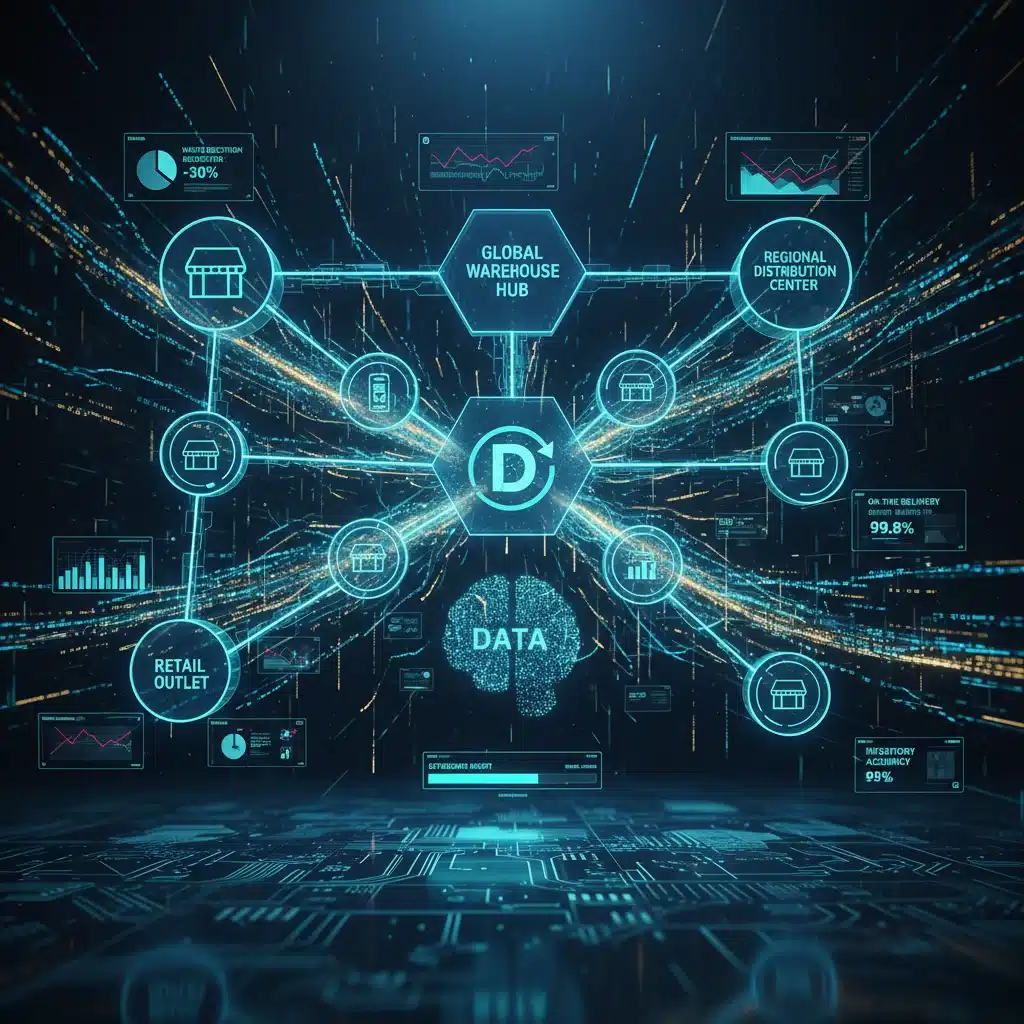
The evolution of retail data analytics will continue to redefine retail, making it more efficient, customer-centric, and profitable.
Conclusion: Embracing Data for a Profitable Future
The promise of a 12% increase in profit margins by 2026 for US retailers is a compelling call to action. It underscores the transformative power of retail data analytics. By strategically collecting, analyzing, and acting upon data, retailers can unlock unprecedented insights into customer behavior, optimize every facet of their operations, and make informed decisions that directly impact their bottom line.
The path to achieving these gains requires a commitment to technological investment, talent development, and a cultural shift towards data-driven decision-making. Those who embrace this transformation will not only survive but thrive in the dynamic retail environment, setting new benchmarks for efficiency, customer satisfaction, and, most importantly, profitability. The future of retail is data-driven, and the time to invest in robust retail data analytics is now.