Boost E-commerce Conversion 15%: Q2 2026 AI Personalization Strategy
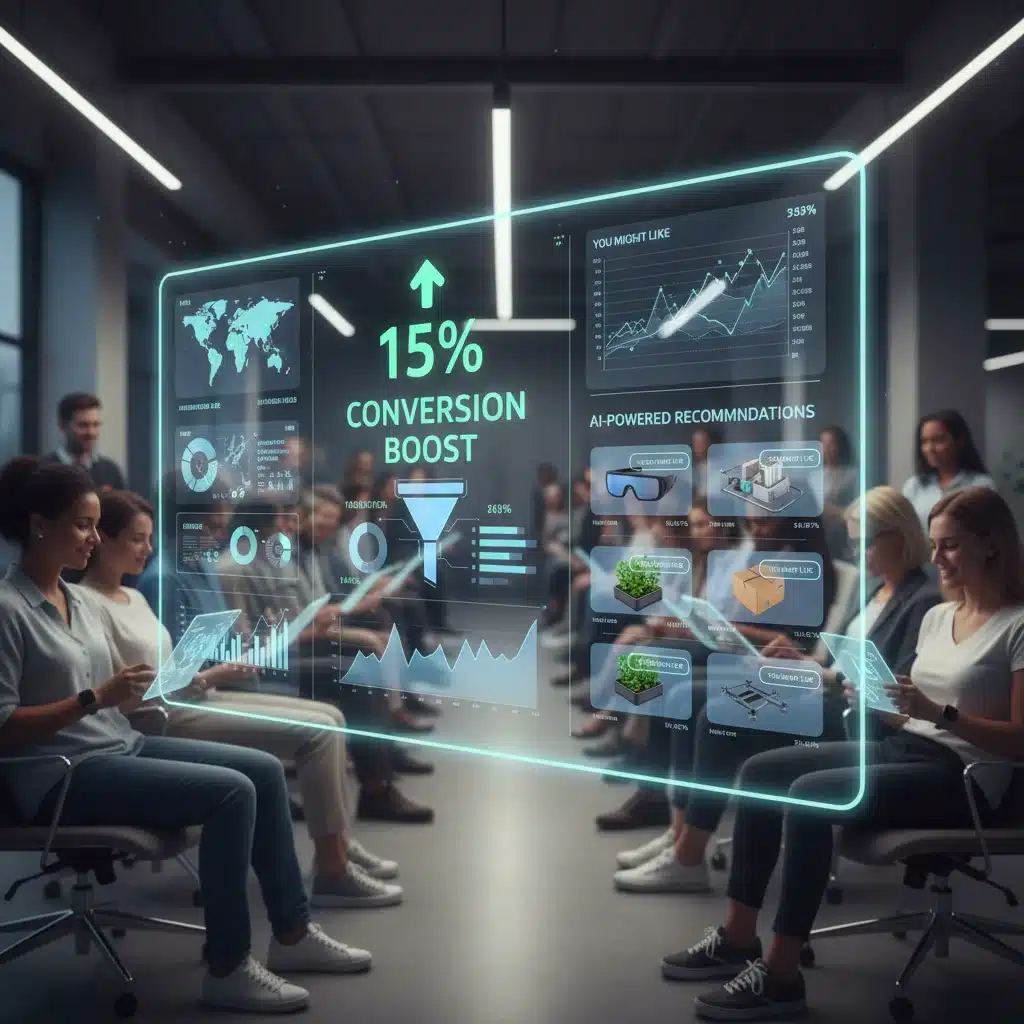
Optimizing Your Q2 2026 E-commerce Strategy: A 15% Conversion Rate Boost Through AI Personalization
The e-commerce landscape is constantly evolving, demanding innovative strategies to capture and retain customer attention. As we look towards Q2 2026, the imperative for online retailers is clear: move beyond generic approaches and embrace the power of AI E-commerce Personalization. This isn’t just about showing relevant products; it’s about creating a hyper-tailored, intuitive shopping journey that anticipates needs, delights customers, and, most importantly, drives conversions. Our goal? A tangible 15% boost in your conversion rate, achievable by leveraging the sophisticated capabilities of artificial intelligence.
In this comprehensive guide, we will delve into the critical aspects of integrating AI into your e-commerce strategy. We’ll explore how AI can transform every touchpoint of the customer journey, from initial discovery to post-purchase engagement. We’ll examine the foundational principles of AI E-commerce Personalization, the tools and technologies driving this revolution, and practical steps you can take to implement these strategies for measurable success in the upcoming quarter. Prepare to unlock unprecedented growth and customer loyalty.
The Imperative of AI E-commerce Personalization in 2026
The modern consumer expects more than just a product catalog. They demand a personalized experience that mirrors the attention they might receive in a high-end physical store. Generic marketing and one-size-fits-all websites are rapidly becoming obsolete. In 2026, the battle for customer attention and loyalty is won through relevance, and AI is the most powerful weapon in that arsenal. AI E-commerce Personalization allows businesses to understand individual customer behaviors, preferences, and intent at an unprecedented scale and speed.
Why Traditional Personalization Falls Short
Historically, personalization efforts have relied on rule-based systems or basic segmentation. While these methods offered some improvements over no personalization, they often lacked the dynamism and depth required to truly connect with individual shoppers. Rule-based systems are rigid, require constant manual updates, and struggle with the vast, ever-changing data sets of modern e-commerce. Basic segmentation, while useful, still groups customers into broad categories, missing the nuances of individual preferences. This is where AI E-commerce Personalization steps in, offering a leap forward in capability.
The AI Advantage: Beyond Basic Recommendations
AI goes beyond simply suggesting items based on past purchases. It analyzes a multitude of data points – browsing history, click-through rates, time spent on pages, search queries, social media activity, demographics, geographic location, and even external factors like weather – to build a comprehensive, real-time profile of each customer. This holistic understanding enables predictive capabilities, allowing e-commerce platforms to anticipate needs and offer solutions before the customer even explicitly searches for them. This proactive approach is the cornerstone of achieving a significant conversion rate increase.
Foundational Pillars of AI E-commerce Personalization
To successfully implement AI E-commerce Personalization, it’s crucial to understand its core components. These pillars work in concert to create a seamless, individualized shopping experience.
1. Data Collection and Analysis: The Lifeblood of AI
The effectiveness of any AI system hinges on the quality and quantity of data it processes. For AI E-commerce Personalization, this includes:
- Behavioral Data: Clicks, views, scroll depth, time on page, search queries, items added to cart, abandoned carts, purchase history.
- Demographic Data: Age, gender, location, income (where available and consented).
- Transactional Data: Purchase frequency, average order value, product categories purchased, returns.
- Contextual Data: Device type, operating system, time of day, referral source, current weather (for certain product categories).
- Psychographic Data: Interests, values, lifestyle (often inferred from behavioral data).
AI algorithms, particularly machine learning models, then process this vast amount of data to identify patterns, predict future behavior, and segment customers dynamically. This continuous learning process ensures that personalization efforts remain relevant and adaptive.
2. Recommendation Engines: The Core of Personalization
Recommendation engines are perhaps the most visible aspect of AI E-commerce Personalization. These sophisticated algorithms suggest products or content to users based on various techniques:
- Collaborative Filtering: Suggests items based on the preferences of similar users (“customers who bought this also bought”).
- Content-Based Filtering: Recommends items similar to those a user has liked in the past (e.g., if a user buys a specific brand of running shoes, recommend other running gear from that brand or similar brands).
- Hybrid Approaches: Combine collaborative and content-based methods for more accurate and diverse recommendations.
- Deep Learning Models: Utilize neural networks to uncover complex, non-linear relationships in data, leading to highly nuanced and effective recommendations.
The goal is not just to suggest products, but to suggest the *right* products at the *right* time, increasing the likelihood of a purchase.
3. Dynamic Content Optimization: Tailoring the Entire Experience
Personalization extends beyond product recommendations. AI E-commerce Personalization enables dynamic content optimization across the entire website and other channels:
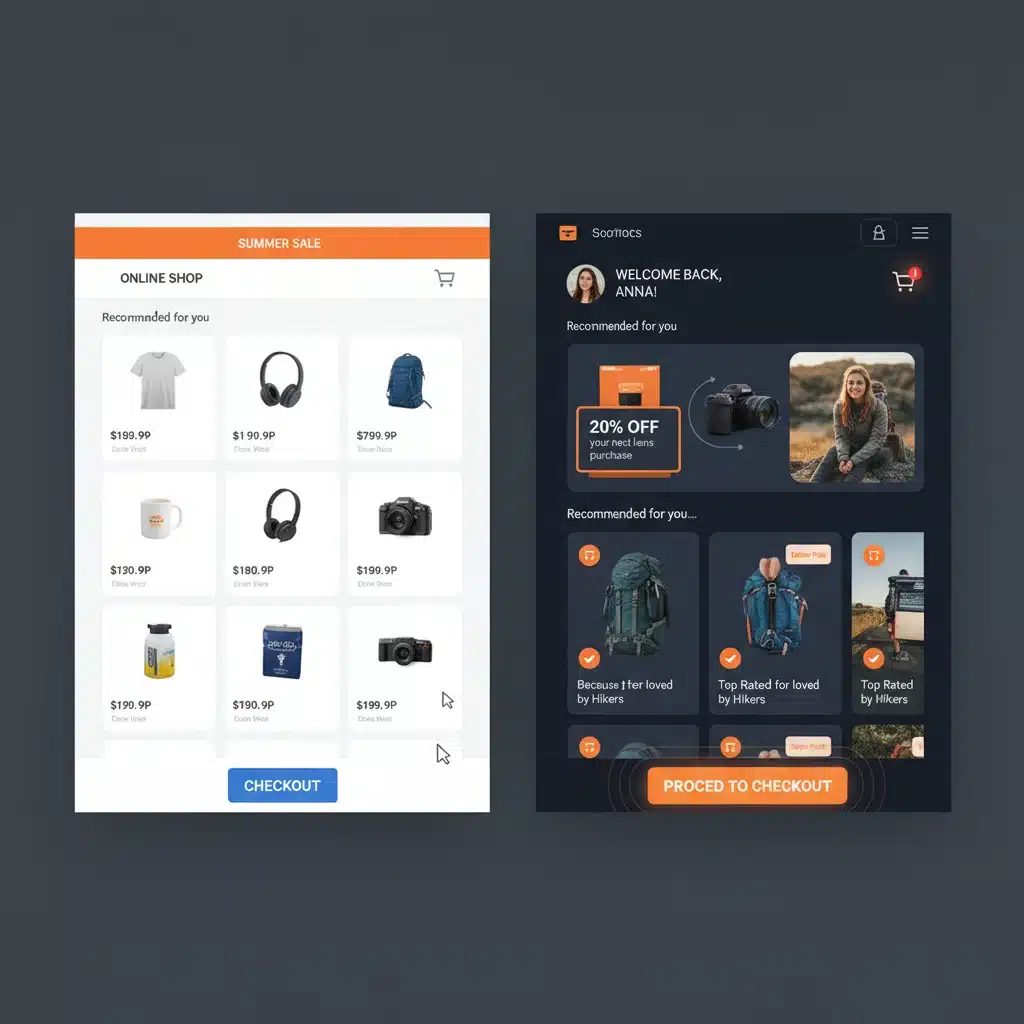
- Homepage Layouts: Tailoring hero banners, featured categories, and promotions based on individual browsing history and preferences.
- Product Page Customization: Displaying different product images, descriptions, or reviews based on user segments or past interactions.
- Search Results: Re-ranking search results to prioritize products most relevant to the individual user.
- Email Marketing: Sending personalized email campaigns with tailored product suggestions, abandoned cart reminders, and exclusive offers.
- Pricing and Promotions: Dynamically adjusting pricing or offering personalized discounts to specific customer segments to incentivize purchases.
This holistic approach ensures that every interaction feels uniquely crafted for the individual shopper.
Implementing AI E-commerce Personalization for a 15% Conversion Boost
Achieving a 15% conversion rate increase requires a strategic, phased approach to implementing AI E-commerce Personalization. Here’s how to get started and scale your efforts for Q2 2026.
Step 1: Audit Your Current Data Infrastructure
Before deploying any AI solution, assess your existing data collection, storage, and processing capabilities. Do you have a unified customer profile? Are your data sources integrated? Identify gaps in data collection and ensure data quality. A robust Customer Data Platform (CDP) can be instrumental here, consolidating data from various sources into a single, actionable view.
Step 2: Define Clear KPIs and Goals
While a 15% conversion boost is the overarching goal, break it down into measurable key performance indicators (KPIs) related to personalization:
- Increased click-through rates on personalized recommendations.
- Higher average order value (AOV) from personalized offers.
- Reduced bounce rates on personalized landing pages.
- Improved customer lifetime value (CLTV) due to enhanced loyalty.
- Lower cart abandonment rates.
These KPIs will help you track progress and refine your AI E-commerce Personalization strategies.
Step 3: Choose the Right AI Personalization Tools and Platforms
The market offers a wide array of AI personalization solutions, from all-in-one platforms to specialized tools. Consider:
- E-commerce Platform Integrations: Many modern e-commerce platforms (Shopify Plus, Magento, Salesforce Commerce Cloud) offer native AI capabilities or robust integrations with third-party tools.
- Dedicated Personalization Engines: Companies like Dynamic Yield, Optimizely, and Bloomreach specialize in AI-driven personalization across various touchpoints.
- Recommendation-as-a-Service: Solutions focused specifically on optimizing product recommendations.
- Customer Data Platforms (CDPs): Essential for centralizing and activating customer data for personalization.
Evaluate solutions based on ease of integration, scalability, feature set, and pricing.
Step 4: Start Small, Iterate, and Scale
Don’t try to personalize everything at once. Begin with high-impact areas where AI E-commerce Personalization can yield quick wins:
- Personalized Product Recommendations: Implement on product pages, category pages, and the homepage.
- Dynamic Homepage Content: Vary hero banners and featured collections based on user segments.
- Personalized Email Campaigns: Automate product recommendations in abandoned cart emails or post-purchase follow-ups.
Continuously monitor performance, A/B test different personalization strategies, and use the insights gained to expand your efforts to other areas of your e-commerce site and marketing channels. AI models improve with more data and feedback, so iterative deployment is key.
Key Strategies for Maximizing AI Personalization Impact
Beyond the technical implementation, certain strategic approaches can amplify the effectiveness of your AI E-commerce Personalization efforts.
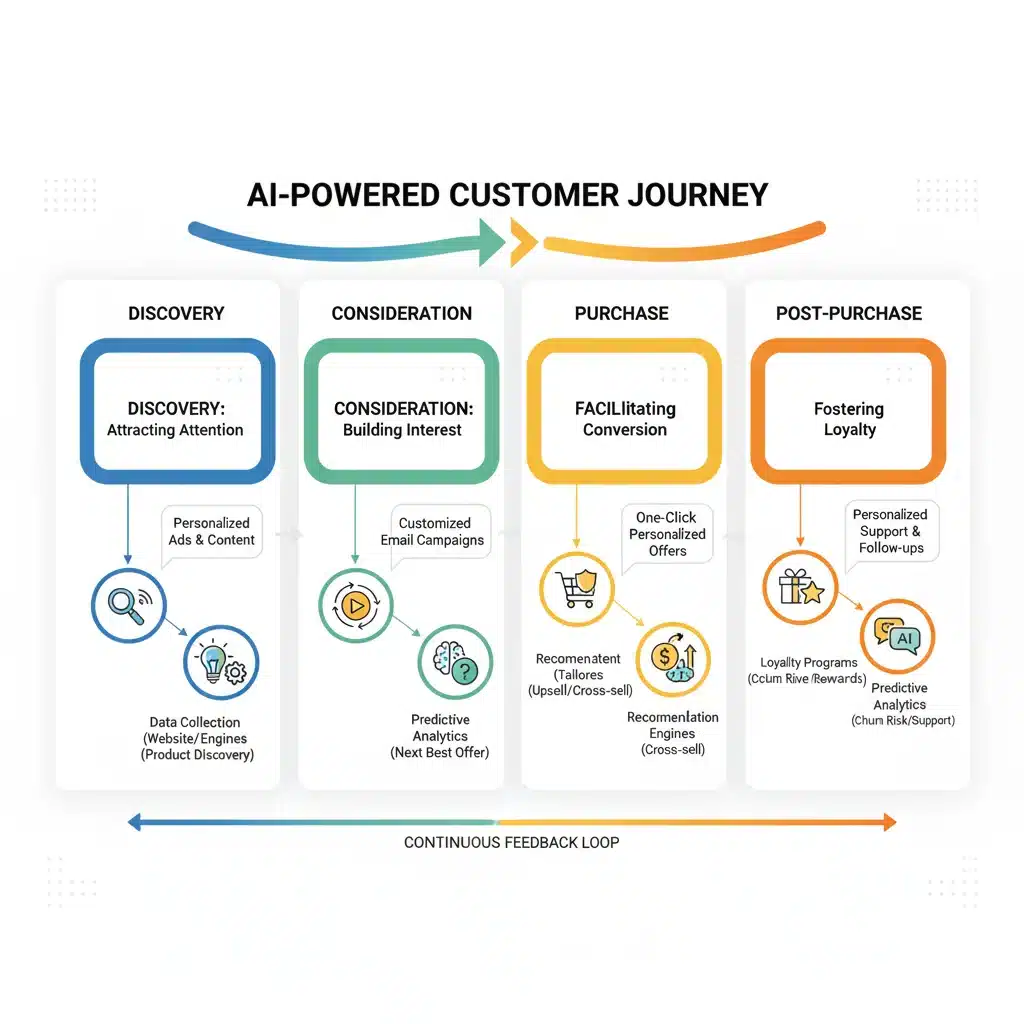
1. Hyper-Personalized Customer Journeys
Think beyond individual page elements. Map out your entire customer journey and identify every touchpoint where AI can create a more relevant experience. This includes:
- Pre-Purchase: Targeted ads based on browsing behavior, personalized landing pages.
- During Purchase: Dynamic product recommendations, personalized search results, tailored promotions in the cart.
- Post-Purchase: Personalized order updates, relevant cross-sell/upsell suggestions for future purchases, targeted loyalty program communications.
A cohesive, personalized journey reduces friction and builds brand loyalty.
2. Predictive Analytics for Proactive Engagement
Leverage AI’s predictive capabilities to anticipate customer needs and potential issues:
- Churn Prediction: Identify customers at risk of leaving and offer proactive incentives to retain them.
- Next Best Offer: Predict the most likely product a customer will be interested in purchasing next and present it.
- Inventory Management: Forecast demand more accurately based on personalized preferences, reducing stockouts and overstocking.
Proactive engagement demonstrates that you understand and value your customers, fostering deeper relationships.
3. AI-Powered Customer Service and Support
Extend personalization to your customer service channels. AI-powered chatbots can provide instant, personalized support, answer FAQs, and even guide customers to relevant products based on their query history and profile. This not only improves customer satisfaction but also frees up human agents for more complex issues, leading to operational efficiency.
4. Ethical AI and Transparency
As you delve deeper into AI E-commerce Personalization, maintain a strong focus on ethical considerations. Be transparent about data collection practices, provide clear privacy policies, and give customers control over their data and preferences. Building trust is paramount; privacy breaches or perceived invasiveness can quickly erode customer loyalty.
Measuring Success and Continuous Optimization
Achieving and sustaining a 15% conversion rate boost requires ongoing monitoring and optimization. AI E-commerce Personalization is not a set-it-and-forget-it solution; it’s an iterative process.
A/B Testing and Experimentation
Routinely A/B test different personalization strategies. For example, compare the performance of two different recommendation algorithms, or test the impact of personalized homepage banners versus generic ones. Data-driven experimentation is crucial for refining your approach and maximizing ROI.
Feedback Loops and Model Refinement
Ensure your AI models have robust feedback loops. Every customer interaction – a click, a purchase, an ignored recommendation – provides valuable data that can be used to retrain and improve the accuracy of your algorithms. The more data they process and learn from, the more effective your personalization will become.
Attribution Modeling
Understand how different personalized touchpoints contribute to conversions. Use advanced attribution models to accurately credit the impact of your AI E-commerce Personalization efforts across the customer journey, allowing you to allocate resources effectively.
Challenges and Considerations for Q2 2026
While the benefits of AI E-commerce Personalization are immense, there are challenges to navigate:
- Data Silos: Ensuring all relevant customer data is accessible and unified can be complex.
- Integration Complexity: Integrating AI tools with existing e-commerce infrastructure requires technical expertise.
- Algorithm Bias: Ensuring your AI algorithms are fair and don’t perpetuate biases present in the training data.
- Talent Gap: Finding skilled data scientists and AI specialists to manage and optimize these systems.
- Privacy Regulations: Navigating evolving data privacy laws (e.g., GDPR, CCPA) and ensuring compliance.
Addressing these challenges proactively will be key to a successful Q2 2026 strategy.
Conclusion: Your Path to a 15% Conversion Boost with AI E-commerce Personalization
The future of e-commerce is personal. By embracing AI E-commerce Personalization, you’re not just adopting a new technology; you’re fundamentally transforming how you connect with your customers. For Q2 2026, the goal of a 15% conversion rate boost is not merely aspirational but entirely achievable with a well-planned, data-driven, and customer-centric AI strategy.
Start by understanding your data, choosing the right tools, and implementing personalization iteratively. Focus on creating seamless, hyper-relevant customer journeys across all touchpoints. Continuously measure, test, and refine your approach, always keeping ethical considerations and customer trust at the forefront. The businesses that master AI E-commerce Personalization will be the ones that dominate the digital marketplace in the years to come, building stronger brands, fostering deeper loyalty, and achieving remarkable growth. The time to invest in your AI-powered future is now.