RPA in Retail Back-Office: Boost Efficiency, Cut Costs by 40%

The retail sector is in a constant state of flux, driven by evolving consumer expectations, fierce competition, and the relentless march of technological innovation. To stay competitive and profitable, retailers are continuously seeking ways to optimize their operations, reduce costs, and enhance customer experiences. One technology that is rapidly gaining traction and delivering transformative results in this endeavor is Robotic Process Automation (RPA). Specifically, the application of RPA in retail back-office functions is emerging as a game-changer, with projections indicating potential cost savings of up to 40% by 2026. This comprehensive article delves into the profound impact of RPA on retail back-office operations, exploring its benefits, implementation strategies, challenges, and future outlook.
The back-office of any retail enterprise is the unseen engine that keeps the front-end running smoothly. It encompasses a myriad of tasks, from inventory management and supply chain logistics to finance, human resources, and customer service support. These processes are often repetitive, rules-based, and highly data-intensive, making them ideal candidates for automation. Manual execution of these tasks can be prone to errors, time-consuming, and resource-heavy, directly impacting a retailer’s bottom line and operational efficiency. This is where RPA in retail back-office steps in, offering a powerful solution to these long-standing challenges.
Understanding Robotic Process Automation (RPA)
Before diving into the specifics of RPA in retail back-office, it’s crucial to understand what RPA entails. At its core, RPA involves the use of software robots (bots) to automate repetitive, rule-based digital tasks that were traditionally performed by humans. These bots can mimic human interactions with digital systems, such as logging into applications, entering data, extracting information, and performing complex calculations. Unlike traditional IT automation, RPA does not require complex system integrations or coding; instead, it operates at the user interface level, interacting with existing applications just like a human would.
The beauty of RPA lies in its non-invasive nature. It can be implemented quickly and efficiently, often without disrupting existing IT infrastructure. This makes it an attractive option for retailers looking to achieve rapid returns on investment (ROI) and streamline their operations without undergoing extensive system overhauls. The capabilities of RPA extend across various functions, making it a versatile tool for enhancing productivity and accuracy across the retail value chain.
The Core Challenges in Retail Back-Office Operations
Retail back-office operations are notorious for their complexity and the sheer volume of transactions they handle daily. Several factors contribute to the operational inefficiencies and high costs associated with these functions:
- High Volume of Repetitive Tasks: Daily operations involve countless repetitive tasks such as order processing, invoice reconciliation, data entry, report generation, and inventory updates. These tasks are mundane for human employees and can lead to burnout and errors.
- Manual Data Entry and Errors: A significant portion of back-office work involves manual data input across disparate systems. This process is highly susceptible to human error, leading to discrepancies, rework, and potential financial losses.
- Legacy Systems and Siloed Data: Many retailers still rely on legacy systems that do not communicate effectively with newer platforms. This creates data silos and requires manual intervention to transfer information between systems, hindering efficiency.
- Seasonal Fluctuations and Scalability Issues: The retail industry experiences significant seasonal peaks, such as holiday seasons, which demand rapid scaling of operations. Manual processes struggle to cope with these fluctuations, leading to delays and increased operational costs.
- Compliance and Regulatory Requirements: Retailers must adhere to a complex web of compliance and regulatory standards, especially concerning financial transactions and data privacy. Manual processes make it challenging to maintain consistent compliance and generate audit trails.
- High Operational Costs: The labor-intensive nature of back-office tasks, coupled with the need for extensive training and oversight, contributes significantly to operational expenditures.
These challenges collectively underscore the urgent need for innovative solutions that can automate and optimize back-office processes. This is precisely where the strategic deployment of RPA in retail back-office proves invaluable.
How RPA Transforms Retail Back-Office Functions
The adoption of RPA in retail back-office is not just about automating tasks; it’s about fundamentally rethinking how these operations are conducted to achieve unprecedented levels of efficiency, accuracy, and cost-effectiveness. Here’s how RPA is making a difference across various back-office domains:
1. Financial Operations and Accounting
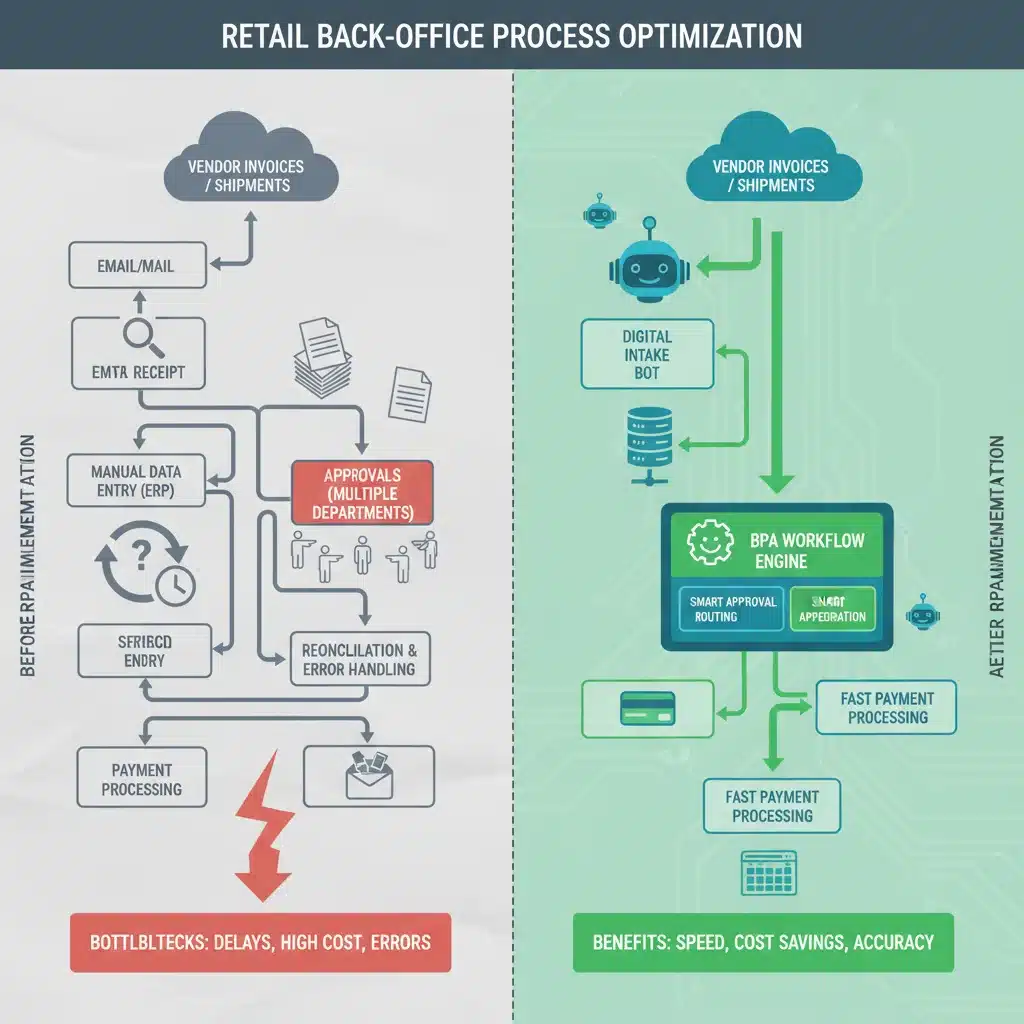
- Invoice Processing: RPA bots can automatically extract data from invoices (both physical and digital), validate information against purchase orders and goods received notes, and initiate payment processes. This reduces manual effort, speeds up processing times, and minimizes errors.
- Reconciliation: Bank reconciliations, vendor statement reconciliations, and intercompany reconciliations can be automated, significantly cutting down the time and effort required, and improving accuracy.
- Expense Management: Bots can process expense reports, verify compliance with company policies, and initiate reimbursements, ensuring timely and accurate payments.
- Financial Reporting: RPA can automate the collection of data from various financial systems to generate comprehensive reports, providing real-time insights for better decision-making.
2. Inventory Management and Supply Chain
- Order Processing: Automating the entire order-to-cash cycle, from receiving customer orders to processing them, checking inventory availability, and generating dispatch notes.
- Inventory Tracking and Replenishment: RPA bots can monitor inventory levels, trigger reorder alerts, and even place orders with suppliers based on predefined rules and demand forecasts, optimizing stock levels and preventing stockouts or overstocking.
- Vendor Management: Automating vendor onboarding, updating vendor information, and managing communications, leading to more efficient supplier relationships.
- Logistics and Shipping: RPA can streamline the generation of shipping labels, tracking information, and customs documentation, improving the speed and accuracy of logistics operations.
3. Human Resources (HR)
- Onboarding and Offboarding: Automating the creation of employee records, setting up access permissions, managing payroll data, and handling exit procedures, ensuring a seamless experience for employees and HR staff.
- Payroll Processing: RPA can gather time and attendance data, calculate wages, process deductions, and generate payroll reports, significantly reducing the potential for errors and ensuring timely payments.
- Benefits Administration: Automating the enrollment and management of employee benefits programs, reducing administrative burden.
4. Customer Service Support (Back-Office Aspects)
- Query Resolution: While front-line customer service often involves human interaction, back-office bots can assist by retrieving customer information, updating records, and processing routine requests, empowering service agents to focus on complex issues.
- Refund and Return Processing: Automating the verification of return requests, processing refunds, and updating inventory, streamlining a critical customer touchpoint.
Quantifiable Benefits of RPA in Retail Back-Office
The adoption of RPA in retail back-office operations translates into a multitude of tangible benefits, directly impacting a retailer’s profitability and competitive edge:
- Significant Cost Savings: This is arguably the most compelling benefit. By automating repetitive tasks, retailers can reduce reliance on manual labor, leading to substantial savings in operational expenditures. Industry projections suggest that retailers can achieve up to a 40% reduction in back-office operational costs by 2026 through strategic RPA implementation. These savings come from reduced headcount in specific areas, minimized overtime, and decreased costs associated with error correction and rework.
- Enhanced Accuracy and Reduced Errors: Bots perform tasks with 100% accuracy, eliminating human errors that can lead to financial losses, compliance issues, and customer dissatisfaction. This precision results in cleaner data, more reliable reports, and improved decision-making.
- Increased Operational Efficiency and Speed: RPA bots work around the clock without breaks, processing tasks much faster than humans. This leads to significantly reduced processing times for invoices, orders, and other critical back-office functions, accelerating business cycles.
- Improved Compliance and Auditability: Bots execute tasks according to predefined rules, ensuring consistent adherence to regulatory requirements and internal policies. Every action performed by an RPA bot is logged, creating a comprehensive audit trail that simplifies compliance reporting and audits.
- Scalability and Flexibility: RPA solutions can be easily scaled up or down to meet fluctuating business demands, such as seasonal peaks. Retailers can deploy more bots during busy periods and reallocate resources during slower times, optimizing resource utilization.
- Employee Satisfaction and Engagement: By offloading mundane, repetitive tasks to bots, human employees are freed up to focus on more strategic, creative, and customer-facing activities that add greater value to the business. This leads to higher job satisfaction, reduced employee turnover, and a more engaged workforce.
- Faster Time-to-Market: Streamlined back-office processes contribute to quicker product launches, efficient campaign execution, and faster response times to market changes, providing a competitive advantage.
- Better Data Quality and Analytics: With accurate and consistently processed data, retailers gain better insights into their operations, enabling more informed strategic planning and better forecasting.
Implementing RPA in Retail Back-Office: A Strategic Approach
Successful implementation of RPA in retail back-office requires a well-thought-out strategy. It’s not merely about deploying technology; it’s about process re-engineering and change management. Here are key steps for effective RPA adoption:
- Identify and Prioritize Processes: Begin by conducting a thorough analysis of existing back-office processes. Identify tasks that are highly repetitive, rule-based, high-volume, prone to errors, and have a significant impact on cost or efficiency. Prioritize processes that offer the quickest ROI and least complexity for initial automation. Examples include invoice processing, data migration, and report generation.
- Build a Dedicated RPA Center of Excellence (CoE): Establish a cross-functional team responsible for driving RPA initiatives. This CoE should include business analysts, process owners, IT specialists, and RPA developers.
- Process Documentation and Optimization: Before automating, thoroughly document and optimize the chosen processes. Eliminate unnecessary steps and redundancies. RPA works best on clean, well-defined processes.
- Select the Right RPA Platform: Choose an RPA vendor and platform that aligns with your retail organization’s specific needs, existing IT infrastructure, and scalability requirements. Consider factors like ease of use, integration capabilities, security features, and vendor support.
- Pilot Project and Phased Rollout: Start with a small pilot project to test the RPA solution and gather learnings. Once successful, adopt a phased rollout approach, gradually expanding RPA implementation across more back-office functions.
- Training and Change Management: Prepare your workforce for the transition. Provide adequate training for employees who will interact with RPA bots or manage automated processes. Address concerns about job displacement by emphasizing that RPA augments human capabilities rather than replacing them entirely.
- Monitor, Measure, and Optimize: Continuously monitor the performance of RPA bots, track key performance indicators (KPIs) such as cost savings, error reduction, and processing times. Regularly optimize and refine automated processes to maximize benefits.
Potential Challenges and Mitigation Strategies
While the benefits of RPA in retail back-office are substantial, organizations may encounter certain challenges during implementation:
- Resistance to Change: Employees may be apprehensive about job security or uncomfortable with new technology. Mitigation: Transparent communication, employee training, and highlighting how RPA frees them for more engaging work can alleviate concerns.
- Process Complexity: Some back-office processes are highly complex and involve numerous exceptions. Mitigation: Start with simpler processes and gradually tackle more complex ones. Consider combining RPA with Artificial Intelligence (AI) for more cognitive tasks.
- Scalability Issues: If not planned properly, scaling RPA across the enterprise can be challenging. Mitigation: Choose a robust RPA platform, establish a strong CoE, and design automation with future scalability in mind.
- Maintenance and Governance: Bots require ongoing maintenance, especially when underlying applications change. Mitigation: Implement strong governance frameworks, establish clear ownership for bot maintenance, and regularly review bot performance.
- Security Concerns: Automating access to sensitive data raises security questions. Mitigation: Ensure the RPA platform adheres to stringent security standards, implement role-based access controls, and conduct regular security audits.
The Future of Retail Back-Office: RPA and Beyond
The journey of RPA in retail back-office is just beginning. As the technology matures, and as retailers become more adept at leveraging its capabilities, we can expect even more profound transformations. The convergence of RPA with other emerging technologies like Artificial Intelligence (AI), Machine Learning (ML), and Optical Character Recognition (OCR) is giving rise to “Intelligent Automation.” This next generation of automation will enable bots to handle more complex, unstructured data and make more nuanced decisions, further expanding the scope of automation in retail back-office.
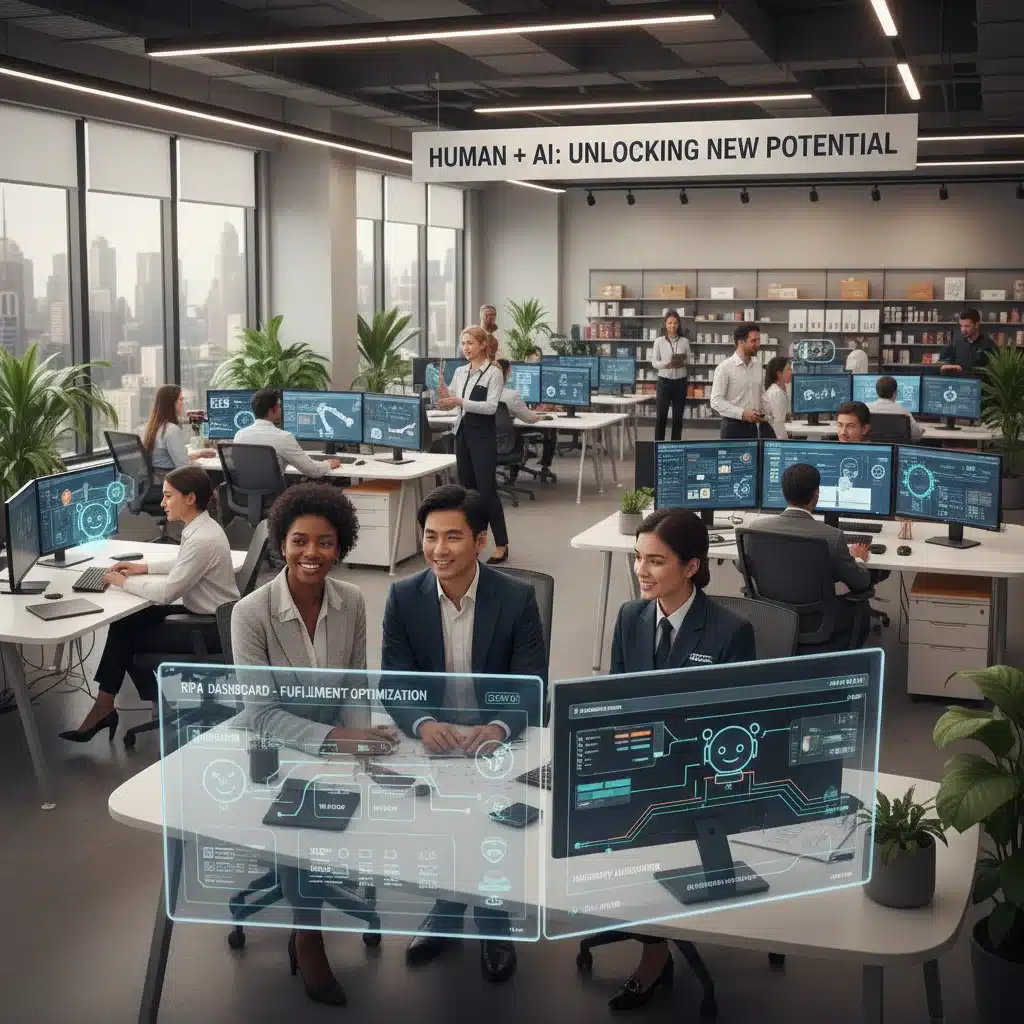
Imagine bots that not only process invoices but also analyze spending patterns, predict future demand with higher accuracy, and even suggest optimal pricing strategies. This is the promise of intelligent automation. Retailers who embrace this evolution will not only achieve the projected 40% cost savings but will also gain unprecedented agility, responsiveness, and resilience in a rapidly changing market.
Moreover, the focus will shift from merely automating tasks to automating entire business processes end-to-end. This holistic approach will break down departmental silos, create a more integrated operational ecosystem, and foster a culture of continuous improvement.
Conclusion
The retail industry stands at the precipice of a significant operational overhaul, with Robotic Process Automation leading the charge. The strategic implementation of RPA in retail back-office is no longer a luxury but a necessity for businesses aiming to remain competitive, agile, and profitable. By automating repetitive, rules-based tasks, retailers can unlock substantial cost savings, improve accuracy, boost efficiency, and empower their human workforce to focus on higher-value activities. The projected 40% cost reduction in operational costs by 2026 is a powerful testament to the transformative potential of RPA.
As retailers navigate the complexities of modern commerce, embracing RPA will be key to streamlining their back-office operations, enhancing their overall business performance, and ultimately delivering superior value to their customers. The future of retail is automated, intelligent, and more efficient than ever before, with RPA serving as a cornerstone of this exciting evolution.