Mastering First-Party Data for DTC Growth: A 3-Month Action Plan
Mastering DTC First-Party Data for Unprecedented Growth: A 3-Month Action Plan
In the rapidly evolving landscape of direct-to-consumer (DTC) e-commerce, the ability to understand and connect with your customers on a deeply personal level is no longer a luxury—it’s a necessity. As third-party cookies face deprecation and privacy regulations tighten, DTC brands are increasingly recognizing the invaluable power of DTC first-party data. This proprietary information, collected directly from your customers with their consent, offers an unparalleled opportunity to craft hyper-personalized experiences, optimize marketing spend, and foster enduring brand loyalty.
This comprehensive guide will lay out a robust 3-month action plan designed to help your DTC brand not just collect, but effectively leverage DTC first-party data to drive significant growth. We’ll delve into the strategies for collection, analysis, and activation, ensuring that by the end of this period, your brand is operating with a data-driven edge that sets you apart from the competition.
The shift towards first-party data isn’t merely a response to regulatory changes; it’s a strategic move that empowers brands to own their customer relationships. By directly engaging with your audience, you gain insights into their preferences, behaviors, and needs that no third-party source can provide. This direct line of communication builds trust, enhances the customer experience, and ultimately, fuels sustainable growth for your DTC business.
Understanding the Power of DTC First-Party Data
Before we dive into the action plan, let’s solidify our understanding of what DTC first-party data entails and why it’s so crucial. Simply put, first-party data is any information your company collects directly from its customers. This can include:
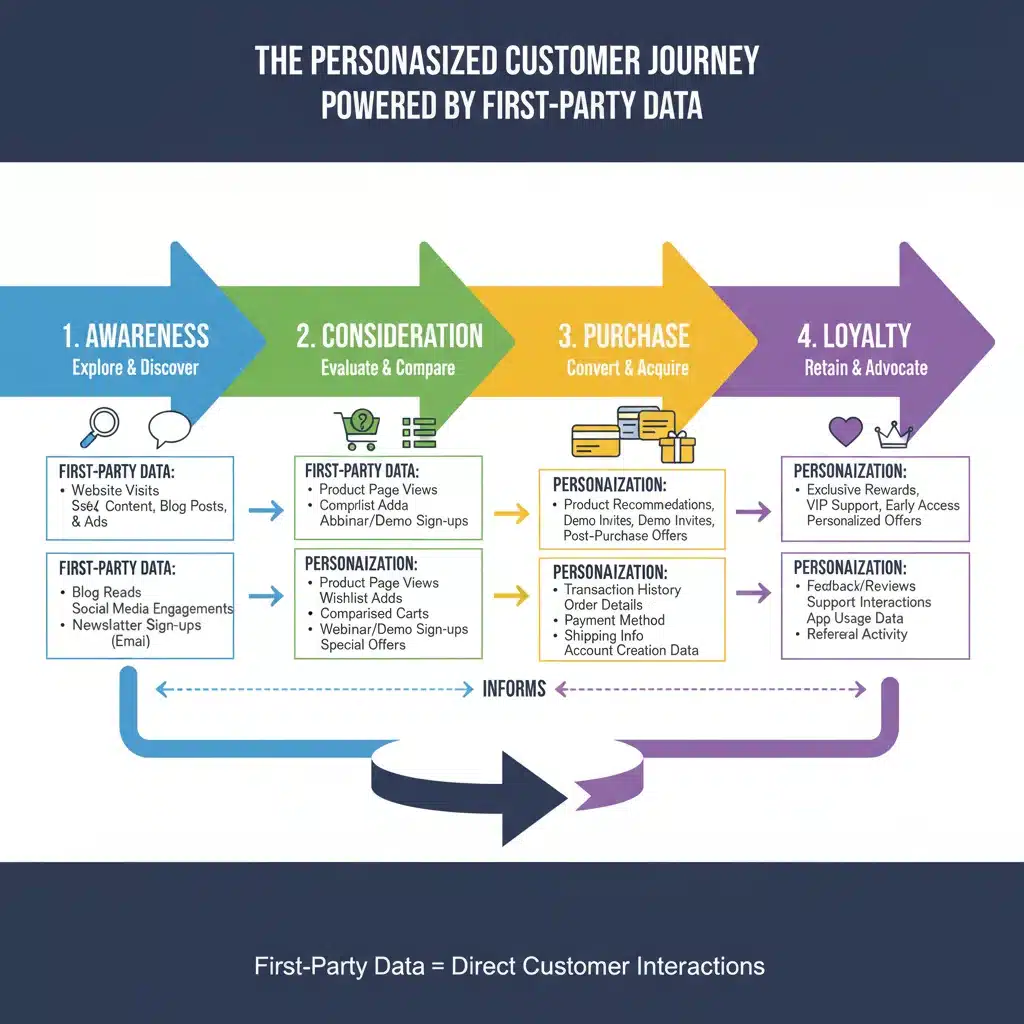
- Behavioral Data: Website visits, pages viewed, products added to cart, purchase history, app usage, email opens and clicks.
- Demographic Data: Name, age, gender, location (collected via forms, surveys, or account creation).
- Preference Data: Product interests, communication preferences, brand feedback (from surveys, preference centers).
- Customer Service Interactions: Chat logs, support tickets, call transcripts.
The key differentiator here is ‘direct collection.’ This data is owned by your brand, making it more accurate, reliable, and relevant to your specific customer base. Unlike third-party data, which is aggregated and often less precise, first-party data provides a granular view of your individual customers.
Why Now is the Time for a First-Party Data Focus
The urgency to master DTC first-party data is driven by several critical industry shifts:
- Privacy Regulations: GDPR, CCPA, and similar regulations worldwide are pushing for greater transparency and consumer control over personal data. Brands that proactively collect and manage first-party data with consent are better positioned for compliance.
- Third-Party Cookie Deprecation: Google’s planned phasing out of third-party cookies in Chrome will significantly impact traditional advertising and tracking methods. First-party data offers a powerful alternative for targeting and personalization.
- Increased Customer Expectations: Consumers today expect personalized experiences. They want brands to understand their needs and offer relevant products and content. First-party data is the foundation for delivering this level of personalization.
- Competitive Advantage: Brands that effectively leverage first-party data can gain a significant edge by optimizing every touchpoint of the customer journey, from discovery to post-purchase support.
Now, let’s outline a strategic 3-month plan to help your DTC brand harness the full potential of DTC first-party data.
Month 1: Foundation & Collection – Building Your Data Engine
The first month focuses on establishing the necessary infrastructure and processes for ethical and efficient DTC first-party data collection. This is where you lay the groundwork for everything that follows.
Week 1-2: Audit & Strategy Definition
-
Current Data Audit:
Begin by taking stock of all existing data sources. Where do you currently collect customer information? (e.g., e-commerce platform, email marketing service, CRM, social media interactions, customer service logs). Identify what data points are being collected and how they are stored.
-
Define Data Goals:
What do you want to achieve with this data? Examples include: increasing customer lifetime value (CLTV), reducing customer acquisition costs (CAC), improving personalization, enhancing product development, or optimizing marketing campaigns. Clear goals will guide your collection efforts.
-
Identify Key Data Points:
Based on your goals, determine the most valuable data points for your business. For a fashion DTC brand, this might be size preferences, style interests, or previous purchase categories. For a food DTC brand, it could be dietary restrictions, flavor preferences, or subscription frequency.
-
Privacy Policy Review & Update:
Ensure your privacy policy is clear, transparent, and compliant with all relevant regulations. Explicitly state what data you collect, why you collect it, how it’s used, and how customers can manage their data. This builds trust and ensures legal compliance.
Week 3-4: Implementation of Collection Mechanisms
-
Website & App Tracking:
Implement or optimize analytics tools (e.g., Google Analytics 4, Adobe Analytics) to accurately track user behavior on your website and mobile app. Focus on events like product views, add-to-carts, purchases, search queries, and form submissions. Ensure proper consent management (e.g., cookie consent banners) is in place.
-
Enhanced Forms & Surveys:
Go beyond basic email sign-ups. Introduce progressive profiling on your website forms, asking for additional preference data over time (e.g., birthday, product interests, communication frequency). Utilize post-purchase surveys to gather feedback on product satisfaction and future needs. Consider interactive quizzes that collect data while entertaining users.
-
Account Creation & Preference Centers:
Encourage customers to create accounts by offering benefits like faster checkout, order history, and exclusive offers. Within their accounts, provide a robust preference center where they can update their information, choose communication channels, and specify product interests. This is a goldmine for DTC first-party data.
-
Email & SMS Opt-ins:
Refine your opt-in strategies for email and SMS. Offer clear value propositions for signing up. Segment your lists from the start based on initial preferences or lead magnets.
-
Customer Service & Live Chat Integration:
Integrate data from customer service interactions (chatbots, live chat, support tickets) into your customer profiles. These conversations often reveal pain points, product ideas, and strong preferences.
Month 2: Consolidation & Analysis – Making Sense of Your Data
Once you’ve established effective collection methods, the second month is dedicated to bringing all that data together and extracting meaningful insights. This is where raw data transforms into actionable intelligence for your DTC first-party data strategy.
Week 5-6: Data Integration & Centralization
-
Customer Data Platform (CDP) Evaluation/Implementation:
A CDP is crucial for unifying DTC first-party data from disparate sources into a single, comprehensive customer profile. Evaluate different CDP solutions based on your budget, technical capabilities, and specific data goals. If a full CDP isn’t feasible immediately, explore integrating key platforms (e.g., e-commerce, email, CRM) as much as possible.
-
Data Cleaning & Standardization:
Ensure data quality by cleaning, de-duplicating, and standardizing your collected information. Inaccurate or inconsistent data can lead to flawed insights and ineffective personalization. Implement data validation rules at the point of collection where possible.
-
Single Customer View (SCV) Creation:
The ultimate goal of integration is to build a Single Customer View (SCV) – a holistic profile for each customer that includes all their interactions, preferences, and transactional history. This SCV is the backbone of truly personalized experiences.
Week 7-8: Segmentation & Insight Generation
-
Basic Segmentation:
Start with foundational segmentation based on readily available DTC first-party data. Common segments include:
- Demographics: Age, gender, location.
- Behavioral: New vs. returning customers, high-value purchasers, cart abandoners, frequent browsers.
- Transactional: First-time buyers, repeat buyers, high AOV (Average Order Value) customers, low-frequency buyers.
- Engagement: Email openers, website visitors, social media interactors.
-
Advanced Segmentation (RFM Analysis):
Implement RFM (Recency, Frequency, Monetary) analysis to identify your most valuable customers. This powerful technique categorizes customers based on how recently they purchased, how often they purchase, and how much they spend. This helps in understanding customer loyalty and potential churn.
-
Customer Lifetime Value (CLTV) Calculation:
Begin calculating and tracking CLTV. This metric is vital for understanding the long-term value of your customers and optimizing your acquisition and retention strategies. Use DTC first-party data to refine CLTV predictions.
-
Behavioral Trend Analysis:
Analyze trends in customer behavior. Are there specific product categories that are consistently popular? Are certain marketing channels driving higher engagement? Identify patterns that can inform your strategies.
-
Qualitative Data Analysis:
Don’t overlook qualitative DTC first-party data from surveys, reviews, and customer service interactions. Use sentiment analysis or manual review to uncover deeper insights into customer satisfaction, pain points, and product desires.

Month 3: Activation & Optimization – Putting Data to Work
The final month is all about taking the insights gained from your DTC first-party data and actively using them to enhance customer experiences and drive business outcomes. This is where your data engine truly starts to hum.
Week 9-10: Personalization & Targeted Campaigns
-
Personalized Website Experiences:
Use your data to dynamically personalize website content. This can include:
- Product Recommendations: Based on browsing history, purchase history, and similar customer behavior.
- Personalized Landing Pages: Tailored content for segments arriving from specific campaigns.
- Dynamic Content: Changing banners, promotions, or messaging based on user segments (e.g., first-time visitor vs. loyal customer).
-
Segmented Email & SMS Campaigns:
Move beyond generic blasts. Craft highly targeted email and SMS campaigns based on your segments. Examples:
- Abandoned Cart Recovery: Personalized messages with specific product details.
- Win-Back Campaigns: Targeted offers for lapsed customers.
- Birthday/Anniversary Messages: Special discounts to celebrate milestones.
- Product Launch Announcements: Sent to segments most likely to be interested.
-
Personalized Advertising:
Leverage your DTC first-party data to create custom audiences for social media and programmatic advertising platforms. This allows you to re-target existing customers with highly relevant ads or find lookalike audiences based on your best customers, significantly improving ad efficiency and reducing CAC.
-
Customer Service Personalization:
Empower your customer service team with access to the SCV. Agents can provide more informed and empathetic support, knowing a customer’s history, preferences, and previous interactions.
Week 11-12: A/B Testing, Measurement & Iteration
-
A/B Testing Framework:
Implement a rigorous A/B testing framework for all your personalized initiatives. Test different headlines, calls to action, product recommendations, and campaign structures. Data provides the hypotheses; A/B testing provides the answers.
-
Key Performance Indicator (KPI) Tracking:
Continuously monitor the KPIs you defined in Month 1. Are you seeing improvements in CLTV, conversion rates, average order value, or customer retention? Track the impact of your personalized efforts on these metrics.
-
Feedback Loops & Iteration:
Establish regular review cycles to analyze performance data and gather feedback. What’s working? What isn’t? Use these insights to refine your DTC first-party data collection, analysis, and activation strategies. Data is dynamic, and your approach should be too.
-
Data Governance & Security Review:
As your data infrastructure grows, regularly review your data governance policies and security measures. Ensure data is protected, access is controlled, and you remain compliant with privacy regulations.
Beyond the 3-Month Mark: Sustaining Your DTC First-Party Data Advantage
This 3-month plan is a sprint to build a strong foundation, but mastering DTC first-party data is an ongoing marathon. To sustain your advantage, consider these long-term strategies:
- Continuous Data Enrichment: Look for new opportunities to collect valuable first-party data. This could involve loyalty programs, community forums, or even in-person events if applicable.
- Predictive Analytics: Once you have a robust dataset, explore predictive analytics to forecast customer behavior, identify churn risks, and anticipate future needs.
- Machine Learning for Personalization: Implement machine learning algorithms for more sophisticated product recommendations, dynamic pricing, and content optimization.
- Cross-Functional Collaboration: Ensure all departments – marketing, sales, product development, customer service – are aligned on data goals and utilize the insights derived from first-party data.
- Ethical Data Use & Transparency: Always prioritize customer trust. Be transparent about data collection and usage, and give customers control over their information. Ethical data practices are key to long-term success.
The Future is First-Party
The landscape for DTC brands is undeniably shifting, with DTC first-party data emerging as the most valuable asset in a brand’s arsenal. By investing in a structured approach to collect, analyze, and activate this data, your brand can move beyond generic marketing to truly understand and serve its customers. This leads to more meaningful relationships, optimized marketing spend, and ultimately, sustainable, accelerated growth.
Embrace this 3-month action plan as your roadmap to transforming your DTC brand into a data-driven powerhouse. The future of e-commerce belongs to those who truly know their customers, and DTC first-party data is the key to unlocking that profound understanding.