Optimize Your E-commerce Funnel: 15% Boost Q1 2025
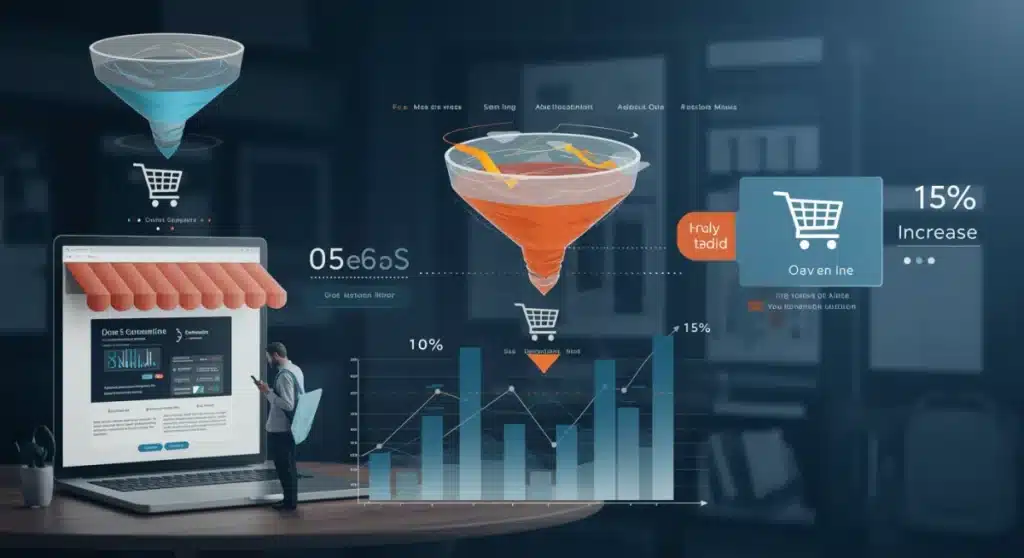
Achieving a 15% boost in your e-commerce conversion funnel by Q1 2025 requires a strategic, data-driven approach focused on enhancing every stage of the customer journey for US retailers.
For US retailers aiming to thrive in the competitive digital landscape, understanding and optimizing your e-commerce conversion funnel is paramount. This isn’t merely about increasing traffic; it’s about converting that traffic into loyal customers, ultimately driving a significant 15% boost in Q1 2025 and beyond. Let’s explore the data-driven strategies that can make this ambitious goal a reality.
Understanding the E-commerce Conversion Funnel
The e-commerce conversion funnel represents the journey a potential customer takes from initial awareness of your brand or product to making a purchase. It’s a multi-stage process, and optimizing each step is crucial for overall success. By meticulously analyzing each stage, retailers can identify friction points and implement targeted improvements.
Historically, the funnel has been viewed as a linear path, but modern e-commerce often sees customers moving fluidly between stages. This necessitates a holistic approach to optimization, ensuring a seamless experience regardless of where a customer is in their journey. Data analytics are the backbone of this understanding, providing insights into user behavior and preferences.
The stages of the funnel
A typical e-commerce conversion funnel includes several key stages, each with its own set of challenges and opportunities for optimization. Recognizing these stages allows for more granular analysis and targeted interventions.
- Awareness: The customer first encounters your brand, perhaps through ads, social media, or search engines.
- Interest: They show interest by clicking on a product, browsing categories, or reading reviews.
- Consideration: The customer actively evaluates products, comparing features, prices, and shipping options.
- Intent: They add items to their cart or express a strong desire to purchase.
- Conversion: The customer completes the purchase, becoming a paying customer.
- Retention: Post-purchase engagement leading to repeat business and loyalty.
By dissecting each stage, retailers can pinpoint exactly where potential customers are dropping off and, more importantly, why. This data-driven diagnostic is the first step towards achieving significant conversion rate improvements.
Ultimately, a deep understanding of your specific e-commerce conversion funnel, informed by robust data, is the foundation upon which all successful optimization efforts are built. Without this insight, any attempts at improvement would be mere guesswork, unlikely to yield the desired 15% boost.
Leveraging Data Analytics for Funnel Optimization
Data analytics is not just a buzzword; it’s the engine driving informed decision-making in e-commerce optimization. For US retailers targeting a 15% conversion boost, a sophisticated approach to data collection and interpretation is non-negotiable. This involves more than just looking at overall conversion rates; it requires drilling down into specific metrics at each stage of the funnel.
By continuously monitoring key performance indicators (KPIs), businesses can react swiftly to changes in customer behavior and market trends. This proactive stance ensures that optimization efforts remain relevant and effective, preventing stagnation in conversion rates.
Key metrics to monitor
To effectively optimize your e-commerce conversion funnel, you need to track a variety of metrics that provide a comprehensive view of customer behavior. These metrics act as diagnostic tools, highlighting areas that need immediate attention.
- Bounce Rate: The percentage of visitors who leave your site after viewing only one page. High bounce rates can indicate poor landing page design or irrelevant traffic.
- Click-Through Rate (CTR): The ratio of users who click on a specific link to the number of total users who view a page, email, or advertisement. Improves understanding of ad and content effectiveness.
- Add-to-Cart Rate: The percentage of visitors who add at least one item to their shopping cart. A strong indicator of product interest.
- Cart Abandonment Rate: The percentage of customers who add items to a shopping cart but do not complete the purchase. This is a critical area for recovery efforts.
- Conversion Rate: The percentage of visitors who complete a desired goal, such as making a purchase. The ultimate measure of funnel efficiency.
- Customer Lifetime Value (CLTV): The total revenue a business can reasonably expect from a single customer account over their relationship with the business. Essential for long-term strategy.
Analyzing these metrics in conjunction provides a powerful narrative of your customers’ journey. It allows retailers to move beyond assumptions and base their optimization strategies on concrete evidence. Regularly reviewing these KPIs will reveal patterns and opportunities for improvement.
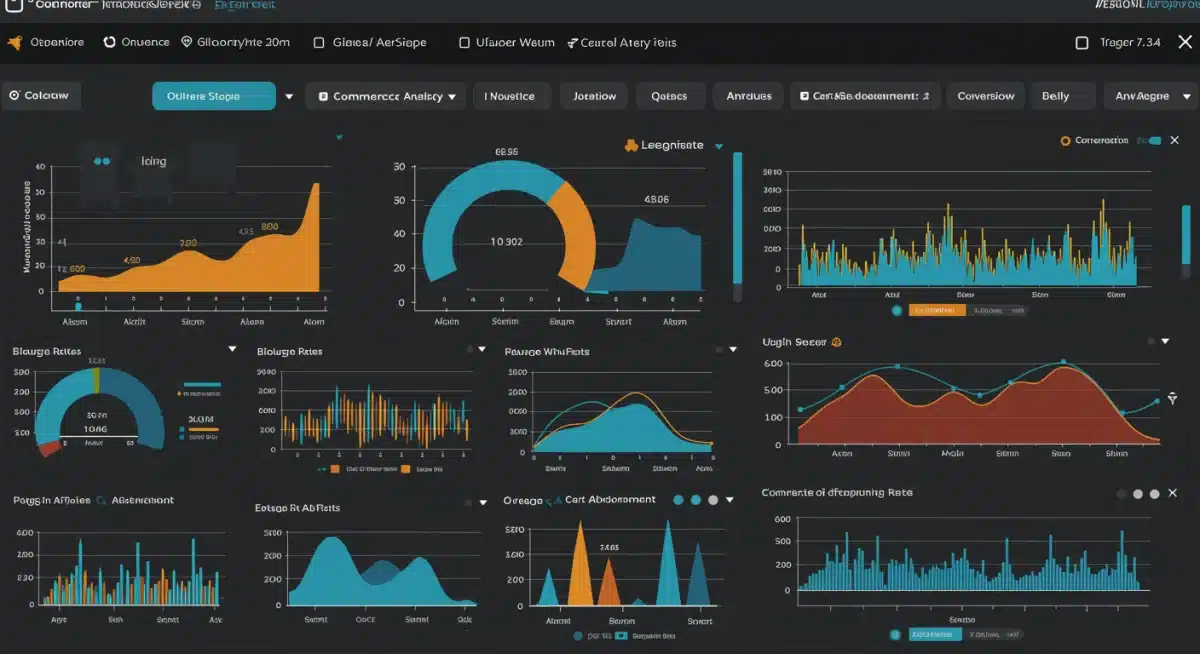
Moreover, segmenting your audience based on demographics, traffic source, or behavior can uncover even deeper insights. What works for one segment might not work for another, emphasizing the need for personalized optimization strategies. This granular data analysis is what separates average performance from exceptional growth.
Enhancing User Experience (UX) for Better Conversions
A seamless and intuitive user experience (UX) is no longer a luxury but a fundamental requirement for any successful e-commerce platform. For US retailers, optimizing UX is a direct pathway to improving the e-commerce conversion funnel, making it easier and more enjoyable for customers to complete their purchases. A poorly designed website can deter even the most motivated buyer.
Investing in UX improvements demonstrates a commitment to customer satisfaction, which in turn builds trust and encourages repeat business. Every interaction a customer has with your site should be frictionless, guiding them effortlessly towards conversion.
Streamlining the user journey
To enhance UX, retailers must focus on simplifying the customer journey from discovery to checkout. This involves evaluating every touchpoint and removing any obstacles that might cause frustration or confusion.
- Intuitive Navigation: Ensure categories are logical, search functions are robust, and filters are effective, allowing customers to easily find what they’re looking for.
- Fast Page Load Times: Slow-loading pages are a major conversion killer. Optimize images, leverage caching, and minimize code to ensure quick loading.
- Mobile Responsiveness: With a significant portion of e-commerce traffic coming from mobile devices, a fully responsive and optimized mobile experience is non-negotiable.
- Clear Product Information: Provide high-quality images, detailed descriptions, and transparent pricing. Answer potential questions before they are asked.
- Simplified Checkout Process: Minimize the number of steps, offer guest checkout options, and clearly display shipping costs and delivery times.
By addressing these elements, retailers can significantly reduce friction points within the e-commerce conversion funnel. A smooth journey not only encourages immediate purchases but also fosters a positive brand perception, crucial for long-term customer loyalty.
Ultimately, a superior user experience directly correlates with higher conversion rates. By prioritizing the customer’s journey and making it as effortless as possible, US retailers can expect to see tangible improvements in their Q1 2025 performance.
Personalization and AI-Driven Recommendations
In today’s competitive e-commerce landscape, generic experiences no longer suffice. Personalization, powered by artificial intelligence (AI), is a critical strategy for US retailers looking to significantly boost their e-commerce conversion funnel. Tailoring the shopping experience to individual customer preferences creates a more engaging and relevant journey, leading to higher conversion rates.
AI algorithms can analyze vast amounts of data, from browsing history to purchase patterns, to deliver highly specific recommendations. This not only helps customers discover products they genuinely want but also makes them feel understood and valued, strengthening their connection to the brand.
Implementing effective personalization strategies
To successfully integrate personalization, retailers need to adopt a multi-faceted approach that touches various points of the customer journey. This goes beyond simple “customers who bought this also bought…” suggestions.
- Product Recommendations: Utilize AI to suggest products based on browsing history, past purchases, items viewed by similar customers, and real-time behavior.
- Personalized Content: Dynamically adjust website content, promotions, and email marketing messages to reflect individual interests and preferences.
- Dynamic Pricing: While controversial, AI can analyze demand and individual price sensitivity to offer personalized discounts or pricing, within ethical boundaries.
- Search Personalization: Optimize search results to prioritize products most relevant to an individual user’s demonstrated interests.
- Personalized Onsite Experience: Customize homepage layouts, category displays, and even navigation paths based on user segments or individual profiles.
The power of AI lies in its ability to process complex data sets and identify subtle patterns that human analysts might miss. This enables a level of personalization that was once unimaginable, transforming the shopping experience into a highly curated one.
By consistently delivering relevant and personalized interactions, US retailers can significantly enhance customer engagement and move them more effectively through the e-commerce conversion funnel. This strategic use of AI will be a key differentiator for achieving ambitious growth targets in Q1 2025.
Optimizing Checkout and Post-Purchase Experience
The checkout process is the final, crucial hurdle in the e-commerce conversion funnel. Even after a customer has expressed clear intent to purchase, a clunky or confusing checkout can lead to significant abandonment rates. For US retailers, streamlining this stage and optimizing the post-purchase experience are vital for securing the targeted 15% boost by Q1 2025.
A smooth checkout instills confidence and reduces buyer’s remorse, while an excellent post-purchase experience fosters loyalty and encourages repeat business. Both are integral to a healthy conversion rate and customer lifetime value.
Strategies for a frictionless checkout
Minimizing friction at checkout is about removing every possible barrier between the customer and their completed purchase. Every extra step or unexpected surprise can be a reason for abandonment.
- Guest Checkout Option: Allow customers to purchase without creating an account, reducing initial commitment barriers.
- Progress Indicator: Visually show customers how many steps are left in the checkout process, managing expectations.
- Multiple Payment Options: Offer a variety of payment methods, including credit cards, digital wallets (e.g., Apple Pay, Google Pay), and buy-now-pay-later services.
- Transparent Pricing: Display all costs, including shipping and taxes, upfront. Hidden fees are a major cause of cart abandonment.
- Clear Error Messages: Provide helpful and actionable feedback if a form field is incorrectly filled, preventing frustration.
- Security Assurances: Clearly display trust badges and security certifications to reassure customers about the safety of their personal and payment information.
Beyond the checkout, the post-purchase experience is equally important. Timely order confirmations, shipping updates, and easy access to customer support contribute to a positive overall impression.
Providing exceptional post-purchase support, including hassle-free returns and proactive communication, transforms a one-time buyer into a repeat customer. This focus on the entire customer journey, from initial interest to post-delivery satisfaction, solidifies the improvements made earlier in the e-commerce conversion funnel, ensuring sustained growth for US retailers.
A/B Testing and Continuous Improvement
Achieving a 15% boost in your e-commerce conversion funnel by Q1 2025 is not a one-time fix but an ongoing process of experimentation and refinement. A/B testing, coupled with a culture of continuous improvement, allows US retailers to systematically identify what works best for their audience and implement changes with confidence.
This iterative approach ensures that every optimization effort is data-backed and contributes directly to improved performance. Without A/B testing, changes are merely assumptions, and their impact cannot be accurately measured.
Implementing an effective A/B testing strategy
Successful A/B testing requires a structured approach, from hypothesis generation to result analysis. It’s about testing one variable at a time to isolate its impact on conversion rates.
- Formulate Clear Hypotheses: Before testing, clearly define what you expect to happen and why. For example: “Changing the CTA button color to green will increase clicks by 5% because green signifies ‘go’.”
- Test One Variable at a Time: To accurately attribute changes in conversion, only alter one element (e.g., headline, image, button color, product description) per test.
- Run Tests for Sufficient Duration: Ensure enough traffic and time to achieve statistical significance. Rushing tests can lead to misleading conclusions.
- Segment Your Audience: Analyze results across different customer segments to understand if an optimization performs differently for various groups.
- Document and Learn: Keep a record of all tests, their hypotheses, results, and learnings. This builds a knowledge base for future optimizations.
Continuous improvement means that even after a successful A/B test, the process doesn’t stop. The winning variation becomes the new baseline, and new hypotheses are generated for further optimization. This cyclical process ensures that your e-commerce conversion funnel is always evolving and improving.
By embedding A/B testing and a commitment to continuous improvement into their operational DNA, US retailers can not only achieve their Q1 2025 conversion goals but also establish a sustainable framework for long-term growth and competitiveness in the dynamic digital marketplace.
| Key Optimization Area | Brief Description |
|---|---|
| Data Analytics & KPIs | Monitor key metrics like bounce rate and cart abandonment to pinpoint funnel weaknesses. |
| User Experience (UX) | Streamline navigation, ensure fast load times, and optimize for mobile responsiveness. |
| Personalization & AI | Implement AI-driven product recommendations and personalized content for engagement. |
| Checkout Optimization | Simplify the checkout process with guest options, clear pricing, and multiple payment methods. |
Frequently Asked Questions About E-commerce Conversion
The e-commerce conversion funnel maps the customer’s journey from initial awareness to purchase. It’s crucial because it helps identify specific points where potential customers drop off, allowing retailers to implement targeted strategies to improve conversion rates and sales.
Data analytics provides insights into user behavior at every funnel stage. By tracking KPIs like bounce rates and cart abandonment, retailers can pinpoint weak areas, understand customer motivations, and make data-driven decisions to optimize their site for higher conversions.
Improving UX involves streamlining navigation, ensuring fast page load times, optimizing for mobile devices, providing clear product information, and simplifying the checkout process. These actions reduce friction and make the shopping journey more enjoyable for customers.
Personalization, often driven by AI, tailors the shopping experience by offering relevant product recommendations, personalized content, and dynamic pricing. This makes customers feel understood and increases the likelihood of them finding and purchasing desired items.
The checkout process is the final step before purchase, and any friction can lead to abandonment. Optimizing it with guest checkout, multiple payment options, transparent pricing, and clear progress indicators reduces barriers and instills confidence, directly boosting conversion rates.
Conclusion
Achieving a 15% boost in your e-commerce conversion funnel by Q1 2025 for US retailers is an ambitious yet entirely attainable goal. It demands a holistic, data-driven strategy that meticulously addresses every stage of the customer journey. From leveraging advanced analytics to understand user behavior, to enhancing user experience with intuitive design, implementing AI-powered personalization, streamlining the critical checkout process, and embracing continuous A/B testing, each component plays a pivotal role. By committing to these strategic optimizations, retailers can not only meet but exceed their conversion targets, fostering stronger customer relationships and ensuring sustained growth in the dynamic world of online retail.