Boost CLV 20% with AI Personalization for DTC Brands in 2026
How DTC Brands Can Achieve a 20% Increase in Customer Lifetime Value by Implementing AI-Driven Personalization in 2026
In the fiercely competitive landscape of modern commerce, Direct-to-Consumer (DTC) brands face the perennial challenge of not just acquiring customers, but retaining them and maximizing their long-term value. The goal is clear: to foster enduring relationships that translate into sustained revenue and brand loyalty. By 2026, the brands that thrive will be those that have masterfully leveraged technology to understand and anticipate customer needs on an individual level. This is where AI Personalization CLV comes into play, offering a transformative pathway for DTC brands to achieve an ambitious yet entirely attainable 20% increase in Customer Lifetime Value (CLV).
The digital realm has democratized access to markets, but it has also elevated customer expectations. Consumers today demand experiences that are not just seamless, but deeply personal and relevant. Generic marketing messages and one-size-fits-all approaches are no longer sufficient to capture and hold attention. Enter Artificial Intelligence (AI), a game-changer that empowers DTC brands to move beyond basic segmentation and deliver hyper-personalized experiences at scale. This article will delve into the strategic implementation of AI-driven personalization, outlining actionable steps, exploring key technologies, and illustrating how DTC brands can strategically position themselves to reap significant CLV rewards by 2026.
Understanding Customer Lifetime Value (CLV) in the DTC Context
Before we explore the ‘how,’ it’s crucial to solidify our understanding of CLV. Customer Lifetime Value represents the total revenue a business can reasonably expect from a single customer account throughout their relationship with the brand. For DTC brands, CLV is more than just a metric; it’s a philosophy that prioritizes long-term customer relationships over short-term transactions. A higher CLV indicates greater customer loyalty, reduced acquisition costs over time, and a more sustainable business model.
Several factors influence CLV, including average order value (AOV), purchase frequency, customer retention rate, and the overall cost of serving that customer. Traditional methods of increasing CLV often involve loyalty programs, excellent customer service, and targeted promotions. While these remain important, AI-driven personalization elevates these efforts to an unprecedented level of precision and effectiveness. It allows DTC brands to move from reactive strategies to proactive, predictive engagement, ensuring that every customer interaction is optimized for maximum value.
The Imperative of AI-Driven Personalization for DTC Brands
Why is AI-driven personalization not just an advantage, but a necessity for DTC brands aiming for a 20% CLV increase by 2026? The answer lies in its ability to solve fundamental challenges that traditional marketing approaches struggle with:
1. Overcoming Information Overload
In a world saturated with choices, customers are constantly bombarded with marketing messages. AI cuts through this noise by presenting only the most relevant products, content, and offers, based on individual preferences and behaviors. This not only improves conversion rates but also enhances the customer experience, making them feel understood and valued.
2. Predicting Future Behavior
AI algorithms can analyze vast datasets of customer behavior – browsing history, purchase patterns, demographic information, social media interactions – to predict future actions. This predictive power allows DTC brands to anticipate needs, identify potential churn risks, and proactively engage customers with timely and relevant interventions.
3. Scaling Personalization
Manually segmenting customers and crafting personalized messages for each group is a laborious and often inefficient process, especially as a brand scales. AI automates and scales personalization efforts, enabling DTC brands to deliver one-to-one experiences to thousands or even millions of customers simultaneously, without compromising authenticity.
4. Optimizing the Customer Journey
From initial discovery to post-purchase support, AI can optimize every touchpoint in the customer journey. This means personalized product recommendations on the website, dynamic email content, tailored social media ads, and even customized customer service interactions. Each optimized interaction contributes to a more satisfying customer experience, thereby bolstering loyalty and CLV.
Key Pillars of AI-Driven Personalization for CLV Growth
Achieving a 20% CLV increase requires a multi-faceted approach to AI-driven personalization. Here are the core pillars DTC brands should focus on:
1. Hyper-Personalized Product Recommendations
This is perhaps the most visible application of AI Personalization CLV. AI algorithms analyze past purchases, browsing behavior, expressed preferences, and even real-time session data to suggest products that are highly likely to appeal to the customer. This goes beyond simple ‘customers who bought this also bought…’ to truly understanding individual taste and intent.
- Types of Recommendations: Cross-sell, upsell, complementary products, ‘frequently bought together,’ ‘inspired by your browsing history,’ and ‘trending for you.’
- Impact on CLV: Increases average order value (AOV) and purchase frequency by making shopping easier and more enjoyable.
2. Dynamic Content and Website Personalization
Your website is your digital storefront. AI can transform it into a dynamic, adaptive experience for each visitor. This includes:
- Homepage Layouts: Customizing the hero banners, featured collections, and promotional modules based on visitor segments or individual profiles.
- Product Page Tailoring: Highlighting specific product features, reviews, or lifestyle images that resonate with the visitor’s demographics or previous interactions.
- Search and Navigation: Providing intelligent search results and optimizing navigation paths based on user intent.
- Impact on CLV: Reduces bounce rates, increases conversion rates, and creates a more engaging brand experience.
3. Personalized Email and Marketing Automation
Email remains a powerful channel for DTC brands. AI supercharges email marketing by:
- Segmenting Audiences: Creating micro-segments based on behavior, preferences, and predicted churn risk.
- Dynamic Content Insertion: Populating emails with personalized product recommendations, relevant articles, or exclusive offers.
- Optimized Send Times: Using AI to determine the ideal time to send emails for each individual, maximizing open and click-through rates.
- Automated Journeys: Triggering personalized email sequences based on specific customer actions (e.g., abandoned cart reminders with tailored incentives, post-purchase follow-ups with relevant product care tips).
- Impact on CLV: Drives repeat purchases, nurtures leads, and strengthens customer relationships through timely and relevant communication.
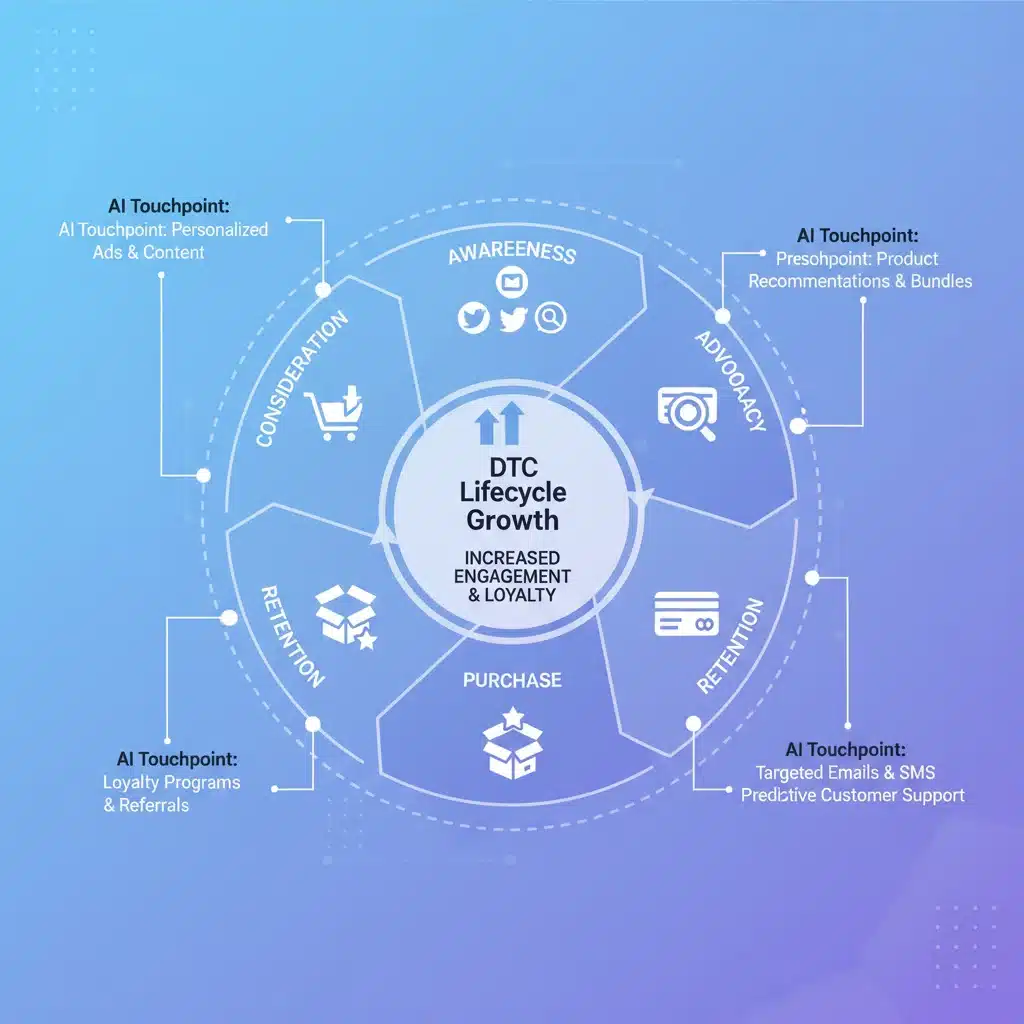
4. Predictive Analytics for Churn Prevention and Re-engagement
One of the most powerful applications of AI Personalization CLV is its ability to predict which customers are at risk of churning. By analyzing patterns in purchase frequency, engagement levels, and demographic data, AI can flag at-risk customers, allowing DTC brands to intervene proactively.
- Early Warning Systems: Identify customers showing signs of disengagement (e.g., reduced website visits, lower email open rates, longer gaps between purchases).
- Targeted Re-engagement Campaigns: Deploy personalized offers, surveys, or content to win back at-risk customers before they leave.
- Impact on CLV: Significantly improves customer retention, which is often more cost-effective than acquiring new customers.
5. AI-Powered Customer Service and Support
Exceptional customer service is a cornerstone of CLV. AI can enhance this by:
- Intelligent Chatbots: Providing instant, personalized answers to common queries, freeing up human agents for more complex issues. These chatbots can access customer history to offer tailored solutions.
- Personalized Self-Service Options: Guiding customers to relevant FAQs or troubleshooting guides based on their past interactions or product ownership.
- Sentiment Analysis: AI can analyze customer interactions (e.g., chat transcripts, social media comments) to gauge sentiment and flag urgent issues or dissatisfied customers, allowing for faster and more empathetic human intervention.
- Impact on CLV: Increases customer satisfaction, resolves issues faster, and builds trust, leading to greater loyalty.
Strategic Implementation: A Roadmap for DTC Brands by 2026
To achieve a 20% CLV increase through AI Personalization CLV, DTC brands need a structured implementation roadmap:
Phase 1: Data Foundation and Infrastructure (Now – 2024)
The bedrock of effective AI is high-quality data. DTC brands must invest in robust data collection and management systems.
- Unified Customer Profiles: Consolidate data from all touchpoints (website, app, CRM, email, social media, POS) into a single customer data platform (CDP). This creates a 360-degree view of each customer.
- Data Governance and Quality: Establish clear protocols for data collection, storage, and maintenance to ensure accuracy, completeness, and compliance (e.g., GDPR, CCPA).
- Technology Stack Assessment: Evaluate existing marketing and e-commerce platforms. Identify gaps and necessary integrations for AI tools. Consider platforms with native AI capabilities or strong API support.
- Team Training: Educate marketing, sales, and customer service teams on the importance of data and the potential of AI.
Phase 2: Pilot and Iterate (2024 – 2025)
Start small, learn fast, and scale strategically.
- Identify Key Use Cases: Begin with high-impact, manageable AI personalization initiatives, such as personalized product recommendations or dynamic email content.
- A/B Testing and Experimentation: Continuously test different personalization strategies against control groups to measure their impact on key metrics like conversion rates, AOV, and engagement.
- Feedback Loops: Gather qualitative and quantitative feedback from customers and internal teams. Use these insights to refine AI models and personalization strategies.
- Vendor Selection: Partner with AI solution providers that align with your brand’s specific needs, budget, and integration requirements. Look for scalability and proven success in the DTC space.
Phase 3: Scale and Optimize (2025 – 2026)
Expand successful pilot programs across more touchpoints and customer segments.
- Full-Scale Implementation: Roll out AI personalization across your entire customer journey, from website experience to post-purchase support.
- Advanced AI Applications: Explore more sophisticated AI capabilities like predictive churn modeling, individualized pricing strategies (within ethical boundaries), and AI-powered content generation.
- Continuous Monitoring and Optimization: AI models require constant monitoring and retraining with new data to maintain their effectiveness. Establish a process for ongoing performance review and adjustment.
- Ethical AI Considerations: Ensure that personalization efforts are transparent, respect customer privacy, and avoid discriminatory practices. Build trust by giving customers control over their data and preferences.
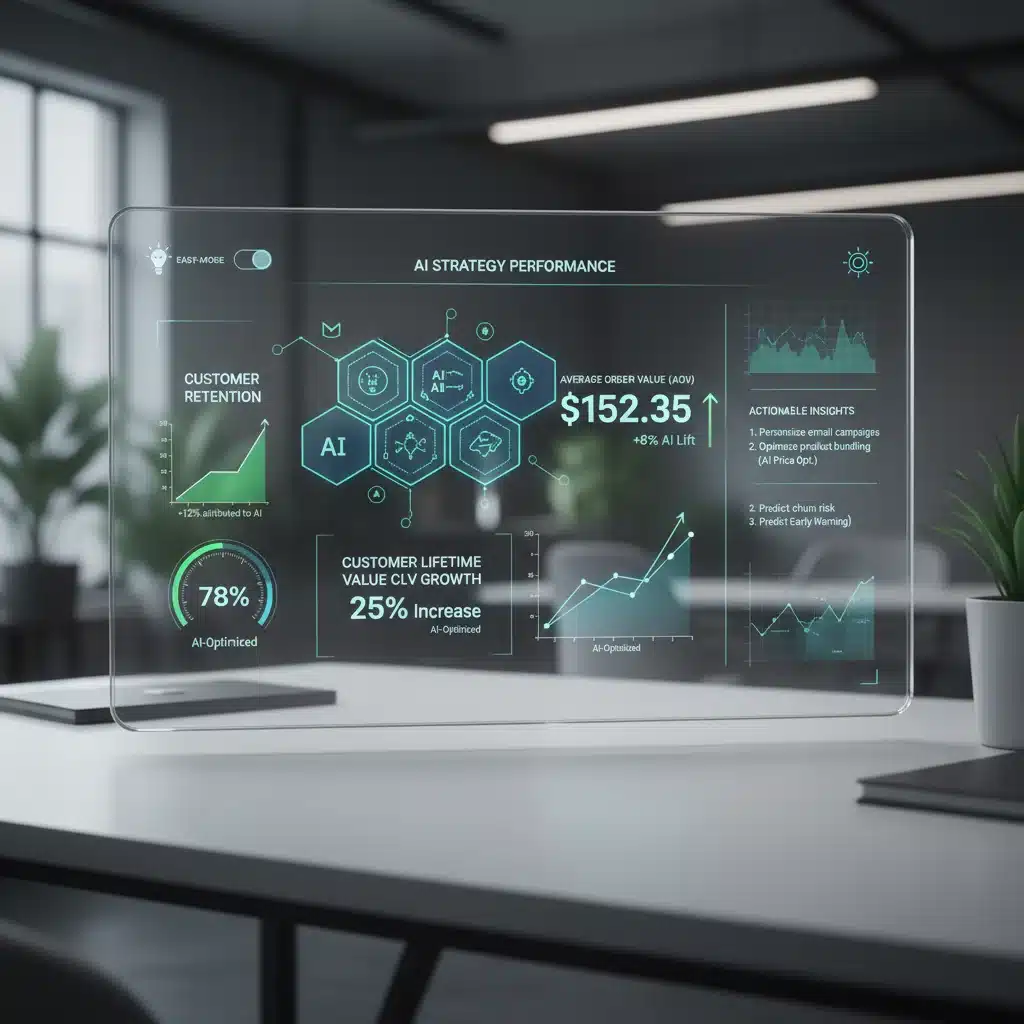
Measuring the Impact: Key Metrics for CLV Growth
To confirm that your AI Personalization CLV efforts are yielding the desired 20% increase, you must rigorously track key performance indicators (KPIs):
- Customer Lifetime Value (CLV): The ultimate metric. Track its growth over time, segmenting by personalized vs. non-personalized customer groups.
- Average Order Value (AOV): An increase in AOV often indicates successful cross-selling and upselling through personalized recommendations.
- Purchase Frequency: How often do customers make repeat purchases? AI personalization should drive this up.
- Customer Retention Rate: The percentage of customers who continue to purchase from your brand over a given period. Predictive analytics and re-engagement campaigns directly impact this.
- Churn Rate: The opposite of retention. A decrease in churn rate is a direct indicator of successful retention efforts.
- Conversion Rate: The percentage of website visitors or email recipients who complete a desired action (e.g., making a purchase). Personalized experiences should significantly boost this.
- Engagement Metrics: Email open rates, click-through rates, time spent on site, interaction with personalized content – all indicate the effectiveness of your personalization.
- Customer Satisfaction (CSAT) and Net Promoter Score (NPS): Personalized experiences generally lead to happier customers who are more likely to recommend your brand.
By meticulously tracking these metrics, DTC brands can identify which AI personalization strategies are most effective and continually refine their approach to maximize CLV.
Challenges and Considerations
While the benefits of AI Personalization CLV are substantial, DTC brands must be aware of potential challenges:
- Data Privacy and Ethics: Consumers are increasingly concerned about data privacy. Brands must be transparent about data usage and ensure compliance with regulations. Over-personalization can also feel intrusive.
- Data Silos: Disparate data sources can hinder the creation of a unified customer view. Investing in a CDP is crucial.
- Technological Complexity: Implementing and managing AI solutions requires technical expertise. Brands may need to hire specialized talent or partner with experienced vendors.
- Cost of Implementation: Initial investment in AI tools and data infrastructure can be significant, but the long-term ROI justifies it.
- Bias in AI Models: AI models can inherit biases from the data they are trained on, leading to unfair or inaccurate personalization. Regular auditing and diverse data sources are essential.
The Future of DTC and AI Personalization
Looking towards 2026 and beyond, the integration of AI Personalization CLV will only deepen. We can expect:
- Generative AI for Content: AI will not only personalize existing content but also generate new, highly relevant product descriptions, marketing copy, and even visual assets tailored to individual preferences.
- Immersive Personalization: The rise of augmented reality (AR) and virtual reality (VR) will enable highly immersive and personalized shopping experiences, allowing customers to virtually try on clothes or visualize products in their homes.
- Voice Commerce Personalization: As voice assistants become more prevalent, AI will personalize recommendations and shopping experiences through natural language interactions.
- Proactive Problem Solving: AI will move beyond just recommendations to proactively identify and solve potential customer issues before they even arise, further cementing loyalty.
Conclusion: Seizing the 20% CLV Opportunity
The opportunity for DTC brands to significantly boost their Customer Lifetime Value by 20% through AI-driven personalization by 2026 is not merely a theoretical aspiration; it’s a strategic imperative. By building a robust data foundation, adopting intelligent personalization tools, and continuously optimizing their approach, DTC brands can cultivate deeper, more meaningful relationships with their customers. This transformation will not only lead to substantial revenue growth but also create a resilient, customer-centric business model capable of thriving in the dynamic digital economy. The time to invest in AI Personalization CLV is now, positioning your brand at the forefront of the next wave of e-commerce innovation.
Embrace the power of AI to understand, engage, and delight your customers at every turn, and watch your CLV soar. The future of DTC is personal, and it’s powered by AI.