Boost AOV by 18%: Conversational Commerce with AI Chatbots for DTC Brands in 2026

The Rise of Conversational Commerce: How DTC Brands Can Increase AOV by 18% with AI Chatbots in 2026
In the rapidly evolving landscape of e-commerce, Direct-to-Consumer (DTC) brands are constantly seeking innovative strategies to enhance customer experience and drive revenue growth. The year 2026 is poised to mark a significant milestone in this pursuit, with the widespread adoption of conversational commerce powered by AI chatbots. This paradigm shift isn’t just about automation; it’s about intelligent, personalized interactions that can lead to tangible financial gains. Specifically, industry projections indicate that DTC brands leveraging advanced AI chatbots within their conversational commerce strategies can expect to see an impressive 18% increase in Average Order Value (AOV).
This article delves into the transformative power of AI chatbots for DTC brands, exploring how these intelligent agents are revolutionizing customer engagement, streamlining purchasing decisions, and ultimately, boosting AOV. We’ll uncover the mechanics behind this projected growth, examine successful implementation strategies, and provide a roadmap for DTC brands looking to capitalize on this burgeoning trend.
Understanding Conversational Commerce and Its Evolution
Conversational commerce, at its core, refers to the intersection of messaging apps, live chat, and e-commerce. It’s about meeting customers where they are – on platforms they already use for communication – and guiding them through the purchasing journey in a personalized, interactive manner. This isn’t a new concept, but its evolution has been dramatically accelerated by artificial intelligence.
Initially, conversational commerce relied on human agents. While effective, this approach was resource-intensive and often struggled with scalability, especially for DTC brands experiencing rapid growth. The advent of sophisticated AI chatbots has changed the game entirely. These AI-powered entities can handle a vast volume of inquiries simultaneously, provide instant responses, and even learn from interactions to improve their performance over time. This scalability and efficiency are crucial for DTC brands aiming to maintain a competitive edge and deliver exceptional customer service without incurring prohibitive costs.
The shift towards AI-driven conversational commerce is driven by several factors:
- Consumer Preference: Modern consumers, particularly younger demographics, prefer communicating with brands through messaging apps. They expect instant gratification and personalized experiences.
- Technological Advancements: Natural Language Processing (NLP) and machine learning have made AI chatbots incredibly adept at understanding complex queries and generating human-like responses.
- Data Insights: AI chatbots collect valuable data on customer preferences, pain points, and purchasing behaviors, which can be used to refine product offerings and marketing strategies.
- Operational Efficiency: Automating routine customer service tasks frees up human agents to focus on more complex issues, leading to improved overall efficiency.
For DTC brands, this evolution means moving beyond transactional websites to create engaging, dialogue-driven shopping experiences. This is where the potential for increasing AI Chatbots DTC AOV truly shines.
The Mechanics of Boosting AOV with AI Chatbots
An 18% increase in AOV is a significant figure, and it’s not achieved through simple automation. It’s the result of strategic implementation of AI chatbots that are designed to do more than just answer FAQs. Here’s how AI chatbots contribute to a higher AOV:
Personalized Product Recommendations
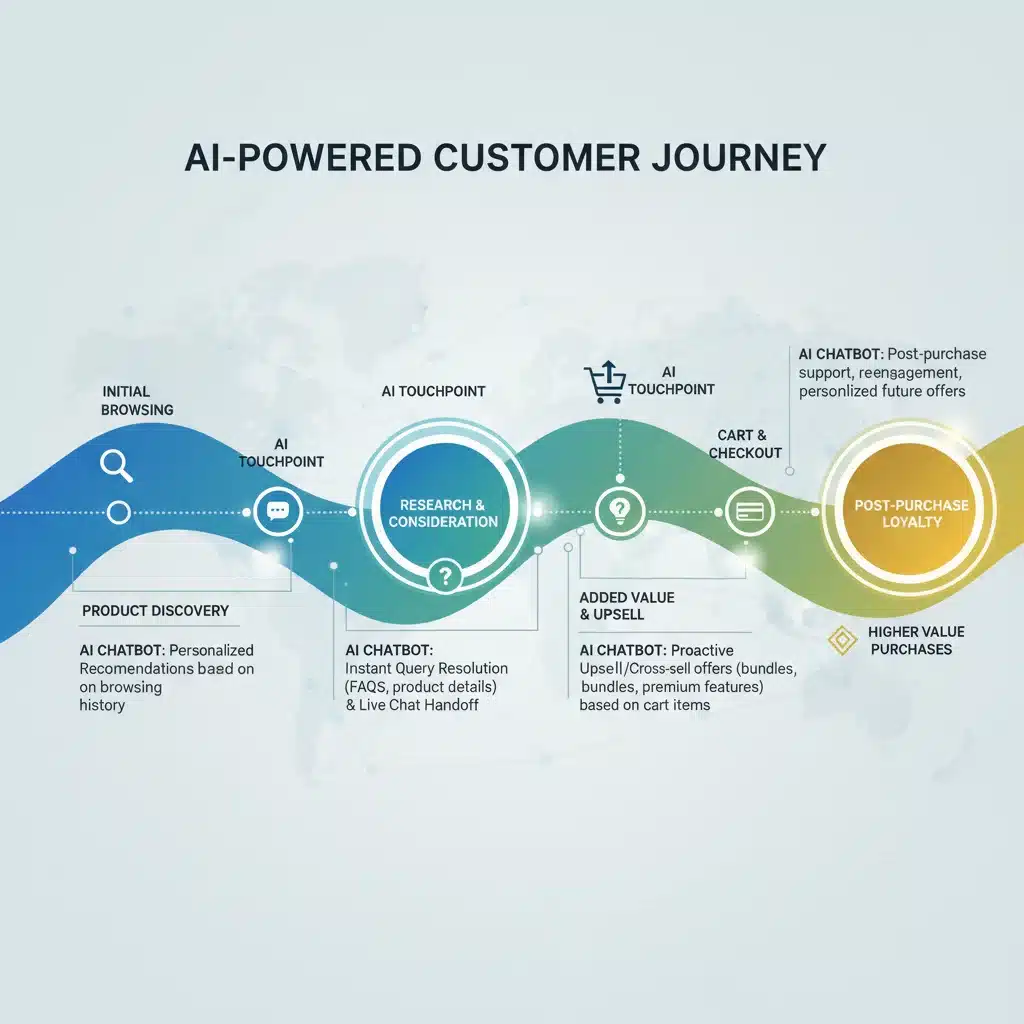
One of the most powerful ways AI chatbots increase AOV is through hyper-personalized product recommendations. Unlike static recommendation engines on a website, a chatbot can engage in a dynamic conversation with a customer, asking clarifying questions about their preferences, needs, and even their mood. Based on these real-time inputs and historical data, the chatbot can suggest highly relevant products, often leading to additional purchases.
For example, if a customer is looking for a moisturizer, the chatbot might ask about their skin type, concerns (e.g., dryness, acne), and even their desired scent. With this information, it can recommend not just one moisturizer, but a complementary serum, a toner, or even a complete skincare routine, effectively increasing the cart value. This level of personalized guidance mimics the experience of a knowledgeable sales associate, but with the scalability and availability of AI.
Strategic Upselling and Cross-selling
AI chatbots are exceptionally good at identifying opportunities for upselling and cross-selling. As a customer adds items to their cart or expresses interest in a particular product, the chatbot can intelligently suggest related or upgraded items. This isn’t random; it’s based on purchase history, browsing behavior, and predefined rules that maximize relevance.
Consider a customer purchasing a new coffee maker. An AI chatbot could proactively suggest compatible coffee beans, a grinder, or even a subscription service for filters. If a customer is buying a dress, the chatbot might recommend matching accessories or a complementary jacket. By presenting these options at the opportune moment, often before checkout, the chatbot subtly encourages customers to add more items, directly contributing to an increased AI Chatbots DTC AOV.
Proactive Engagement and Cart Recovery
Cart abandonment is a significant challenge for DTC brands. AI chatbots can play a crucial role in reducing this by proactively engaging with customers who show signs of hesitation or have left items in their cart. A chatbot can initiate a conversation, offering assistance, answering last-minute questions, or even providing incentives like free shipping or a small discount to encourage completion of the purchase.
Furthermore, during the browsing phase, if a customer lingers on a high-value product page or appears to be struggling, the chatbot can offer help. This proactive engagement can prevent potential abandonments and guide the customer towards a successful, higher-value purchase. This direct intervention is far more effective than generic email reminders, as it’s immediate and context-aware.
Enhanced Customer Service and Trust Building
While not directly transactional, superior customer service indirectly impacts AOV by building trust and encouraging repeat purchases. AI chatbots provide instant answers to common questions about products, shipping, returns, and more. This eliminates friction in the buying process and reduces customer frustration.
When customers feel supported and confident in their purchase, they are more likely to spend more and return for future purchases. A seamless, positive experience fostered by an efficient AI chatbot contributes to brand loyalty, which in turn leads to higher lifetime value and a greater propensity for larger orders. This reinforces the value of AI Chatbots DTC AOV strategies.
Key Strategies for DTC Brands to Implement AI Chatbots for AOV Growth
To achieve the projected 18% AOV increase, DTC brands need to implement AI chatbots strategically. Here are critical steps and considerations:
1. Define Clear Objectives and Use Cases
Before deploying an AI chatbot, clearly define what you want it to achieve. While increasing AOV is a primary goal, break it down into specific use cases: personalized recommendations, upsell/cross-sell prompts, cart abandonment recovery, FAQ automation, lead qualification, etc. Each use case requires specific training and integration.
2. Choose the Right AI Chatbot Platform
The market offers numerous AI chatbot platforms. Look for one that:
- Integrates seamlessly with your existing e-commerce platform (e.g., Shopify, Magento).
- Has robust NLP capabilities to understand nuanced customer queries.
- Offers personalization features based on customer data.
- Provides analytics and reporting to track performance.
- Allows for easy training and customization.
3. Integrate with CRM and Product Catalogs
For truly personalized and effective recommendations, your AI chatbot must be deeply integrated with your Customer Relationship Management (CRM) system and product catalog. This allows it to access customer history, preferences, and real-time inventory data, ensuring recommendations are relevant and available.
4. Develop Comprehensive Conversation Flows
Design intuitive and engaging conversation flows. Map out potential customer queries and responses, ensuring the chatbot can handle a wide range of scenarios. Include pathways for upselling and cross-selling at natural points in the conversation. Don’t forget to include escalation paths to human agents for complex issues the chatbot cannot resolve.
5. Continuously Train and Optimize
AI chatbots are not a ‘set it and forget it’ solution. They require continuous training and optimization. Regularly review chatbot conversations, identify areas for improvement in understanding and response generation, and update its knowledge base with new products, promotions, and FAQs. Leverage machine learning capabilities to allow the chatbot to learn from every interaction.
6. A/B Testing and Analytics
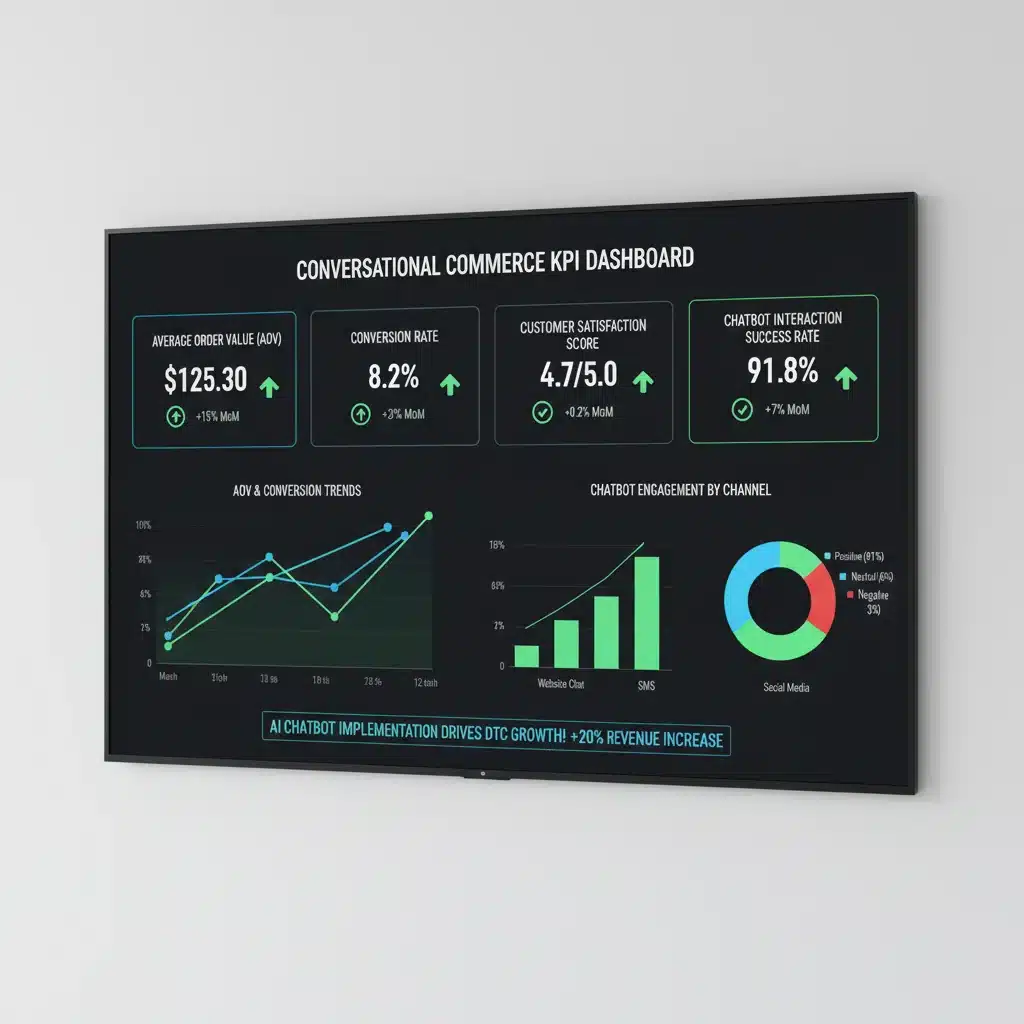
Implement A/B testing for different chatbot prompts, recommendation strategies, and engagement tactics to see what resonates most with your audience and drives the highest AOV. Utilize the analytics provided by your chatbot platform to track key metrics such as interaction rates, conversion rates, average session duration, and most importantly, the direct impact on AOV.
Real-World Impact and Future Projections for AI Chatbots DTC AOV
The 18% AOV increase isn’t an arbitrary number; it’s a reflection of market trends and the proven efficacy of AI in e-commerce. Early adopters of advanced conversational AI have already reported significant improvements in customer engagement and sales metrics. For instance, brands that have implemented AI for guided selling often see conversion rates jump by 10-15%, and when combined with personalized recommendations, AOV naturally follows an upward trajectory.
By 2026, the AI chatbot technology will be even more sophisticated. Expect advancements in:
- Predictive Personalization: Chatbots will not just react to customer input but predict their needs and preferences even before they articulate them, based on vast amounts of data and behavioral patterns.
- Multimodal Interactions: Integration with voice assistants, visual search, and even augmented reality will make conversational commerce richer and more immersive.
- Seamless Omnichannel Experience: AI chatbots will provide a consistent experience across all touchpoints – website, social media, messaging apps, and even in-store.
- Emotional Intelligence: Future chatbots may be able to detect customer emotions through text analysis, allowing them to adjust their tone and approach for more empathetic and effective interactions.
These advancements will further solidify the role of AI chatbots as indispensable tools for DTC brands looking to optimize their sales funnel and significantly increase their AI Chatbots DTC AOV.
Challenges and Considerations
While the benefits are clear, implementing AI chatbots for AOV growth isn’t without its challenges:
- Data Privacy and Security: Handling customer data requires strict adherence to privacy regulations and robust security measures.
- Maintaining a Human Touch: While automation is efficient, DTC brands must ensure the chatbot experience doesn’t feel cold or impersonal. The ability to seamlessly transfer to a human agent is crucial.
- Initial Investment: Implementing a sophisticated AI chatbot system can require a significant upfront investment in technology and training.
- Integration Complexity: Integrating the chatbot with various existing systems (CRM, ERP, inventory) can be complex and time-consuming.
DTC brands must approach these challenges proactively, investing in secure platforms, designing empathetic conversation flows, and prioritizing seamless human-AI collaboration to maximize the benefits of conversational commerce.
Conclusion: The Future is Conversational and AI-Driven
The journey towards an 18% increase in Average Order Value for DTC brands by 2026 is intricately linked to the strategic adoption of AI chatbots in conversational commerce. These intelligent tools are not just automating customer service; they are transforming the entire customer journey, making it more personalized, efficient, and ultimately, more profitable. By leveraging AI for personalized recommendations, strategic upselling and cross-selling, proactive engagement, and enhanced customer service, DTC brands can cultivate deeper customer relationships and drive substantial revenue growth.
The future of e-commerce for DTC brands is conversational, and it’s powered by AI. Brands that embrace this shift now, focusing on intelligent implementation and continuous optimization, will be well-positioned to capture a larger share of the market and achieve impressive AOV growth in the years to come. The time to invest in AI Chatbots DTC AOV strategies is now, to ensure your brand is not just participating in the future of retail, but leading it.