
Data-Driven Pricing Strategies: Maximizing Profit Margins by 7% for US Online Retailers in 2026
In the fiercely competitive landscape of US online retail, achieving and sustaining robust profit margins is paramount. As we look towards 2026, the differentiator for success will increasingly be the intelligent application of data-driven pricing strategies. This isn’t just about tweaking prices; it’s about harnessing the power of vast datasets to make informed, agile, and ultimately, highly profitable decisions. For online retailers, the promise is significant: a potential increase in profit margins by 7% by 2026. This comprehensive guide will delve into how retailers can achieve this ambitious goal, exploring the methodologies, technologies, and strategic shifts required to transform raw data into a powerful competitive advantage.
The Imperative of Data-Driven Pricing in Modern Retail
The traditional approach to pricing, often based on cost-plus models or infrequent competitive checks, is no longer sufficient in a dynamic online environment. Consumers are more informed than ever, price comparison is instantaneous, and market conditions can shift rapidly. Data-driven pricing strategies move beyond guesswork, employing sophisticated analytics to understand market demand, competitor movements, customer behavior, and internal cost structures in real-time. This holistic view enables retailers to set prices that not only cover costs but also maximize revenue and profitability without alienating customers.
The digital age provides an unprecedented volume of data: website traffic, conversion rates, customer demographics, purchasing history, browsing patterns, competitor pricing, social media sentiment, and even macroeconomic indicators. When effectively collected, analyzed, and interpreted, this data becomes the bedrock for intelligent pricing decisions. The 7% margin increase isn’t an arbitrary figure; it reflects the compounding effect of optimized pricing across a vast product catalog and fluctuating market conditions. Ignoring this shift means leaving money on the table, while embracing it promises substantial financial gains.
Understanding the Core Components of Data-Driven Pricing
At its heart, data-driven pricing involves several interconnected components. Each plays a crucial role in building a robust pricing framework that can adapt and optimize over time:
1. Dynamic Pricing: The Real-Time Advantage
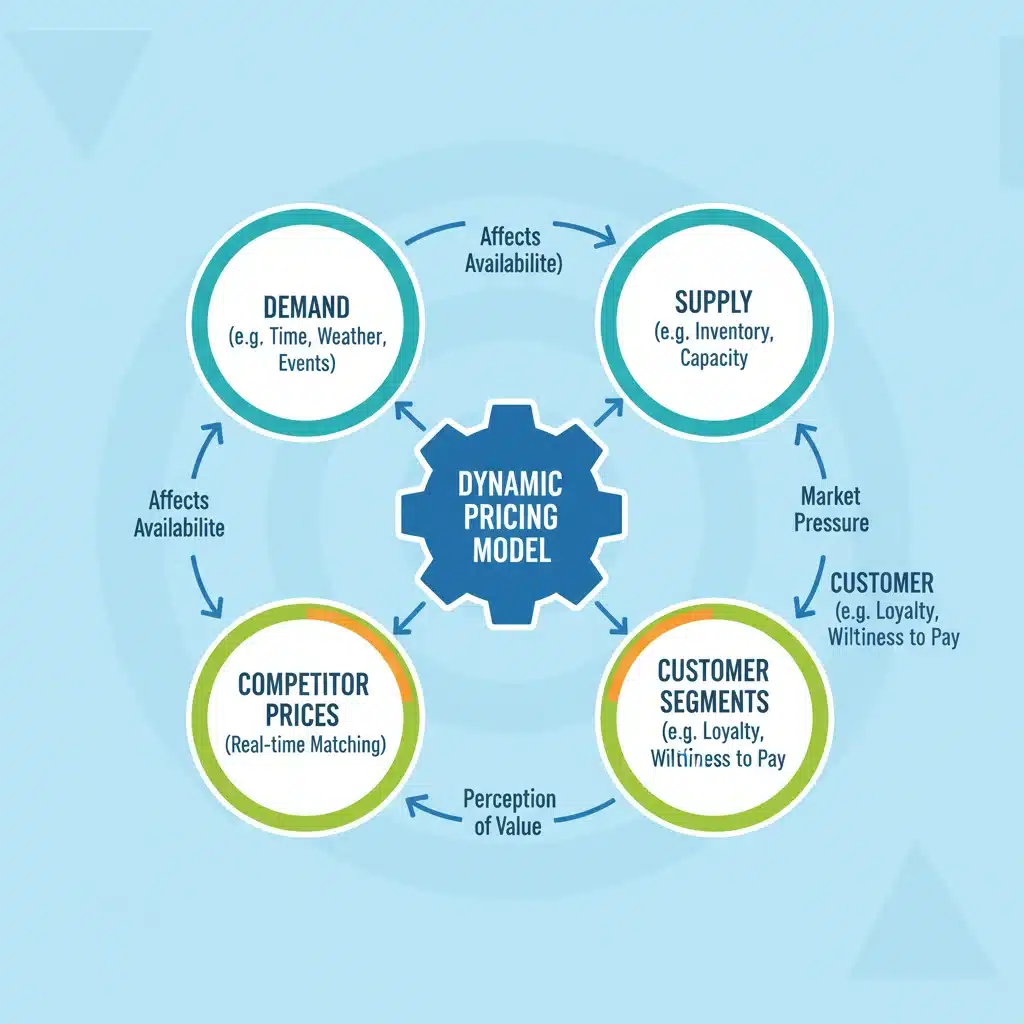
Dynamic pricing, also known as surge pricing or demand pricing, is the ability to adjust prices in real-time based on market demand, supply, competitor prices, time of day, customer segment, and other relevant factors. Airlines and ride-sharing services have long mastered this, but its application in online retail is becoming increasingly sophisticated. For instance, a retailer might increase the price of a popular item during peak shopping hours or decrease it to stimulate demand during off-peak times. Seasonal trends, flash sales, and even weather patterns can influence dynamic pricing algorithms.
Implementing dynamic pricing effectively requires robust data infrastructure and advanced algorithms. Retailers need to continuously monitor key metrics such as inventory levels, sales velocity, website traffic, and competitor actions. The goal is to find the optimal price point that maximizes both sales volume and profit margins, often a delicate balance. The beauty of dynamic pricing lies in its responsiveness; it allows retailers to capitalize on fleeting opportunities and mitigate potential losses almost instantaneously.
2. Competitive Pricing Analysis: Staying Ahead of the Curve
In online retail, competition is just a click away. Customers can easily compare prices across multiple platforms. Therefore, a key element of data-driven pricing strategies is continuous and automated competitive pricing analysis. This involves tracking competitor prices for identical or similar products, understanding their pricing strategies (e.g., everyday low prices, promotional pricing), and identifying pricing gaps or opportunities.
Advanced tools can scrape competitor websites, analyze pricing data, and provide alerts when significant price changes occur. This allows retailers to react swiftly, whether by adjusting their own prices to remain competitive or by strategically maintaining higher prices if their value proposition warrants it. However, it’s not just about being the cheapest; it’s about understanding market positioning and ensuring your prices reflect your brand’s perceived value while remaining attractive to your target audience.
3. Customer Segmentation and Personalization: Tailoring Value
Not all customers are the same, and their willingness to pay can vary significantly. Data-driven pricing allows for granular customer segmentation based on purchasing history, browsing behavior, demographic data, loyalty status, and even geographic location. This segmentation enables personalized pricing strategies, where different customer groups might see different prices or receive tailored discounts.
For example, a new customer might receive a welcome discount to encourage their first purchase, while a loyal customer might be offered exclusive access to a sale. High-value customers could be presented with premium product lines at full price, while price-sensitive customers might be targeted with value-oriented options. Personalization extends beyond just price; it also involves offering relevant product recommendations and a customized shopping experience, all of which contribute to higher conversion rates and customer lifetime value.
4. Cost Analysis and Profit Optimization: Knowing Your Bottom Line
While external factors like demand and competition are crucial, a deep understanding of internal costs is equally vital for data-driven pricing. This includes not just the direct cost of goods sold, but also shipping costs, marketing expenses, operational overheads, return rates, and customer acquisition costs. By accurately tracking these costs, retailers can determine the true profitability of each product and category.
Profit optimization involves identifying products that are underperforming in terms of margin, understanding why, and adjusting pricing or marketing strategies accordingly. It also means recognizing high-margin products and strategizing how to promote them more effectively. This internal financial data, when combined with external market data, provides a comprehensive picture that allows for truly optimized pricing decisions that directly impact the 7% margin increase.
Technologies Enabling Data-Driven Pricing
Achieving a 7% margin increase through data-driven pricing strategies is heavily reliant on the right technological infrastructure. Manual processes are simply too slow and prone to error in today’s fast-paced retail environment. Key technologies include:
1. Big Data Analytics Platforms
These platforms are essential for collecting, storing, and processing massive volumes of structured and unstructured data from various sources. They provide the foundation for extracting meaningful insights from sales transactions, website interactions, customer feedback, and external market data. Cloud-based solutions offer scalability and flexibility, allowing retailers to expand their data capabilities as their business grows.
2. AI and Machine Learning Algorithms
Artificial Intelligence (AI) and Machine Learning (ML) are the engines behind sophisticated data-driven pricing. These algorithms can identify complex patterns in data that humans would miss, predict future demand, optimize pricing in real-time, and even learn from past pricing decisions to continuously improve performance. ML models can analyze historical sales data, promotional effectiveness, and external factors to recommend optimal prices for thousands of SKUs simultaneously.
3. Price Optimization Software
Specialized price optimization software integrates with existing e-commerce platforms and leverages AI/ML to automate pricing decisions. These tools can perform competitive price monitoring, implement dynamic pricing rules, manage promotions, and provide detailed analytics on pricing performance. They often come with dashboards that allow retailers to visualize the impact of pricing changes and make strategic adjustments.
4. Customer Relationship Management (CRM) Systems
CRM systems house valuable customer data, including purchase history, preferences, and interactions. Integrating CRM data with pricing strategies allows for highly personalized pricing and promotional offers, enhancing customer loyalty and driving repeat purchases. Understanding customer segments through CRM data is crucial for tailoring pricing strategies effectively.
5. Business Intelligence (BI) Tools
BI tools transform raw data into understandable and actionable insights through dashboards, reports, and visualizations. They empower decision-makers to monitor key performance indicators (KPIs) related to pricing, such as profit margins per product, sales velocity, and customer acquisition costs. Effective BI tools are critical for tracking the progress towards the 7% margin increase target.
Implementing Data-Driven Pricing: A Strategic Roadmap
Achieving a 7% increase in profit margins by 2026 requires a structured approach to implementing data-driven pricing strategies. Here’s a roadmap for US online retailers:
Phase 1: Data Collection and Infrastructure Setup (6-12 months)
- Define Key Data Sources: Identify all relevant internal (sales, inventory, costs, customer data) and external (competitor prices, market trends, economic indicators) data sources.
- Integrate Data Systems: Ensure seamless integration between your e-commerce platform, ERP, CRM, and analytics tools. This might involve API development or using pre-built connectors.
- Establish Data Governance: Implement policies and procedures for data quality, security, and privacy. Clean and consistent data is foundational.
- Invest in a Data Warehouse/Lake: Set up a scalable infrastructure to store and process large volumes of data.
Phase 2: Analytics and Model Development (6-12 months)
- Hire/Train Data Scientists: Build an in-house team or partner with external experts capable of developing and managing pricing algorithms.
- Develop Predictive Models: Create models for demand forecasting, price elasticity, and customer segmentation. Start with simpler models and gradually increase complexity.
- Pilot Dynamic Pricing: Begin with a small subset of products or a specific product category to test dynamic pricing models. Monitor performance closely.
- Competitive Intelligence Setup: Implement tools for automated competitive price monitoring and analysis.
Phase 3: Automation and Optimization (Ongoing)
- Deploy Price Optimization Software: Integrate advanced pricing software that can automate price adjustments based on predefined rules and AI recommendations.
- A/B Testing: Continuously test different pricing strategies and promotional offers to understand their impact on sales, conversions, and margins.
- Performance Monitoring: Establish clear KPIs and use BI tools to continuously monitor the effectiveness of pricing strategies. Adjust algorithms and rules as needed.
- Iterative Improvement: Data-driven pricing is an ongoing process. Regularly review market changes, customer feedback, and technological advancements to refine your strategies.
Challenges and Considerations
While the benefits of data-driven pricing are clear, implementing these strategies is not without its challenges:
- Data Quality: Inaccurate or incomplete data can lead to flawed pricing decisions. Investing in data cleansing and governance is crucial.
- Technological Investment: The initial investment in data infrastructure, AI/ML tools, and specialized software can be substantial. Retailers need to view this as a strategic investment with a high ROI.
- Talent Gap: Finding and retaining skilled data scientists and analysts is a significant challenge.
- Customer Perception: Dynamic pricing, if not handled carefully, can sometimes lead to customer dissatisfaction if they perceive prices as unfair or inconsistent. Transparency and clear communication can mitigate this.
- Ethical Considerations: Ensure pricing strategies do not discriminate unfairly against certain customer segments.
- Integration Complexity: Integrating various disparate systems can be complex and time-consuming.
Addressing these challenges proactively is key to a successful transition to a data-driven pricing model. Starting small with pilot projects and gradually scaling up can help mitigate risks and build internal expertise.
The Future of Retail: Beyond 2026
The pursuit of a 7% increase in profit margins by 2026 through data-driven pricing strategies is just the beginning. As technology evolves, so too will the sophistication of pricing models. We can expect to see:
- Hyper-Personalization: Even more granular pricing based on individual customer behavior and real-time context.
- Predictive Analytics Enhanced with External Factors: Integration of even broader external data, such as real-time weather patterns, local events, and social media trends, to fine-tune pricing.
- Blockchain for Supply Chain Transparency: Enhanced visibility into supply chain costs, enabling more accurate cost-plus components in pricing.
- Voice Commerce Integration: Optimizing pricing for voice-activated shopping platforms, where price comparison might be less immediate.
- Subscription Model Optimization: Data-driven insights will also optimize recurring revenue models, determining optimal subscription tiers and renewal incentives.
US online retailers that embrace these advancements will not only achieve the 7% margin increase but also establish themselves as leaders in a continuously evolving market. The ability to adapt quickly and make intelligent, data-informed decisions will be the ultimate determinant of long-term success and profitability.
Conclusion: Seizing the Data-Driven Opportunity
For US online retailers, the opportunity to significantly boost profit margins by 7% by 2026 is real and achievable through the strategic implementation of data-driven pricing strategies. This involves a fundamental shift from intuition-based pricing to a model powered by sophisticated analytics, AI, and continuous optimization. By focusing on dynamic pricing, competitive analysis, customer segmentation, and rigorous cost management, retailers can unlock new levels of profitability.
The journey requires investment in technology, talent, and a commitment to continuous learning and adaptation. However, the rewards – increased revenue, higher margins, improved customer satisfaction, and a stronger competitive position – far outweigh the challenges. As the digital retail landscape becomes even more competitive, those who master the art and science of data-driven pricing will be the ones who not only survive but thrive, setting new benchmarks for profitability in the years to come.
Start your journey today towards harnessing the power of data to transform your pricing strategy and secure a more profitable future for your online retail business.