AI-Driven Personalization: Boosting US Retail Conversions by 8%
Unpacking the Latest 3-Month Trend: How AI-Driven Personalization is Boosting US Retail Conversions by 8%
In the dynamic landscape of modern retail, staying ahead means constantly innovating and adapting to consumer demands. Over the past three months, a groundbreaking trend has emerged, reshaping the US retail sector: the profound impact of AI retail personalization. Recent data indicates a significant 8% boost in conversion rates directly attributable to the strategic implementation of AI-driven personalization strategies. This isn’t just a fleeting statistic; it’s a testament to a fundamental shift in how retailers connect with their customers, offering an unparalleled level of tailored experiences that resonate deeply and drive measurable results.
The rise of artificial intelligence in retail is not a new concept, but its application in personalization has reached a new level of sophistication and effectiveness. From hyper-targeted product recommendations to dynamic pricing and customized marketing messages, AI is empowering retailers to understand individual customer preferences with unprecedented accuracy. This deep understanding allows businesses to deliver highly relevant and timely interactions, transforming the shopping journey from a generic transaction into a personalized adventure.
This comprehensive article will delve into the intricacies of this pivotal trend, exploring the mechanisms behind AI-driven personalization, the tangible benefits it offers, and the strategies retailers are employing to achieve such impressive conversion rate improvements. We will also examine the challenges, ethical considerations, and the exciting future that lies ahead for AI in retail. Understanding this trend is crucial for any retailer looking to thrive in an increasingly competitive market, where customer experience is king and personalization is the key to unlocking sustained growth.
The Core Mechanics of AI Retail Personalization
At its heart, AI retail personalization is powered by sophisticated algorithms that analyze vast amounts of customer data. This data can include browsing history, purchase patterns, demographic information, social media activity, and even real-time behavioral cues. Machine learning models then process this information to identify patterns, predict future behaviors, and generate highly individualized recommendations and experiences.
One of the primary mechanisms is collaborative filtering, where AI identifies customers with similar tastes and recommends products based on what those similar customers have purchased or viewed. Content-based filtering, on the other hand, recommends items similar to those a customer has liked in the past. Hybrid approaches combine both for even greater accuracy.
Beyond simple recommendations, AI also drives dynamic pricing strategies, adjusting product prices in real-time based on demand, competitor pricing, and individual customer’s willingness to pay. This ensures optimal pricing for both the customer and the retailer. Furthermore, AI personalizes website layouts, app interfaces, and email communications, presenting content and offers that are most likely to engage each specific user. This level of customization ensures that every touchpoint feels unique and directly addresses the customer’s needs and desires, significantly enhancing the overall customer experience and paving the way for higher conversion rates.
Natural Language Processing (NLP) is another critical component, enabling AI-powered chatbots and virtual assistants to understand and respond to customer queries in a personalized and efficient manner. These tools can guide customers through their shopping journey, offer product information, and resolve issues, all while maintaining a consistent brand voice and tailored interaction. The ability of AI to learn and adapt over time is what truly sets it apart, allowing personalization strategies to continuously evolve and improve their effectiveness, leading to sustained increases in retail conversions.
Why the 8% Conversion Boost Matters for US Retail
An 8% increase in conversion rates is a substantial figure in any industry, but particularly in the competitive US retail sector. This boost translates directly into increased revenue, improved customer loyalty, and a stronger market position for businesses that successfully implement AI retail personalization. For many retailers, even a 1% increase in conversions can mean millions of dollars in additional sales; an 8% rise is transformative.
This improvement isn’t just about selling more products; it’s about building stronger, more meaningful relationships with customers. When customers feel understood and valued, they are more likely to return, make repeat purchases, and become brand advocates. This enhanced customer loyalty reduces customer acquisition costs in the long run and creates a more stable and predictable revenue stream.
Moreover, personalized experiences reduce decision fatigue for shoppers. Instead of sifting through countless irrelevant products, customers are presented with curated selections that align with their preferences, making the purchasing process smoother and more enjoyable. This efficiency directly contributes to higher conversion rates and a more positive perception of the brand.
The 8% conversion boost also highlights the growing expectation among consumers for personalized interactions. In an age where digital natives dominate a significant portion of the market, generic experiences are increasingly overlooked. Retailers who fail to adopt personalized strategies risk falling behind competitors who are leveraging AI to create superior customer journeys. This trend underscores the urgency for businesses to invest in and refine their AI personalization capabilities to remain competitive and capture a larger share of the market.
Key Strategies Driving AI-Powered Conversion Gains
Several strategic applications of AI retail personalization are primarily responsible for the observed conversion gains. These strategies are not standalone but often work in concert to create a seamless and highly effective personalized experience across multiple touchpoints.
Hyper-Personalized Product Recommendations
This is perhaps the most visible aspect of AI personalization. Retailers are moving beyond simple ‘customers who bought this also bought…’ suggestions. Advanced AI models analyze a myriad of factors, including real-time browsing behavior, past purchases, items added to carts or wishlists, demographic data, and even external trends, to offer incredibly precise product recommendations. These recommendations can appear on product pages, in shopping carts, during checkout, and within personalized emails, significantly increasing the likelihood of an additional purchase.
Dynamic Content and Layout Optimization
AI can dynamically alter website and app content, images, and even entire page layouts based on individual user profiles and behaviors. For a first-time visitor, the homepage might highlight best-sellers or introductory offers. For a returning customer who frequently buys electronics, the homepage might feature new gadgets or accessories related to their past purchases. This ensures that every visitor sees the most relevant content, reducing bounce rates and guiding them more effectively towards conversion.
Personalized Marketing Campaigns
Email marketing, SMS campaigns, and push notifications are becoming increasingly sophisticated with AI. Instead of mass-sending generic promotions, AI segments audiences into highly specific groups and crafts personalized messages, offers, and timing for each. An email reminding a customer about an item left in their cart, perhaps with a small discount, or a notification about a new product line perfectly suited to their style, can be incredibly effective in driving conversions.
Predictive Analytics for Inventory and Demand
While not directly customer-facing, AI’s ability to predict demand and optimize inventory plays a crucial role in enabling effective personalization. By ensuring that personalized recommendations lead to products that are actually in stock and can be delivered promptly, retailers avoid customer disappointment and lost sales, indirectly contributing to higher conversion rates and customer satisfaction.
AI-Powered Customer Service and Support
Chatbots and virtual assistants powered by AI and NLP provide instant, personalized support 24/7. They can answer common questions, guide customers through product selection, troubleshoot issues, and even process returns. This immediate and tailored assistance enhances the customer experience, removes friction from the purchasing process, and builds trust, all of which positively impact conversion rates. When a customer can quickly get answers and support, they are more likely to complete their purchase.
Implementing AI Retail Personalization: Best Practices
Achieving an 8% conversion boost through AI retail personalization isn’t accidental; it requires careful planning and execution. Here are some best practices for retailers looking to harness the power of AI:
- Start with Clear Objectives: Define what you want to achieve. Is it higher conversion rates, increased average order value, or improved customer retention? Clear goals will guide your AI strategy.
- Invest in Data Infrastructure: AI thrives on data. Ensure you have robust systems for collecting, storing, cleaning, and analyzing customer data from all touchpoints. Data quality is paramount for effective personalization.
- Choose the Right AI Tools: There’s a wide array of AI platforms and solutions available. Select tools that align with your specific needs, budget, and existing technology stack. Consider solutions that offer scalability and integration capabilities.
- Iterate and Optimize: AI models require continuous training and refinement. Regularly monitor the performance of your personalization strategies, gather feedback, and use insights to optimize algorithms and approaches. A/B testing different personalization tactics can yield valuable insights.
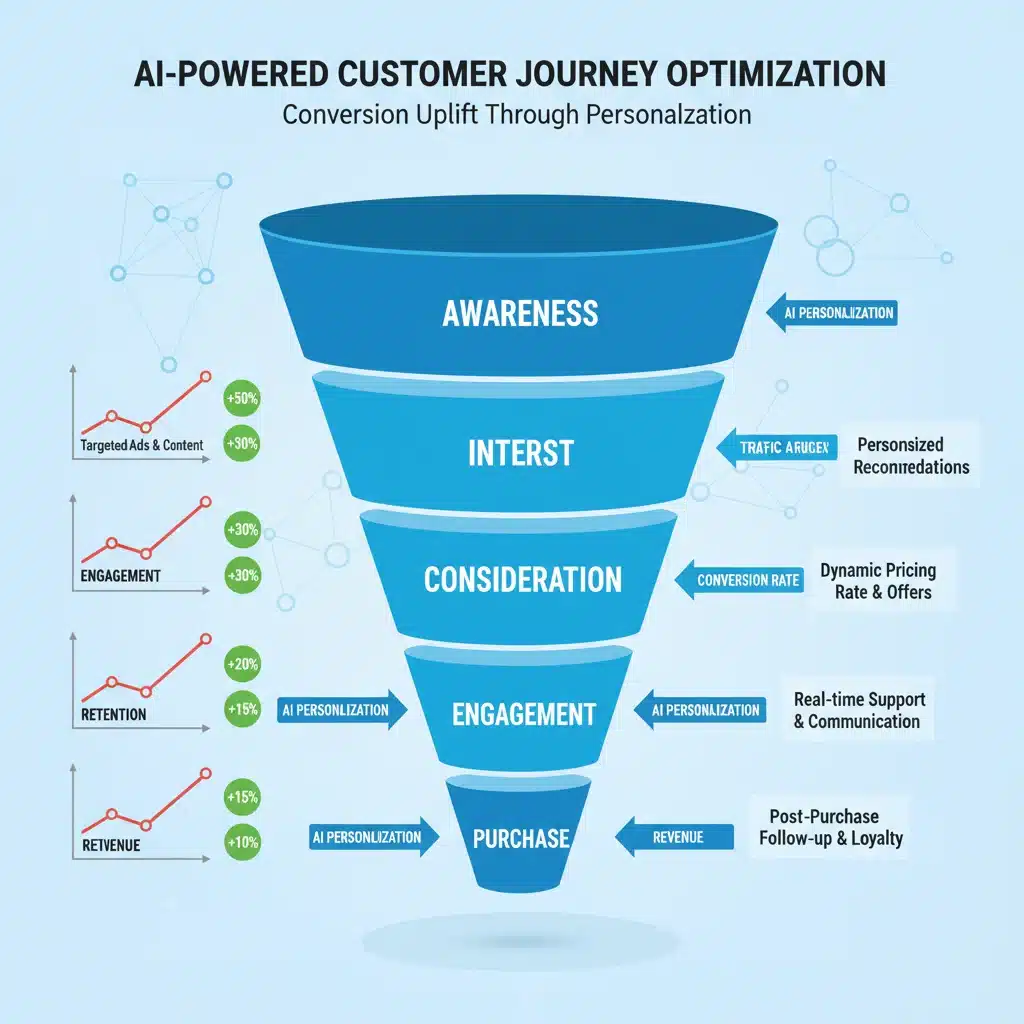
- Focus on the Customer Journey: Personalization should be consistent and coherent across the entire customer journey, from initial discovery to post-purchase support. Map out your customer touchpoints and identify opportunities for AI enhancement at each stage.
- Prioritize Privacy and Transparency: Be transparent with customers about how their data is being used for personalization. Adhere to data privacy regulations (e.g., CCPA, GDPR) and give customers control over their data preferences. Trust is a cornerstone of successful personalization.
- Integrate with Existing Systems: For seamless operation, ensure your AI personalization tools integrate well with your CRM, e-commerce platform, marketing automation, and inventory management systems.
- Educate Your Team: Train your marketing, sales, and customer service teams on how AI personalization works and how to leverage its insights to enhance their efforts.
Challenges and Considerations in AI Retail Personalization
While the benefits of AI retail personalization are clear, several challenges and considerations must be addressed for successful implementation and sustained growth:
Data Privacy and Security
Collecting and analyzing vast amounts of customer data raises significant privacy concerns. Retailers must ensure robust data security measures and comply with all relevant data protection regulations. Transparency with customers about data usage and providing clear opt-out options are crucial for maintaining trust and avoiding reputational damage.
Data Silos and Integration Issues
Many retailers struggle with fragmented data spread across various systems (e.g., online, in-store, CRM, marketing). Breaking down these data silos and integrating disparate systems is essential for creating a unified customer view that AI can effectively leverage for comprehensive personalization. Without a holistic data foundation, personalization efforts will remain limited and less effective.
Algorithm Bias
AI algorithms can inadvertently perpetuate or even amplify existing biases present in the training data. This can lead to discriminatory recommendations or experiences for certain customer segments. Retailers must be vigilant in monitoring their AI models for bias and actively work to mitigate it through diverse data sets and ethical AI development practices.
Cost and Complexity of Implementation
Implementing sophisticated AI personalization solutions can be a significant investment, both in terms of technology and expertise. Small and medium-sized businesses might find the initial costs and technical complexity prohibitive. However, the increasing availability of scalable, cloud-based AI solutions is making these technologies more accessible.
Measuring ROI and Attribution
While an 8% conversion boost is impressive, accurately attributing specific sales to particular personalization efforts can be complex. Retailers need robust analytics and attribution models to understand the true return on investment (ROI) of their AI personalization initiatives and to optimize their strategies effectively.
Maintaining the Human Touch
While AI enhances personalization, it should not completely replace human interaction. The goal is to augment, not eliminate, the human element in customer service and sales. Finding the right balance between automated personalization and genuine human connection is key to creating truly exceptional customer experiences.
The Future of AI Retail Personalization
The 8% conversion boost observed in the last three months is just the beginning. The future of AI retail personalization promises even more sophisticated and immersive experiences. Here’s a glimpse into what we can expect:
Hyper-Individualization at Scale
AI will move beyond segment-based personalization to truly individual experiences, adapting to real-time emotional states, contexts, and even environmental factors. Imagine an AI understanding your mood based on your browsing patterns and recommending products that align with it, or adjusting offers based on local weather conditions.
Voice and Visual Search Integration
As voice assistants and visual search technologies become more prevalent, AI personalization will integrate seamlessly, allowing customers to find products through natural language queries or by simply showing an image. This will open up new avenues for personalized recommendations and discovery.
Augmented Reality (AR) and Virtual Reality (VR) Shopping
AI will power personalized AR and VR shopping experiences, allowing customers to virtually try on clothes, place furniture in their homes, or explore digital showrooms tailored to their preferences. This immersive personalization will blur the lines between online and offline shopping.
Proactive Personalization
AI will become more proactive, anticipating customer needs even before they articulate them. This could involve automatically reordering frequently purchased items, suggesting complementary products based on past usage, or alerting customers to potential issues with products they own.
Ethical AI and Trust-Building
As AI becomes more pervasive, there will be an increased focus on ethical AI development, ensuring fairness, transparency, and accountability. Retailers who prioritize ethical AI practices and build trust with their customers will gain a significant competitive advantage.
Seamless Omnichannel Experiences
AI will further unify online and offline shopping experiences, ensuring that personalization is consistent across all channels. A customer’s preferences learned online will inform their in-store experience, and vice versa, creating a truly seamless and personalized journey.
Conclusion: Embracing the Personalized Future of Retail
The 8% boost in US retail conversion rates driven by AI retail personalization is a clear indicator that the future of commerce is deeply personal. Retailers who embrace this transformative technology are not just improving their bottom line; they are building stronger, more resilient businesses capable of meeting the evolving demands of modern consumers. From understanding individual preferences with unprecedented accuracy to delivering hyper-relevant experiences across every touchpoint, AI is reshaping the retail landscape.
While challenges such as data privacy, integration complexities, and ethical considerations remain, the trajectory is clear: personalization is no longer a luxury but a necessity. By investing in robust data infrastructure, selecting appropriate AI tools, and continuously optimizing their strategies, retailers can unlock significant growth and foster unparalleled customer loyalty. The journey towards a fully personalized retail experience is ongoing, but the recent gains demonstrate that the path is not only promising but already yielding remarkable results. For any retailer looking to thrive in the competitive environment of today and tomorrow, embracing AI-driven personalization is not just an option; it is the strategic imperative.