Boost Retail Profitability: Top 7 Data Analytics Metrics for 2026

Data Analytics Platforms for Retailers: 7 Key Metrics to Track in 2026 for a 15% Increase in Profitability
In the rapidly evolving landscape of retail, the adage “knowledge is power” has never been more pertinent. As we hurtle towards 2026, retailers face an increasingly complex environment characterized by shifting consumer behaviors, intense competition, and an ever-expanding digital footprint. To not only survive but thrive in this dynamic ecosystem, businesses must harness the transformative potential of retail data analytics. The goal is clear: achieve a formidable 15% increase in profitability. This ambitious target is attainable, but it demands a strategic, data-driven approach, anchored by robust retail data analytics platforms and a keen focus on specific, high-impact metrics.
The sheer volume of data generated daily by retail operations – from online browsing patterns to in-store purchase histories, supply chain logistics, and customer service interactions – is staggering. Without effective retail data analytics platforms, this treasure trove of information remains just that: raw data, untapped potential. However, when properly collected, processed, and analyzed, this data transforms into actionable insights that can inform every facet of a retail business, from inventory management and marketing campaigns to pricing strategies and customer experience enhancements.
This comprehensive guide will delve into the critical role of retail data analytics platforms in driving profitability. We will explore seven key metrics that every forward-thinking retailer should be tracking diligently by 2026 to ensure a competitive edge and substantial financial gains. Furthermore, we will discuss how these platforms facilitate the collection, analysis, and interpretation of these metrics, empowering retailers to make informed decisions that directly contribute to their bottom line.
The Imperative of Retail Data Analytics Platforms
Before we dive into the specific metrics, it’s crucial to understand why dedicated retail data analytics platforms are indispensable. These sophisticated systems are designed to:
- Consolidate Data: They integrate data from disparate sources – POS systems, e-commerce platforms, CRM, inventory management, marketing automation, social media, and more – into a unified view. This eliminates data silos and provides a holistic understanding of business performance.
- Provide Real-time Insights: In retail, timing is everything. Modern platforms offer real-time or near real-time data processing, allowing retailers to react swiftly to market changes, customer trends, and operational challenges.
- Facilitate Predictive Analytics: Beyond understanding what has happened, advanced retail data analytics platforms can predict what is likely to happen. This includes sales forecasting, demand prediction, customer churn probability, and identifying emerging trends.
- Enable Personalization: By understanding individual customer preferences and behaviors, retailers can deliver highly personalized experiences, from product recommendations to targeted promotions, significantly boosting engagement and conversion rates.
- Optimize Operations: From optimizing supply chains and managing inventory levels to streamlining store operations and workforce management, these platforms provide insights that drive efficiency and reduce costs.
- Enhance Decision-Making: Ultimately, retail data analytics platforms empower decision-makers with accurate, timely, and relevant information, reducing reliance on intuition and fostering a culture of data-driven strategy.
The investment in robust retail data analytics capabilities is not merely an expense; it’s a strategic imperative for achieving sustained growth and the coveted 15% profitability increase by 2026.
7 Key Retail Data Analytics Metrics for 2026 Profitability
To achieve a substantial boost in profitability, retailers must move beyond traditional sales figures and delve into more nuanced, actionable metrics. Here are seven crucial retail data analytics metrics to prioritize:
1. Customer Lifetime Value (CLV) – The Long-Term Relationship Indicator
What it is: CLV represents the total revenue a business can reasonably expect from a single customer account throughout their relationship with the company. It’s a forward-looking metric that emphasizes the long-term value of customer relationships over individual transactions.
Why it’s crucial for profitability: Acquiring new customers is often more expensive than retaining existing ones. By understanding CLV, retailers can allocate marketing resources more effectively, focusing on retaining high-value customers and attracting new ones with similar profiles. A higher CLV directly translates to increased profitability without necessarily increasing the customer base size.
How retail data analytics platforms help: Platforms integrate purchase history, engagement data, demographic information, and even sentiment analysis to calculate CLV accurately. They can segment customers by CLV, enabling targeted retention strategies, personalized loyalty programs, and optimized marketing spend.
Actionable insights: Identify your most valuable customer segments, tailor exclusive offers to them, and develop strategies to convert lower-CLV customers into higher-CLV ones. Predict customer churn based on declining CLV trends.
2. Inventory Turnover Ratio (ITR) – Optimizing Asset Utilization
What it is: ITR measures how many times inventory is sold and replaced over a specific period. A higher ratio generally indicates efficient sales and inventory management, while a lower ratio might suggest overstocking or weak sales.
Why it’s crucial for profitability: Inventory is a significant asset, but also a liability if it sits unsold. High inventory holding costs (storage, insurance, obsolescence, damage) eat into profits. Optimizing ITR means minimizing these costs while ensuring product availability, directly impacting the bottom line.
How retail data analytics platforms help: These platforms analyze historical sales data, seasonal trends, promotional impacts, and supply chain lead times to forecast demand accurately. They can automate reorder points, optimize stock levels across multiple locations, and identify slow-moving or obsolete inventory for liquidation.
Actionable insights: Reduce carrying costs by optimizing stock levels. Identify products with low turnover to either discontinue, discount, or re-evaluate their placement. Improve cash flow by converting inventory into sales more rapidly.
3. Conversion Rate by Channel – Pinpointing Performance
What it is: Conversion rate measures the percentage of website visitors, store visitors, or marketing campaign recipients who complete a desired action, such as making a purchase. “By Channel” refers to breaking this down for e-commerce, physical stores, mobile apps, social media, etc.
Why it’s crucial for profitability: Understanding which channels are most effective at converting interest into sales allows retailers to allocate marketing budgets and operational resources more efficiently. Improving conversion rates means getting more sales from the same amount of traffic or footfall, directly boosting revenue and profitability.
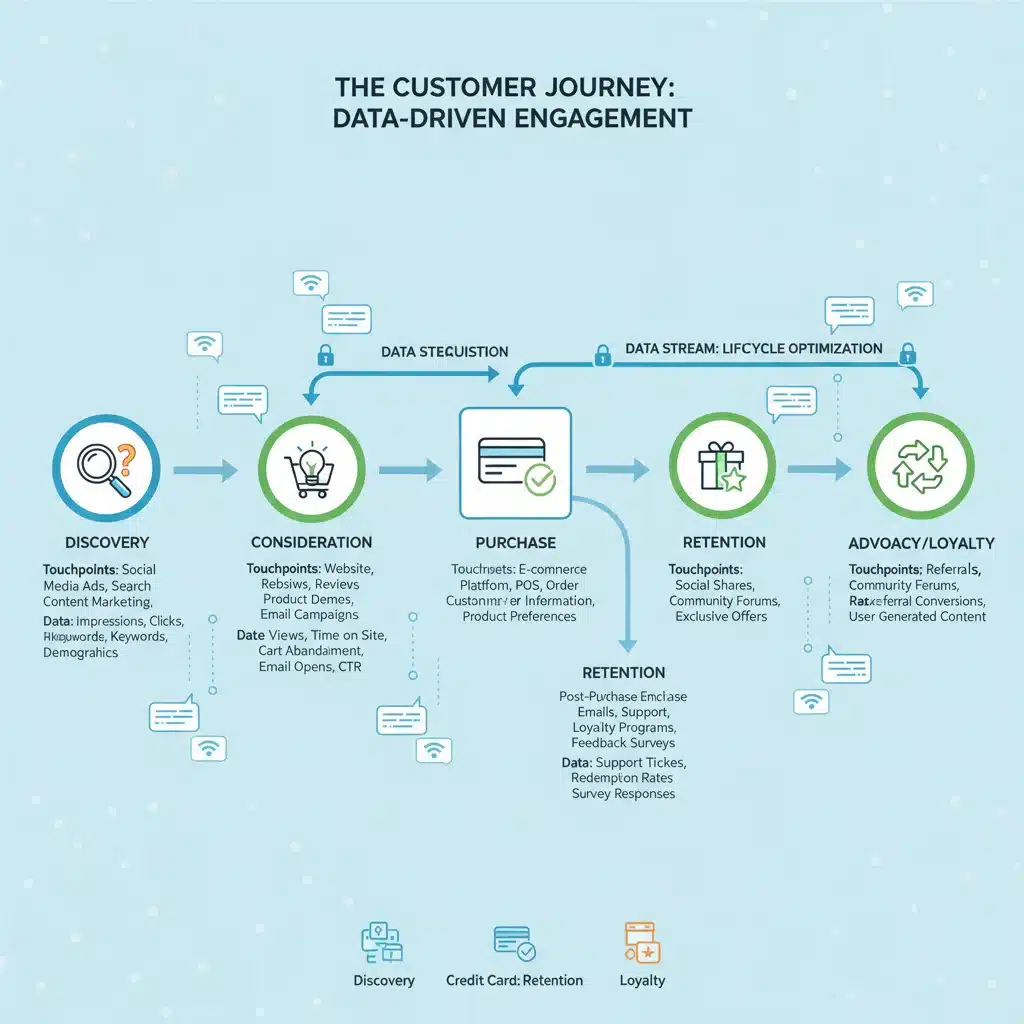
How retail data analytics platforms help: Platforms track user behavior across all touchpoints, from initial click to final purchase. They provide granular data on bounce rates, time on page, cart abandonment rates, and path to purchase for each channel, enabling A/B testing and optimization efforts.
Actionable insights: Identify underperforming channels and optimize their user experience or promotional strategies. Double down on high-performing channels. Understand cross-channel influence (e.g., how online browsing impacts in-store purchases).
4. Average Transaction Value (ATV) / Average Order Value (AOV) – Maximizing Each Sale
What it is: ATV (for in-store) or AOV (for e-commerce) is the average amount of money a customer spends per transaction. It’s calculated by dividing total revenue by the number of transactions.
Why it’s crucial for profitability: Increasing ATV/AOV means generating more revenue from each customer interaction without necessarily increasing customer traffic. This is a highly efficient way to boost profitability, as the marginal cost of selling additional items to an already engaged customer is relatively low.
How retail data analytics platforms help: Platforms analyze purchase patterns to identify opportunities for upselling and cross-selling. They can power recommendation engines, analyze the effectiveness of promotional bundles, and track the impact of various merchandising strategies on ATV/AOV.
Actionable insights: Implement targeted product recommendations (e.g., “customers who bought this also bought…”). Create attractive product bundles. Train sales associates on effective upselling techniques. Offer incentives for reaching higher spending thresholds (e.g., “free shipping on orders over $50”).
5. Customer Acquisition Cost (CAC) – Efficiency of Growth
What it is: CAC is the total cost of acquiring a new customer. It includes all marketing and sales expenses (advertising, salaries, commissions, overheads) divided by the number of new customers acquired over a given period.
Why it’s crucial for profitability: A sustainable business model requires that the CLV significantly outweighs the CAC. If CAC is too high, even a growing customer base might not translate into profit. Optimizing CAC ensures that growth is profitable and scalable.
How retail data analytics platforms help: Platforms track the effectiveness of various marketing campaigns and channels in acquiring new customers. They can attribute new customer sign-ups or first purchases to specific campaigns, allowing for precise calculation of CAC for different initiatives.
Actionable insights: Identify the most cost-effective acquisition channels and reallocate marketing spend accordingly. Optimize landing pages and ad creatives to improve conversion rates and lower CAC. Experiment with new acquisition strategies and measure their CAC rigorously.
6. Return Rate – Minimizing Revenue Leakage
What it is: Return rate is the percentage of sold goods that customers return. It can be measured by units or by value.
Why it’s crucial for profitability: High return rates represent significant costs for retailers, including lost revenue, processing fees, shipping costs, potential damage to goods, and impacts on inventory management. Reducing returns directly contributes to higher net sales and profitability.
How retail data analytics platforms help: Platforms analyze return data to identify patterns: which products are returned most often, why (e.g., wrong size, damaged, doesn’t match description), and from which customer segments or channels. They can also track the impact of improved product descriptions, better sizing guides, or enhanced quality control.
Actionable insights: Address product quality issues or improve product descriptions/imagery based on return reasons. Optimize sizing charts for apparel. Implement better customer support to resolve issues before they lead to returns. Analyze customer segments with high return rates for targeted interventions.
7. Store Performance by Key Metrics (Physical Retail) – Granular Operational Insight
What it is: This encompasses a suite of metrics specific to physical store operations, including foot traffic, conversion rate (in-store), sales per square foot, sales per associate, average basket size, and dwell time. Unlike online metrics, these require specific in-store tracking technologies.
Why it’s crucial for profitability: Physical stores remain a vital part of the retail ecosystem. Optimizing their performance is critical. Understanding these metrics allows retailers to make informed decisions about staffing, store layout, merchandising, and promotional activities, directly impacting sales and operational efficiency.
How retail data analytics platforms help: Modern platforms integrate data from POS systems, foot traffic counters, Wi-Fi analytics, and even video analytics. They provide dashboards that allow store managers and regional directors to compare performance across stores, identify best practices, and pinpoint areas for improvement.
Actionable insights: Optimize staffing levels based on foot traffic patterns. Reconfigure store layouts to improve customer flow and product visibility. Identify top-performing associates for recognition and training opportunities. Tailor product assortments to local customer preferences based on store-specific sales data.

Implementing Retail Data Analytics Platforms for 2026 Success
Achieving a 15% increase in profitability by 2026 is an ambitious but entirely feasible goal with the right strategic framework and the power of retail data analytics. Here’s a roadmap for effective implementation:
1. Define Clear Objectives and KPIs
Before investing in any platform, clearly articulate what you aim to achieve. Is it reducing inventory holding costs, increasing customer retention, or optimizing marketing spend? Each objective will dictate which retail data analytics metrics are most important and how they should be tracked.
2. Choose the Right Platform
The market offers a plethora of retail data analytics platforms, from all-encompassing enterprise solutions to specialized tools. Consider factors like scalability, integration capabilities with existing systems, ease of use, predictive analytics features, and vendor support. Cloud-based solutions often offer greater flexibility and lower upfront costs.
3. Ensure Data Quality and Integration
Garbage in, garbage out. The accuracy and reliability of your insights depend entirely on the quality of your data. Invest in data governance strategies, clean your existing data, and ensure seamless integration across all data sources. This is a foundational step for effective retail data analytics.
4. Foster a Data-Driven Culture
Technology alone is not enough. Encourage employees at all levels to embrace data as a tool for better decision-making. Provide training, create accessible dashboards, and celebrate successes driven by data insights. A culture that values data will maximize the return on your retail data analytics investment.
5. Start Small, Scale Gradually
You don’t need to implement every feature or track every metric from day one. Begin with a pilot project focused on a few key metrics that address a critical business challenge. Demonstrate success, learn from the experience, and then gradually expand your retail data analytics capabilities across the organization.
6. Continuously Monitor and Adapt
The retail landscape is constantly changing. Your retail data analytics strategy should be agile and responsive. Regularly review your chosen metrics, evaluate the effectiveness of your data-driven initiatives, and be prepared to adapt your approach as new trends emerge and business objectives evolve.
The Future of Retail: A Data-Powered Profit Engine
By 2026, retailers who have successfully incorporated sophisticated retail data analytics platforms and are diligently tracking the aforementioned metrics will be the ones leading the market. They will enjoy enhanced operational efficiency, deeper customer engagement, optimized inventory, and ultimately, significantly higher profitability.
The journey to a 15% increase in profitability is not a sprint but a marathon, requiring continuous effort, strategic investment in technology, and a commitment to data-driven decision-making. Embrace the power of retail data analytics, and position your business for unparalleled success in the years to come. The future of retail is intelligent, personalized, and undeniably profitable for those who master their data.
Advanced Strategies for Leveraging Retail Data Analytics
Beyond simply tracking metrics, truly maximizing the potential of retail data analytics platforms involves implementing advanced strategies that create a synergistic effect across different business functions. These strategies are pivotal for not just meeting, but exceeding, the 15% profitability growth target by 2026.
Predictive Merchandising and Assortment Planning
Utilize your retail data analytics platform to move beyond historical sales data. Employ predictive models to forecast demand for specific products, categories, and even styles, considering factors like seasonality, local events, social media trends, and economic indicators. This allows for more accurate purchasing, reduced overstocking, and fewer missed sales opportunities due to stockouts. By analyzing past purchasing patterns and customer demographics, platforms can recommend optimal product assortments for different store locations or online segments, ensuring that the right products are available to the right customers at the right time.
Personalized Customer Engagement at Scale
Retail data analytics platforms enable hyper-personalization. Beyond basic recommendations, they can power dynamic pricing strategies tailored to individual customer segments, personalized promotional offers delivered through preferred channels, and even customized in-store experiences based on loyalty program data. By understanding individual customer preferences, browsing history, and purchase behavior, retailers can create one-to-one marketing campaigns that resonate deeply, fostering stronger loyalty and increasing CLV. This level of personalization is a significant differentiator in a crowded market.
Supply Chain Optimization and Risk Management
The modern supply chain is complex and vulnerable. Retail data analytics platforms can provide end-to-end visibility, tracking inventory from manufacturer to customer. By analyzing data on supplier performance, shipping times, geopolitical events, and demand fluctuations, retailers can identify potential bottlenecks and risks before they impact operations. Predictive analytics can model the impact of various disruptions (e.g., port delays, natural disasters) and recommend alternative strategies, ensuring business continuity and minimizing costly supply chain interruptions. This proactive approach significantly impacts profitability by reducing delays, waste, and emergency costs.
Optimizing Pricing Strategies Dynamically
Static pricing is a relic of the past. Retail data analytics platforms facilitate dynamic pricing models that respond to real-time market conditions, competitor pricing, inventory levels, and customer demand elasticity. Algorithms can adjust prices automatically to maximize revenue and profit margins. For instance, platforms can identify products that can sustain higher prices without impacting sales volume or recommend discounts for slow-moving items to clear inventory quickly. This granular control over pricing is a powerful lever for profitability.
Enhancing Employee Performance and Productivity
Data analytics isn’t just for customers and products; it can also optimize human capital. By analyzing sales per associate, task completion rates, and customer service interactions, retailers can identify training needs, recognize top performers, and optimize staffing schedules. For example, understanding peak foot traffic hours through retail data analytics allows stores to schedule more staff during those times, improving customer service and conversion rates. This translates to a more productive workforce and a better customer experience, both contributing to profitability.
Fraud Detection and Loss Prevention
Retail shrinkage – due to theft, administrative errors, or fraud – is a persistent drain on profitability. Retail data analytics platforms can analyze transaction data, return patterns, and inventory discrepancies to identify suspicious activities in real-time. Machine learning algorithms can detect anomalies that human eyes might miss, flagging potential fraud or theft. This proactive loss prevention can save significant amounts of money, directly boosting the bottom line.
The Synergy of Metrics: A Holistic View
It’s important to remember that these seven key metrics, and the advanced strategies built upon them, are not isolated. They are interconnected and influence each other. For example, reducing CAC through optimized marketing (Metric 5) leaves more budget for enhancing customer experience, which can boost CLV (Metric 1). Improving inventory turnover (Metric 2) frees up capital that can be reinvested in personalized marketing (Metric 3) or store improvements (Metric 7).
A truly effective retail data analytics platform provides a holistic view, allowing retailers to see these interdependencies and understand the ripple effect of their decisions. This unified perspective is what transforms data into a powerful engine for sustained profitability growth.
Conclusion: Your Path to 15% Profitability by 2026
The journey to a 15% increase in profitability by 2026 is not merely about adopting new technologies; it’s about fundamentally transforming how a retail business operates. By strategically implementing robust retail data analytics platforms and diligently tracking the seven key metrics outlined – Customer Lifetime Value, Inventory Turnover Ratio, Conversion Rate by Channel, Average Transaction Value/Order Value, Customer Acquisition Cost, Return Rate, and Store Performance by Key Metrics – retailers can unlock unparalleled insights.
These insights, coupled with advanced strategies in predictive merchandising, personalized engagement, supply chain optimization, dynamic pricing, and employee performance enhancement, will empower businesses to make smarter, faster, and more impactful decisions. The future of retail belongs to those who master their data, turning raw information into a competitive advantage and a powerful driver of sustainable, significant profitability. Start your data-driven transformation today, and secure your place at the forefront of retail innovation.